






A Shadow's Journey Across the Globe
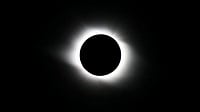
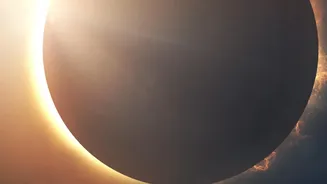
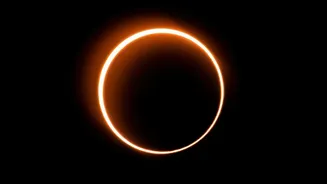
A total solar eclipse occurs when the Moon passes directly between the Sun and Earth, completely blocking the Sun's face. For a few brief, surreal minutes, day turns to twilight, and the Sun's ethereal outer atmosphere, the corona, becomes visible. The
event on August 12, 2026, is especially notable as it will be the first total solar eclipse visible in mainland Europe since 1999. The narrow track where this full spectacle can be witnessed is called the path of totality. This path is a story written by orbital physics, a precise line dictated by the alignment of celestial bodies. On this day, that line will stretch from remote Siberia across the Arctic, Greenland, Iceland, the Atlantic Ocean, and, most prominently, over northern Spain.
The Geographic Path: From Arctic Ice to Spanish Shores
The eclipse's journey begins in the remote reaches of northern Russia before sweeping across the Arctic. Its first significant landfall is over Greenland and then western Iceland, including the capital, Reykjavík. For many observers, however, the main event is in Spain. The path of totality will slice across the northern part of the country, offering millions a chance to experience the phenomenon. Major cities like Bilbao, Valladolid, and Zaragoza are directly in the path, while Madrid and Barcelona will experience a deep partial eclipse of over 99%. The shadow will make its first Spanish appearance on the Atlantic coast of Galicia around 8:27 p.m. local time and exit over the Balearic Islands in the Mediterranean. This path makes Spain the most accessible land-based location for prime viewing.
Why This Path? The Science of an Eclipse's Footprint
The path of totality isn't random; it's the result of a precise cosmic alignment projected onto a moving, spinning Earth. The Moon casts a two-part shadow: a wide, faint outer shadow called the penumbra, and a small, dark inner shadow called the umbra. To see a total eclipse, you must be within the narrow umbra. As the Earth rotates on its tilted axis and the Moon continues in its own inclined orbit, this small shadow cone sweeps across the planet's surface, drawing the path of totality. For the 2026 eclipse, this celestial geometry means the shadow starts near the North Pole and curves southward, crossing from the high Arctic to southern Europe in just over 90 minutes.
A Rare Sunset Spectacle in Spain
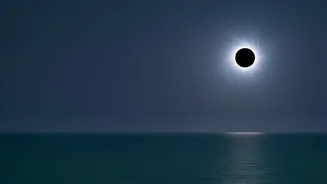
What makes the 2026 eclipse exceptionally unique for viewers in Spain is its timing. The eclipse will occur in the late evening, with totality happening just before sunset. In some locations, like the island of Mallorca, the Sun will be just a few degrees above the western horizon during totality. This creates the potential for a breathtakingly rare sight: a totally eclipsed sun hanging low in the twilight sky, its corona shimmering over the horizon. This low altitude presents a challenge for photographers and observers, who will need a completely unobstructed western view. However, it also promises a uniquely beautiful and dramatic viewing experience, combining the awe of an eclipse with the colors of sunset.
What to Expect in India and North America
While Europe gets the main show, other parts of the world will see a partial eclipse. The event will not be visible from India, as it occurs during the night there. However, a partial eclipse will be visible from much of North America. Viewers in the northeastern United States and eastern Canada will be able to see the Moon take a small "bite" out of the sun. For example, northern Maine will see about 28% of the sun covered, while New York City will see about 10%. NASA will provide a live broadcast of totality, allowing people worldwide to witness the event regardless of their location. This offers a fantastic opportunity for those outside the path to participate in the excitement.