


The Heart of the Feast
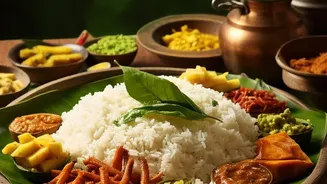
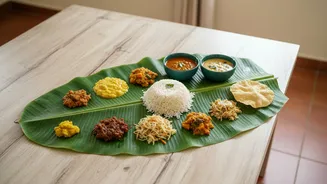
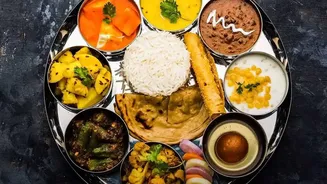
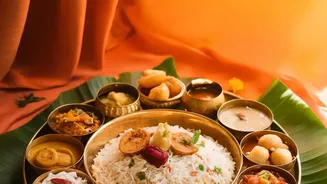
A Sadhya, which translates to 'banquet' in Malayalam, is a vegetarian feast central to celebrations like Onam and Vishu, as well as weddings and other significant occasions. It can consist of anywhere from 24 to over 64 distinct dishes, each with a specific
place and purpose on a banana leaf. This isn't just about abundance; it's a reflection of Kerala's agricultural bounty, ecological wisdom, and a deep-rooted philosophy of community and equality. Everyone eats the same meal together, shoulder to shoulder, embodying a spirit of unity.
Rice: The Foundation
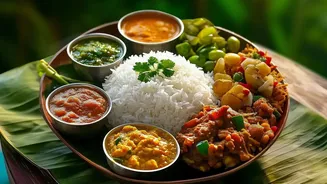
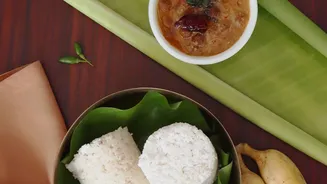
At the very centre of the Sadhya is a mound of steaming rice, typically the reddish-hued and nutty Kerala Matta rice. It serves as the canvas for the entire meal, the anchor around which every other flavour revolves. The meal unfolds in courses, with different curries poured over the rice in a specific sequence. This progression is not random; it is designed to guide the palate and aid digestion, starting with milder flavours and moving towards more complex and tangy ones.
A Symphony of Curries
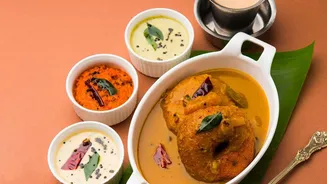
The curries, or 'kootan', are the soul of the Sadhya. The meal begins with 'parippu', a simple lentil curry, drizzled with ghee. This is followed by sambar, a familiar and hearty vegetable and lentil stew. Other key curries include 'avial', a thick mixture of vegetables in a coconut and yoghurt gravy, and 'kaalan', a sourer curd-based curry. Tangy and digestive concoctions like 'pulissery' and 'rasam' are served later in the meal. These are complemented by a host of side dishes ('thoran', 'olan', 'pachadi') and pickles that introduce a variety of textures and tastes.
The Philosophy of Six Tastes
The composition of the Sadhya is deeply rooted in Ayurvedic principles, particularly the concept of 'Shadrasa' or the six tastes: sweet, sour, salty, bitter, pungent, and astringent. A traditional Sadhya is meticulously designed to include all six, creating a perfectly balanced meal that is not only delicious but also nourishing and easy to digest. From the sweetness of jaggery-coated banana chips ('sharkara upperi') to the bitterness of certain vegetables, the sourness of pickles, the saltiness of pappadam, the pungency of ginger curry, and the astringency of dishes like olan, every flavour profile is represented.
Payasam: The Sweet Interlude
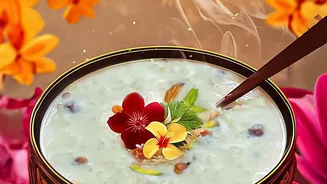
Unlike a typical dessert, Payasam is served towards the end but before the final course of the meal. This sweet pudding, made with ingredients like milk, coconut milk, jaggery, rice flakes, or lentils, is not merely a concluding treat. Its role is to balance the spicy and sour notes of the preceding curries and to soothe the palate. Often, more than one type of payasam is served, such as the milky 'Palada Pradhaman' or the jaggery-based 'Parippu Pradhaman'. A small portion of banana is often mashed into the payasam, creating a unique flavour combination.
The Final Act
After the sweetness of the payasam, the meal concludes with a final serving of rice accompanied by a tangy rasam or spiced buttermilk ('moru'). This final course serves as a digestive aid, cleansing the palate and bringing the elaborate culinary journey to a soothing close. Once finished, the banana leaf is folded, traditionally towards oneself, to signify satisfaction and appreciation for the meal. This simple act marks the end of an experience that nourishes the body, delights the senses, and celebrates a rich cultural heritage.