







The Problem with Traditional Roofs
Your roof is your home's first line of defence against the elements, but it's also a giant heat magnet. Traditional roofing materials, especially dark-coloured concrete, asphalt, and metal sheets, are excellent at absorbing solar radiation. Throughout
the day, they soak up the sun's energy, heating up to temperatures as high as 80°C. This stored heat then radiates downwards into your home, raising indoor temperatures long after the sun has set. This phenomenon forces air conditioners to work overtime, consuming significant amounts of electricity and driving up costs. For the millions of households without AC, it creates dangerously uncomfortable living conditions.
The Science of 'Cool Roofs'
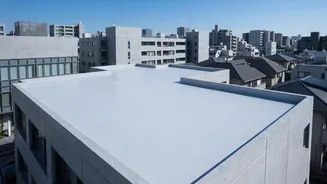
This is where bio-engineered coatings, often called 'cool roof' coatings, come in. These aren't just a simple layer of paint; they are advanced materials engineered to combat heat in two powerful ways. First, they have a very high solar reflectance, meaning they act like a mirror to the sun, bouncing a large portion of solar radiation back into the atmosphere before it can be absorbed. Second, they possess high thermal emittance. This allows the surface to efficiently release any heat it has absorbed, pushing it away from the building. The combined effect is measured by the Solar Reflectance Index (SRI), where a higher value means a cooler roof. While a standard black roof might have a low SRI, a high-performance cool roof can score close to 100, staying dramatically cooler under the same sun.
Beyond Just White Paint
While painting a roof white is a traditional and somewhat effective method, bio-engineered coatings are far more sophisticated. Simple lime wash or 'chuna' can degrade quickly and lose its reflectivity. Advanced cool coatings are formulated with durable polymers, and special ceramic or inorganic pigments that are designed to reflect not just visible light but also the invisible infrared radiation that accounts for a huge chunk of solar heat. Some of the latest innovations are inspired by nature, mimicking the ways certain desert creatures or plants stay cool. The most advanced coatings are part of a category known as Passive Daytime Radiative Cooling (PDRC) materials. These can emit heat so effectively that the surface can even become cooler than the surrounding air, without using any electricity.
The Measurable Benefits for Indian Homes
The impact of this technology is not just theoretical; it's being proven in real-world applications across India. In cities like Hyderabad and Bhopal, cool roof initiatives have demonstrated remarkable results. Studies show that these coatings can lower indoor temperatures by a significant 2°C to 5°C. For homes with air conditioning, this translates into substantial energy savings, with some reports indicating a reduction in cooling costs by as much as 20-30%. For those without AC, the benefit is even more critical: a tangible improvement in comfort and a reduction in heat stress during India's increasingly intense summers. Beyond individual homes, widespread adoption helps combat the 'urban heat island' effect, where cities become much hotter than surrounding rural areas.
Availability and The Path Forward
Cool roof technology is no longer a futuristic concept. Various effective coatings are becoming more available and are being implemented in social housing projects and even on major government buildings, like the new Parliament. While the upfront cost can be higher than a simple paint job, the long-term energy savings and increased comfort provide a strong return on investment. The key challenges are increasing awareness among homeowners and scaling up policy initiatives that incentivize or mandate the use of cool roofs in new construction. As India faces the dual challenges of rising temperatures and growing energy demand, these smart coatings offer a passive, powerful, and sustainable tool to build a cooler, more comfortable future.