






Tucked away in Gujarat’s Saurashtra region, Barda Wildlife Sanctuary is an ecological treasure. Once a royal hunting ground, this rugged landscape is now a crucial conservation site, most notably as the new, second home for the Asiatic lion.
A Sanctuary of Hills and Forests
Spanning over
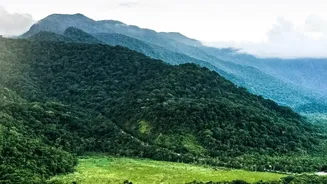
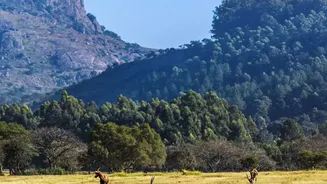
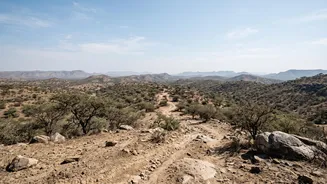
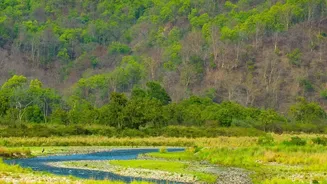
192 square kilometres across the Porbandar and Devbhumi Dwarka districts, Barda is a world away from the coast it sits so close to. The sanctuary is defined by its hilly and undulating terrain, with altitudes ranging from just under 80 metres to over 600 metres. This rugged topography, a former private hunting reserve for the princely states of Jamnagar and Porbandar, creates a mosaic of habitats. It is crisscrossed by rivers like the Bileshvary and Joghri and dotted with dams, which are lifelines in this semi-arid zone. The landscape is a mix of agricultural fields, wastelands, and forests, also supporting local ethnic communities like the Maldharis and Rabaris who have lived here for generations.
A Rich Floral Tapestry
Barda’s most defining ecological feature is its incredible plant diversity. Despite its relatively small size, it is one of the most florally rich areas in Gujarat, with records showing over 650 species of flowering plants. The forests are a mix of southern dry mixed deciduous, tropical thorn forests, and dry bamboo brakes. Key tree and plant species include Gorad, Babul, Dhav, Jamun, and various bamboos. This dense vegetation not only supports the local wildlife but is also a repository of important medicinal plants. The sanctuary's hilly geography also acts as a natural barrier, preventing salinity from the nearby coast from encroaching on inland agricultural areas.
The Wild Inhabitants
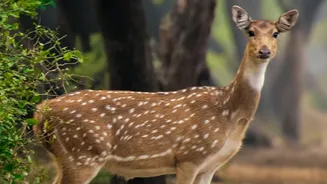
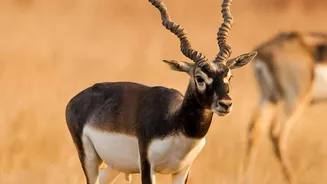
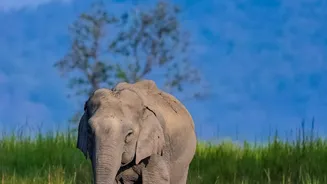
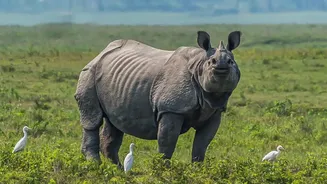
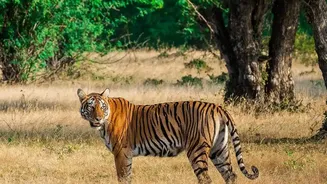
Historically, Barda has been home to a variety of fauna. The sanctuary provides a safe haven for mammals like the leopard, striped hyena, wild boar, bluebull (nilgai), and wolf. However, the most significant recent development has been the re-establishment of a vital predator-prey balance. Conservation efforts have focused on augmenting the prey base, which had dwindled over time. Species like chital (spotted deer) and sambar have been successfully reintroduced through a combination of captive breeding programs and translocation from Gir, providing a sustainable food source for the sanctuary's carnivores.
The Return of the Lion
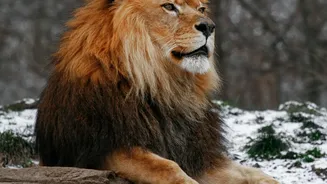
The most celebrated story of Barda's modern ecological revival is the return of the Asiatic lion after an absence of 144 years. Plans to make Barda a second home for lions, to reduce the risk of having the entire population in a single location like Gir, have been in motion since 1979. This vision became a reality starting in January 2023, when a male lion naturally dispersed from the Gir landscape into Barda. This was followed by the introduction of several radio-collared females by the Gujarat Forest Department. As of late 2026, the sanctuary is home to a growing population of 17 lions, including adults and cubs, marking a monumental success in conservation.
A Paradise for Birdwatchers
Beyond the large mammals, Barda is an ornithologist's paradise. Its diverse habitats attract a wide array of resident and migratory birds. The sanctuary is home to rare and endangered raptors like the crested hawk-eagle and spotted eagle, making it a key site for bird conservation. The presence of various owls, partridges, and flamingos further enriches its avian biodiversity, offering a rewarding experience for birdwatchers who explore its varied terrain. The mix of forest, scrubland, and water bodies ensures that different bird species can find their niche within the sanctuary's borders.