







The Urban Farmer's Dilemma
Urban agriculture is booming, transforming concrete jungles into green oases. From community gardens to vertical farms, growing food closer to home promises fresher produce and a smaller carbon footprint. But for organic growers, the city presents a unique
set of challenges. Pests like aphids and spider mites can thrive in the concentrated, often warmer environments of urban farms. And unlike their rural counterparts, city farmers can't exactly crop-dust. The proximity to people, homes, and businesses means that chemical pesticides are often a non-starter, leaving growers to rely on more labor-intensive and sometimes less effective methods to protect their crops.
Enter Bioacoustics
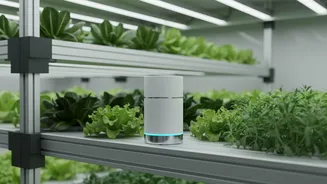
This is where the science of bioacoustics comes in—the study of how sound affects living organisms. While the idea of playing music to your plants has been around for ages as a kind of urban legend, modern research is looking at sound in a much more scientific way. It’s not about playing Mozart to make tomatoes taste sweeter; it’s about using specific sound frequencies to create targeted effects. The headline-grabbing application is pest control, using sound as a chemical-free way to protect plants. These are often ultrasonic, high-frequency sounds outside the range of human hearing, but they can create an environment that pests find unbearable, encouraging them to leave the area.
How Sound Wages War on Pests
So how does a simple vibration stop a hungry insect? The mechanisms are varied and fascinating. Some systems emit pulsed ultrasonic noises that mimic the echolocation calls of bats, natural predators of many nocturnal moth pests. For the moths, hearing this sound triggers an instinctual escape response, causing them to flee the area and preventing them from laying eggs on the crops. Other research focuses on disrupting the pests' own communication. Many insects, like certain species of sharpshooters, use vibrations transmitted through plants to find mates. By broadcasting disruptive vibrations, scientists can effectively jam the signal, making it impossible for the pests to reproduce and establish a population. In some studies, specific frequencies have been shown to directly repel pests like whiteflies, not only driving them away but also reducing the number of eggs they lay.
More Than Just Pest Control
The benefits of sound may go beyond just warding off unwanted guests. Some research indicates that specific sound frequencies can have a direct physiological effect on the plants themselves. Studies have shown that sound waves can stimulate plant growth, increase yield, and even boost their immune systems. The vibrations can apparently increase the activity of certain enzymes, improve nutrient uptake, and enhance photosynthesis. While much of this research is still in early stages, the idea is that sound can act as a gentle stressor that triggers a plant's natural defense and growth mechanisms, making them hardier and more productive without genetic modification or chemical fertilizers.
From Lab to Rooftop
While the science is promising, don't expect to see sonic emitters installed on every urban farm just yet. The effectiveness of these devices can vary greatly depending on the specific pest, the frequency used, and the environment. Some pests might become habituated to the sound over time, and the physical layout of a dense urban garden can create dead zones where the sounds don't reach. However, the technology is evolving rapidly. Researchers and tech companies are developing more sophisticated, solar-powered, and even AI-driven systems designed to learn and adapt. For now, ultrasonic pest repellents are best seen as one tool in a larger, integrated pest management strategy, supplementing other organic practices like promoting beneficial insects and maintaining healthy soil.