






Understanding the Vertical Instinct
Why do cats love to climb? It’s not just for fun; it’s deeply ingrained in their DNA. In the wild, height Tmeans safety and advantage. From a high perch, a cat can survey its territory, spot potential threats (or prey), and feel secure. For an indoor
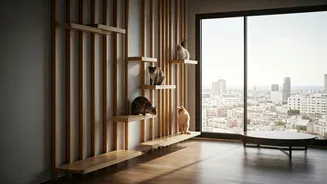
cat, Tespecially in a smaller flat, this instinct doesn't disappear. Providing vertical space helps satisfy this need, reducing stress and boredom. A cat with access to high places is often a more confident and content cat. It allows them to establish their own private spots away from household foot traffic, other pets, or even curious children, giving them a sense of control over their environment.
The Foundation: A Sturdy Cat Tree
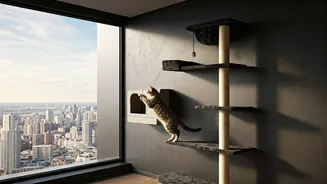
The classic cat tree, or condo, is the easiest way to start building your vertical world. When choosing one, stability is the most critical factor. Look for a tree with a wide, heavy base that won't wobble when your cat leaps onto it. For taller trees, consider models that can be anchored to the wall for extra security. The height should be impressive enough to be exciting, ideally taller than the humans in the house. Pay attention to the materials. Sisal rope-wrapped posts are excellent for scratching, and soft, carpeted perches offer comfortable napping spots. Ensure all platforms are large enough for your cat to lounge on without the risk of slipping off.
Going Up the Walls: Shelves and Pathways
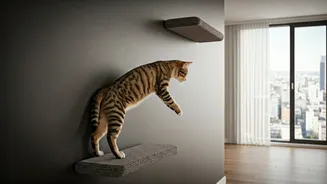
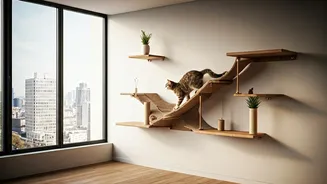
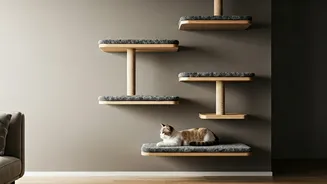
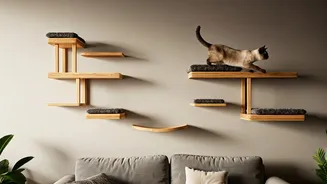
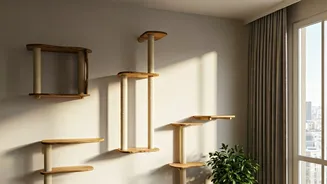
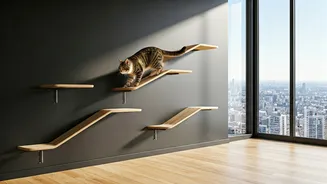
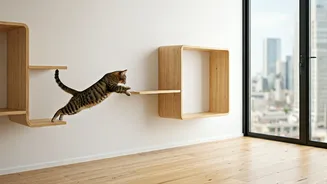
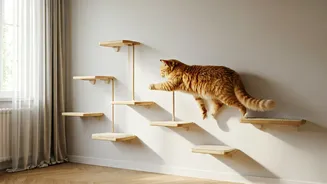
For the truly ambitious cat and owner, wall-mounted shelves, perches, and bridges transform your walls into a feline superhighway. This is where safety becomes paramount. Never use simple adhesive mounts. Every shelf must be securely fastened to the wall using screws and, crucially, drilled into wall studs wherever possible. If studs aren't available, use high-quality drywall anchors rated to hold significant weight. Arrange the shelves in a stair-like pattern, ensuring the distance between them is easily jumpable for your cat. A good rule of thumb is no more than a few feet apart, both horizontally and vertically. Add non-slip surfaces like carpet squares or cork pads to each shelf to provide grip for take-offs and landings.
The Window Perch: A Room with a View
A window is your cat’s television, and a Tsecure perch makes for the best seat in the house. You can find many Ttypes, from sturdy suction-cup perches that attach directly to the glass to wider shelves that install into the window sill. Before installing, ensure the window itself is cat-safe. In a high-rise building, this is non-negotiable. Windows should never be left Topen wide enough for a cat to squeeze through. Invest in high-quality, secure screens or window guards. Even with a screen, Tregularly check it for holes or Tlooseness. A secure window perch provides Tthe Tbest entertainment and mental stimulation, but only when the barrier to the outside Tworld is completely reliable.
Integrating Existing Furniture
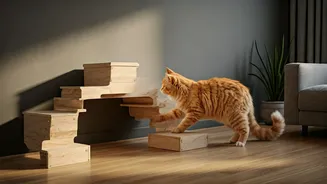
You don't always have to buy new things. You can creatively and Tsafely integrate your Texisting furniture into your cat's vertical world. The top of a Tsturdy bookshelf, wardrobe, or cabinet can Tbecome a prime lookout spot. The key is to ensure the furniture is Tstable and won't tip over. If it’s even slightly Ttwobly, anchor it Tto the wall. Next, provide a safe Tpath up. A Twell-placed stool, a lower shelf, or a small cat Ttree can Tserve as a stepping Tstone. Clear the Ttop surface of Tany breakable or Tdangerous items and place a soft Tblanket or cat Tbed Tthere to Tdesignate Ttit as your Tcat's space. TThis approach is budget-friendly and helps your Tcat’s world blend seamlessly Twith your Town.