






The New Space Economy
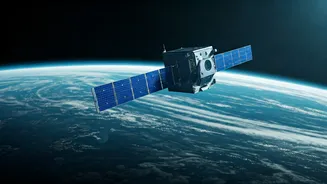
For decades, space was the exclusive domain of government agencies with astronomical budgets. Launching a satellite was an incredibly complex and expensive affair. But that has changed dramatically. The rise of private launch providers like SpaceX has slashed
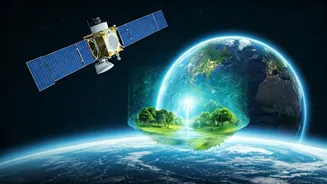
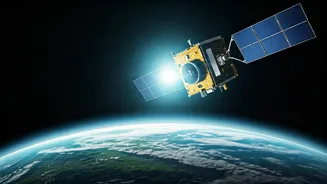
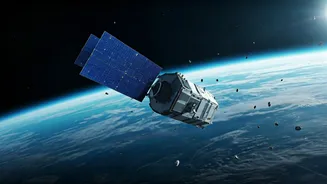
the cost of reaching orbit, creating a 'new space' economy. This has opened the door for a wave of innovative startups that don't need to build their own rockets. Instead, they can focus on designing and deploying small, powerful satellites for specific tasks, often hitching a ride on larger missions. This shift has democratised access to space, allowing nimble companies to focus on a surprising mission: making life on Earth more sustainable.
An Eye in the Sky for Climate Change
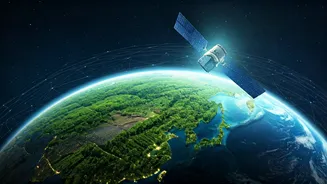
One of the most powerful applications of this new space era is Earth observation. Companies are deploying constellations of satellites that photograph the entire planet with unprecedented frequency and detail. This isn't just about pretty pictures; it's about creating a living, breathing dataset of our world. Startups like the US-based Planet Labs can track deforestation in the Amazon in near-real-time, providing crucial data to conservation groups and governments. They can monitor the health of coral reefs, the retreat of glaciers, and the extent of polar ice melt. This constant stream of information moves climate change from an abstract concept to a measurable, observable reality, equipping scientists and policymakers with the hard evidence needed to take action and monitor progress.
Smarter Farming from Orbit
For a country like India, with a massive agricultural sector, the benefits of space technology are immense. Precision agriculture, powered by satellite data, is transforming how we grow food. Startups in this field provide farmers with detailed insights into their land. Satellites can analyse soil moisture, monitor crop health by detecting subtle changes in vegetation colour, and help create optimised irrigation plans. This allows farmers to use water and fertiliser with surgical precision, applying them only where and when they are needed. The result is higher crop yields, lower costs, reduced water consumption, and less chemical runoff into rivers and groundwater. It’s a classic win-win, boosting food security while minimising environmental impact.
Pinpointing Pollution and Improving Response
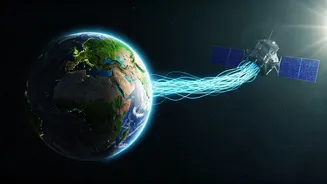
Another critical frontier is monitoring pollution. Some startups specialise in using hyperspectral sensors that can 'see' what the human eye cannot. For instance, Canadian company GHGSat operates satellites designed specifically to detect greenhouse gas emissions, like methane leaks from pipelines, oil fields, and industrial sites. This technology can pinpoint the exact source of a leak, enabling companies to fix it quickly and holding polluters accountable. Beyond emissions, satellite data is invaluable for disaster management. When a flood, wildfire, or cyclone strikes, up-to-date imagery helps first responders understand the extent of the damage, identify accessible routes, and direct resources to the areas that need it most, saving lives and speeding up recovery efforts.