







The Appeal of Built-in Tech
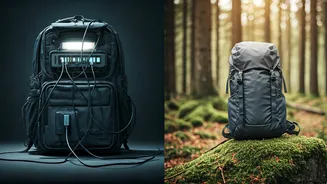
Let's be honest: the idea is tempting. A backpack that can charge your phone on the go feels futuristic and efficient. Marketers have successfully sold us on the concept of integrated tech, promising a seamless connection between our digital lives and the gear
we carry. On a crowded metro or during a busy day, the thought of simply plugging your phone into your backpack strap instead of fumbling for a power bank is undeniably attractive. These bags look modern, speak to our desire for convenience, and promise to solve a common problem—the dreaded low-battery notification. They’ve become a common sight, a symbol of being tech-savvy and prepared. But this convenience often comes at a hidden cost, especially when another feature—waterproofing—is a top priority.
A Port in a Storm Is a Problem
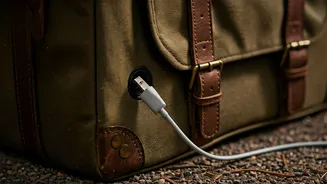
The primary issue with built-in USB ports is simple: they introduce a point of failure. A truly waterproof bag is designed as a sealed unit. Its effectiveness relies on having as few seams and openings as possible. Every time you cut a hole in a fabric to add a feature, you create a potential entry point for water. While manufacturers use rubber gaskets or sealant, these are often the first things to degrade, crack, or fail, especially on budget-friendly models. Furthermore, the electronic components themselves are rarely high-quality. The internal cable and external port are often cheap, uncertified parts that can fail, short-circuit, or deliver an inconsistent charge. Unlike a premium power bank you choose yourself, you're stuck with the quality—or lack thereof—that the bag manufacturer decided to include.
When 'Smart' Tech Becomes Dumb
Technology evolves at a blistering pace. The USB-A port that is standard on most bags today is already being superseded by the more powerful and versatile USB-C. What happens in a year or two when all your new devices use a different standard? Your 'smart' bag suddenly becomes a 'dumb' bag with an obsolete, useless port. This built-in obsolescence is a major drawback. A well-made bag should last you for years, even a decade. Tying its functionality to a rapidly changing piece of technology is a recipe for waste. The philosophy behind great gear, especially for travel and outdoor use, is modularity. You should be able to upgrade or replace individual components. A bag with a built-in USB port violates this principle; when the port breaks or becomes outdated, you can't fix or upgrade it.
The Real Smart Solution: Modularity
The smarter, more reliable, and future-proof solution is beautifully simple: carry a separate, high-quality power bank. This approach gives you complete control. You can choose a power bank with the capacity, charging speed (hello, fast charging!), and ports that you actually need. When technology changes, you simply upgrade your power bank and cable, not your entire bag. Keeping your power bank inside a truly waterproof bag means it, along with all your other electronics, stays completely safe from the elements. Need to charge on the move? A modern, compact power bank can easily be held with your phone in one hand. It’s a more flexible, powerful, and durable system that doesn't compromise the single most important function of a waterproof bag: keeping your belongings dry.
How to Choose a Truly Reliable Bag
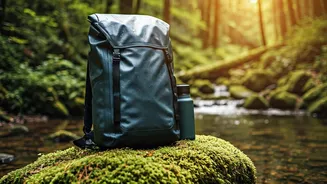
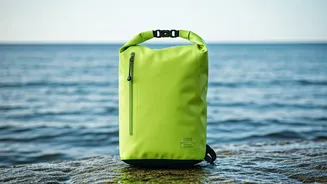
So, if you're skipping the USB port, what should you focus on? First, materials. Look for durable, inherently waterproof fabrics like TPU (thermoplastic polyurethane) or PVC-coated nylon. These materials are tough and don't rely on a temporary coating that can wear off. Second, construction. The best waterproof bags use welded or radio-frequency (RF) sealed seams, which fuse the fabric together to create a permanent, watertight bond. Stitched seams, even if "taped," are a more common point of failure. Third, the closure system. For maximum protection, nothing beats a roll-top closure. This design, common in dry bags for water sports, allows you to roll the top down multiple times and buckle it, creating an incredibly effective seal against even heavy rain or brief submersion. Pay attention to quality zippers as well; look for names like YKK with water-resistant coatings.