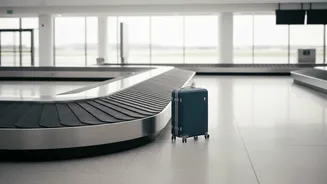








A Landmark Ruling for Passenger Rights
In a significant decision for Indian flyers, a district consumer commission in Kerala recently ordered an airline to pay a passenger a total of Rs 53,923 for a three-day delay in delivering his checked luggage. The ruling, dated July 22, 2026, reinforces
the power of the Ministry of Civil Aviation's Passenger Charter, which sets out clear compensation guidelines. The commission found the airline guilty of a “deficiency in service” for not compensating the passenger despite his repeated complaints. This case serves as a powerful precedent, affirming that airlines are obligated to compensate travellers not only for essentials purchased during the delay but also for the inconvenience caused. The passenger was awarded reimbursement for clothes, a set compensation for the delay, and costs for the legal action.
The Power of the Paper Trail
The Kerala ruling underscores a critical point: successful claims hinge on solid proof. A paper trail is your most powerful tool in any dispute with an airline. Without documentation, your claim is just your word against theirs. The first and most crucial document is the Property Irregularity Report (PIR). This report, filed at the airline's baggage service desk before you leave the airport, is the official starting point of your claim. Without a PIR reference number, most airlines will not even begin to process a claim for delayed, damaged, or lost luggage. Think of the PIR as your official case file number; it proves you reported the issue immediately. From there, every piece of paper—or digital equivalent—adds another layer of strength to your claim.
Building Your Essential Document Checklist
Being organised is your best defence. Before, during, and after your flight, keep a meticulous record. Your paper trail should include your original boarding pass and, most importantly, the baggage tag stickers given to you at check-in. These tags are how airlines track bags through their system. It's also wise to take photos of your packed suitcase and its contents before you leave home. When a bag is delayed, keep every single receipt for essential items you have to buy, like toiletries and clothing. The Kerala passenger's claim was successful partly because he had a receipt for Rs 8,923 for essential clothing he was forced to buy. Finally, document all your interactions with the airline—note down the names of staff you speak to, and save all email correspondence. This creates a clear timeline of your efforts to resolve the issue.
Step-by-Step: From Delay to Compensation
If your bag doesn't arrive, don't panic and don't leave the arrivals hall. First, locate the airline's baggage service counter and file a PIR. Ensure you get a copy of the report with a reference number. Ask the airline about their policy for reimbursing essential purchases. If your bag is delayed, domestic airlines' liability is up to ₹20,000 under the Passenger Charter. For international travel, the liability is capped under the Montreal Convention at a specified number of Special Drawing Rights (SDRs), a currency value set by the IMF. If your bag isn't found within 21 days, it is typically declared officially lost. At this point, your claim shifts from reimbursement for essentials to compensation for the value of the bag and its contents. To support this, you'll need an itemised list with proof of purchase where possible.
When the Airline Doesn't Respond
If the airline is unresponsive or offers inadequate compensation, you have further recourse. The passenger in the Kerala case filed a complaint on the INGRAM portal, a government consumer grievance platform, before approaching the commission. Several consumer court rulings in 2026 have sided with passengers, awarding compensation for lost items and the mental anguish caused, reinforcing that airlines have a legal responsibility for your checked baggage. These rulings demonstrate that the courts view the failure to trace or fairly compensate for lost bags as a clear deficiency in service. The key is to be persistent and to have all your documents in order to prove your case.