






Mastering the 100ml Liquid Rule
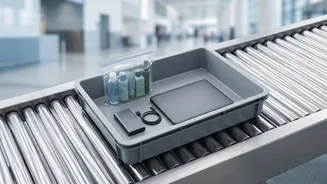
The most common reason for delays at Indian airport security is improperly packed liquids. The rule is simple and strictly enforced: all liquids, aerosols, and gels (LAGs) in your hand luggage must be in containers of 100ml or less. It's crucial to remember
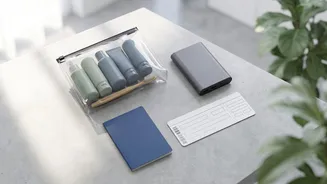
that this limit applies to the container size, not the amount of liquid inside. A half-empty 200ml bottle of shampoo will be confiscated. All these small containers must then be placed inside a single, transparent, resealable plastic bag, typically with a total capacity not exceeding one litre. This includes everything from perfume, toothpaste, and deodorant to creams and hand sanitiser. Being prepared with the right-sized containers in a clear bag before you even reach the airport is the first step to a hassle-free check.
Packing Your Gadgets for Easy Access
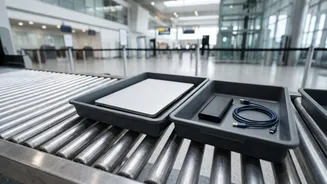
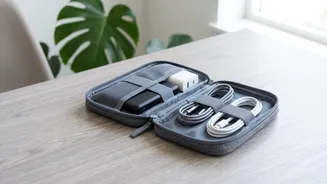
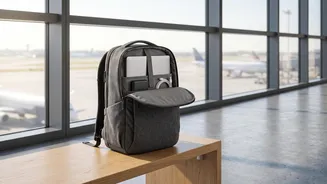
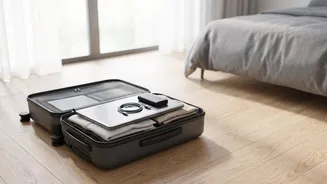
Next to liquids, electronics are the second major item that needs to be handled correctly. All major electronic devices must be removed from your hand luggage and placed in a separate tray for X-ray screening. This typically includes laptops, tablets, e-readers, and sometimes even large cameras. To make this process seamless, pack these items last or in an easily accessible outer pocket of your backpack or carry-on. Fumbling to find your laptop at the bottom of a stuffed bag holds up not only you but the entire queue. Keep your chargers and cables neatly bundled, perhaps in a small pouch, to avoid a tangled mess and prevent them from getting snagged on the scanner's rollers.
Understanding Power Bank Regulations
Power banks have their own specific set of rules. Due to the risk associated with lithium-ion batteries, power banks are strictly prohibited in checked-in luggage and must be carried in your hand baggage only. In India, there are also capacity limits. Power banks up to 100Wh (which covers most standard models up to about 27,000mAh) can be carried without special permission. Those between 100Wh and 160Wh may require airline approval, and anything above 160Wh is banned entirely. You can usually carry a maximum of two power banks. Critically, the Directorate General of Civil Aviation (DGCA) has also specified that you cannot use power banks to charge devices during a flight in India. So, keep them stowed away once you're on board.
Smart Alternatives and Medical Exceptions
To minimise liquid-related issues, consider solid alternatives. Solid shampoo bars, conditioner bars, solid perfumes, and toothpaste tablets are excellent travel-friendly options that don't fall under the 100ml rule. This frees up space in your liquids bag for essentials that don't have a solid version. There are exceptions to the liquid rule for essential medicines and baby food. If you need to carry liquid medication in a container larger than 100ml, it's advisable to have a doctor's prescription with you to present to security personnel. Similarly, baby food and milk are permitted, but you should inform the screening officer about these items as they may require additional verification.
The Final Pre-Flight Check
Before you leave for the airport, do a final check of your hand luggage. Ensure there are no prohibited sharp objects like scissors (with blades over a certain length), knives, or tools. Double-check that all your liquids are in their transparent bag and that your electronics are easy to reach. Remember that security staff may also ask you to remove smartwatches and fitness trackers for screening. Choosing the right bag with dedicated compartments for a laptop and other essentials can make a world of difference. A well-organised bag means a quick and efficient passage through security, letting you relax and look forward to your flight.