





The Showstopper: Perseid Meteor Shower
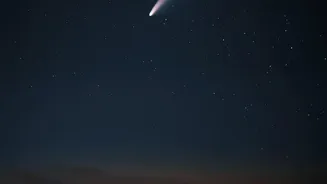
August’s main event is the Perseid meteor shower, one of the best and brightest of the year. This year offers a particularly fantastic show because its peak, on the night of August 12-13, coincides with a new moon. This means the sky will be exceptionally
dark, allowing even faint meteors to shine. The shower is active from mid-July to late August, but the peak is when you can expect to see the most activity. For viewers in India, the best time to watch will be in the pre-dawn hours of August 13, between 2:00 AM and 4:30 AM IST, before twilight begins to brighten the sky. While India will miss the absolute global maximum rate which occurs during its daylight hours, the pre-dawn display will still be spectacular. Under ideal dark-sky conditions, you could see up to 100 meteors per hour, many leaving long, glowing trails. These shooting stars are actually tiny bits of debris left by the comet Swift-Tuttle, burning up as they enter Earth’s atmosphere.
A Parade of Planets
August 2026 is a phenomenal month for planet-watchers. A rare alignment of six planets—Mercury, Jupiter, Mars, Saturn, Uranus, and Neptune—will be visible in the pre-dawn sky around August 12-13. For naked-eye observers, four of these planets will be relatively easy to spot. Look for Saturn shining with a steady, golden light high in the sky before sunrise. Mars will be visible above the eastern horizon, while brilliant Jupiter returns to the morning sky, appearing in the east-northeast. Mercury will be the trickiest to spot, sitting low near the horizon just before sunrise. While Uranus and Neptune are also part of this celestial gathering, you'll need a good pair of binoculars or a small telescope to find them.
Spotlight on Saturn
The ringed planet, Saturn, is a major highlight throughout August. It will be rising a couple of hours after sunset and will be visible for most of the night, making it an excellent target for observation. While its official opposition—when it's brightest and closest to Earth for the year—is on October 4, its visibility in late August is already fantastic. After seemingly vanishing when its rings were edge-on to Earth in 2025, they have tilted back towards us and are once again visible through a telescope. Even a modest telescope will reveal the iconic rings, offering a stunning view from your own backyard or terrace.
Chasing Constellations and the Milky Way
The monsoon season, which typically runs from June to September, often brings cloud cover that can hamper stargazing across much of India. However, during clear spells, the core of our own galaxy, the Milky Way, is beautifully positioned for viewing. Look towards the south for the constellations Sagittarius and Scorpius. This region is the brightest and densest part of the Milky Way, appearing as a hazy, luminous band stretching across the sky. While its full glory is best appreciated from a dark-sky location, parts of it can still be glimpsed from the outskirts of cities on a clear, moonless night.
Tips for Urban Stargazers in India
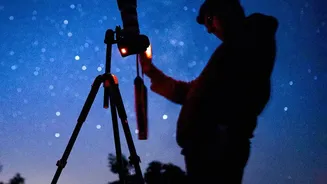
Viewing the night sky from a city can be challenging due to light pollution, but not impossible. The first step is to get away from direct streetlights and building lights. Find a local park, a rooftop, or the outskirts of your city where the sky is darker. Give your eyes at least 20 minutes to adapt to the darkness; avoid looking at your bright phone screen during this time. Using a red-light flashlight helps preserve your night vision. While you don't need a telescope for meteor showers, a pair of binoculars can dramatically enhance views of the Moon, star clusters, and even the moons of Jupiter. Finally, be patient. The longer you look, the more your eyes will adjust and the more you will see.