


The Science of the Perfect Puff
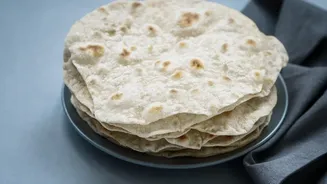
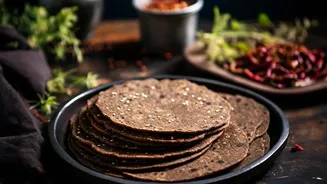
The magic of a roti puffing into a perfect sphere is pure science. When the rolled dough hits a hot tawa, the water trapped within the layers of dough turns to steam. This steam needs to form rapidly and evenly to inflate the roti. If the pan's temperature
is too low, the water evaporates slowly, and the roti dries out and becomes hard before it can puff. If the tawa is too hot, it burns the outside before the inside has a chance to cook and generate steam. An unsteady temperature—too hot for one roti, too cool for the next—is the primary reason for inconsistent results. A steady, correct heat ensures that each roti cooks uniformly, trapping steam effectively and leading to that satisfying puff every time.
Finding Your Tawa's Sweet Spot
The ideal temperature for cooking rotis is a consistent medium-high heat. But how do you know when your tawa is ready? Don't just guess. A properly preheated tawa is non-negotiable for soft rotis. Heat your pan for a few minutes and use the water-drop test: sprinkle a few droplets of water on the surface. If they sizzle and evaporate almost instantly, your tawa is at the perfect temperature. If they dance around aggressively, the pan is too hot and you should reduce the flame slightly. If they just sit there and slowly steam, the tawa is too cold and will produce hard, papad-like rotis. Learning this visual cue is more reliable than timing, as it accounts for your specific stove and cookware.
Why a Heavy-Bottomed Pan Is Your Best Friend
The type of tawa you use plays a massive role in heat management. A thin or lightweight tawa heats up very quickly but also loses heat just as fast, leading to temperature fluctuations. This can cause uneven cooking and hot spots, where one part of the roti burns while another remains undercooked. A heavy-bottomed pan, particularly one made of cast iron or hard-anodized material, is far superior for making rotis. These materials retain heat exceptionally well, providing a stable and evenly distributed temperature across the cooking surface. This means that even when you place a cooler, uncooked roti on the pan, the overall temperature doesn't drop as dramatically, ensuring each roti in your batch gets the same consistent heat as the first.
Techniques for Mastering Temperature Control
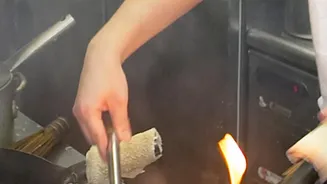
Maintaining steady heat is an active process. First, always preheat your tawa thoroughly before the first roti goes on. Once you start cooking, work at a rhythmic pace. Don't rush and crank up the heat, and don't take long breaks between rotis, allowing the tawa to become excessively hot. The key is to make small, incremental adjustments to the flame between rotis, not while one is cooking. If you notice rotis are browning too quickly, lower the heat slightly after you take one off and before you put the next one on. If they're taking too long to get those characteristic brown spots, increase the heat a little. This constant but gentle regulation prevents the wild temperature swings that ruin texture. Also, avoid using too much dry flour (atta) while rolling, as the excess flour can burn on the tawa, creating bitter spots and interfering with heat transfer.