





A Symphony for the Senses
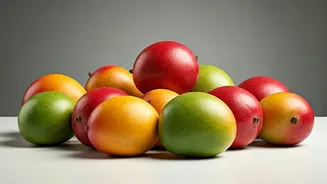
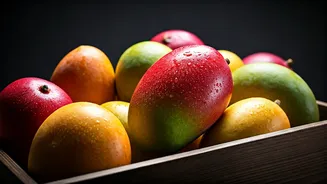
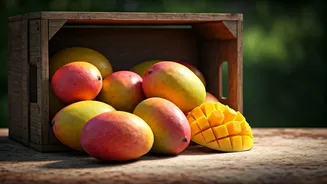
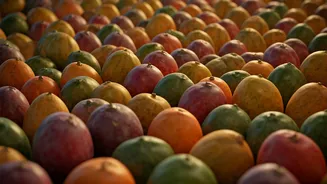
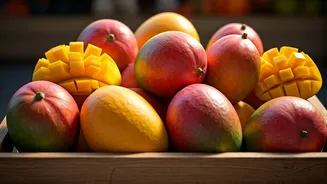
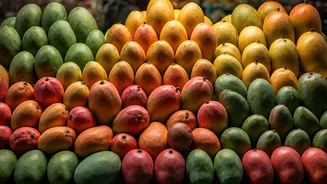
Stepping into a venue like Dilli Haat during the festival is an immediate sensory overload in the best possible way. The usual earthy tones of the marketplace are completely overpowered by a riot of colour. Heaped pyramids of yellow, saffron, green, and
blushing red fruits create a stunning mosaic. The air hums with the excited chatter of families, the passionate haggling of discerning buyers, and the constant, overwhelming perfume of ripe mangoes. It’s not just a market; it’s a pilgrimage for anyone who has waited patiently through the winter for this golden bounty. Every stall seems to be in a friendly competition, showcasing their prized specimens with a farmer’s pride, inviting you to see, smell, and eventually, taste the magic.
The Royal Court: Alphonso vs. Dasheri
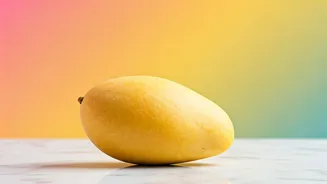
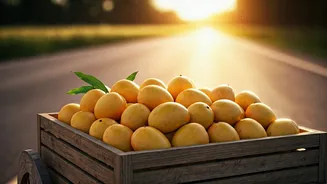
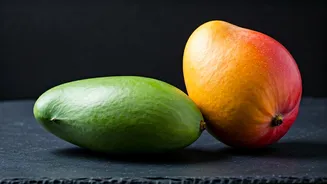
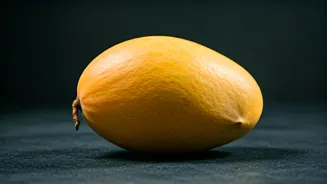
At the heart of the festival is a delicious, long-standing rivalry. On one side, you have the undisputed 'King of Mangoes', the Alphonso. Hailing primarily from Maharashtra’s Konkan coast, its perfect balance of sweetness and tartness, firm, non-fibrous flesh, and heady aroma make it a national obsession. At the festival, vendors present them like jewels, each one a perfect, saffron-hued orb. But Delhi is North Indian territory, and here, the Alphonso faces stiff competition from the local champion: the Dasheri. Slender, sweet, and bursting with fragrant, fibrous juice, the Dasheri is the taste of a North Indian childhood. Watching people debate the merits of the two is a spectator sport in itself. One is a delicacy to be sliced and savoured; the other is an experience to be squeezed and slurped. The festival is the neutral ground where both kings hold court.
Beyond the Famous Two
While Alphonso and Dasheri draw the biggest crowds, the true joy of the festival lies in discovering the incredible diversity of India’s mangoes. This is your chance to move beyond the supermarket staples. You’ll find the Langra from Varanasi, with its distinctive greenish-yellow skin and a unique flavour that has a slight, pleasant tang at the end. Then there’s the mighty Chausa from Uttar Pradesh and Bihar, a late-season marvel known for its incredibly sweet, almost honey-like pulp and bright yellow skin. Don’t miss the Mallika, a hybrid known for its exceptional sweetness and notes of citrus and melon, or the Gulab Khas, a smaller, blush-pink mango that smells, as its name suggests, like roses. The festival is an education, with farmers eager to explain the lineage and tasting notes of each variety.
More Than Just Fruit
This isn't just about buying fruit to take home. The festival is a full-fledged celebration of the mango in all its forms. You'll find stalls selling every conceivable mango-based product: thick, sun-dried sheets of *aam papad*, fiery and sweet mango pickles (*achaar*), refreshing glasses of *aam panna*, rich mango *kulfi*, and decadent mango ice cream. It's a culinary adventure. Often, the festivities include cultural programs with folk music and dance, adding to the carnival-like atmosphere. For the truly competitive, mango-eating competitions provide endless entertainment, as participants race to devour dozens of mangoes in a messy, joyous spectacle. It’s a reminder that this fruit is deeply woven into our culture, a symbol of joy, summer, and shared experience.