
A Human Outpost in the Sky
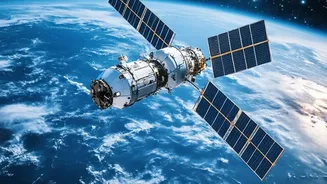
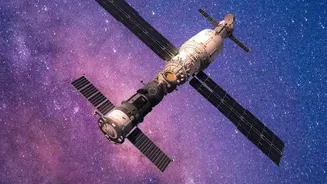
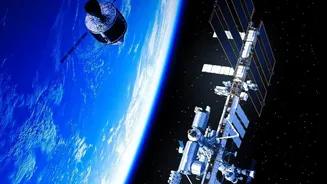
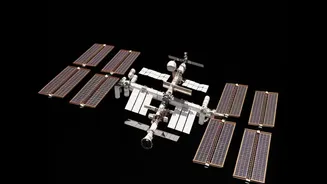
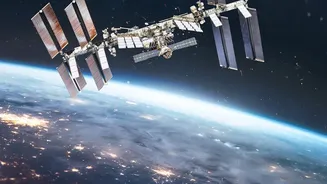
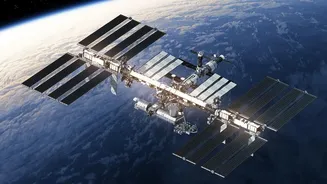
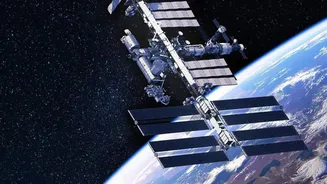
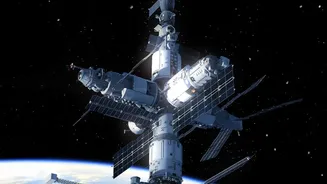
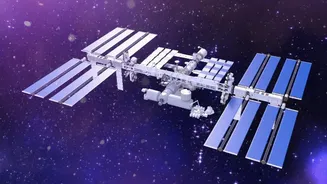
Orbiting roughly 400 kilometres above Earth, the International Space Station is a football-field-sized science laboratory and a home to a multinational crew of astronauts. It travels at an astonishing 17,500 miles per hour, completing about 16 orbits
of our planet every single day. For most of its journey, it's invisible to us on the ground. But under the right conditions, it becomes one of the brightest objects in the sky, easily visible to the naked eye. You don't need a telescope or any special equipment, making it an accessible thrill for anyone interested in space. The ability to watch this symbol of human ingenuity glide overhead connects us directly to the incredible work being done in space.
The Secret to a Perfect Sighting
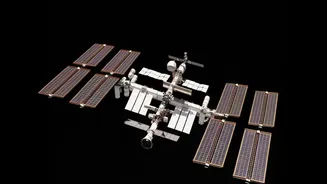
Seeing the ISS isn't as simple as just looking up; timing is everything. The station has no lights of its own that are visible from the ground. We can only see it because its massive solar panels reflect sunlight back to Earth. This creates a specific viewing window. The perfect time to spot the ISS is during dusk or dawn. During these periods, the sky is dark enough for the reflected light to be prominent, but the station is still high enough in its orbit to be bathed in sunlight. These passes can happen multiple times a week or just once a month depending on your location and the station's orbital path. Predicting these moments manually is nearly impossible, which is where your smartphone becomes an essential tool.
Top Apps for Tracking the ISS
Several user-friendly mobile apps can turn your phone into a personal satellite tracker, sending you alerts before a visible pass. NASA's official Spot The Station app (available for iOS and Android) is a fantastic and reliable starting point. It provides precise times, directions for viewing, and the duration of the flyover for your specific location. Another highly popular choice is ISS Detector, which not only tracks the ISS but also offers premium features to spot Starlink satellite 'trains' and other celestial objects. Many of these apps also feature augmented reality (AR) modes, allowing you to point your phone at the sky to see exactly where the station will appear.
What to Expect When You Look Up
When you receive an alert for a sighting, you're looking for a bright, steady point of light moving smoothly and quickly across the sky. It will look like a very fast-moving airplane, but with a key difference: the ISS does not have flashing or blinking lights. Its light is constant and unwavering. A typical pass can last anywhere from two to six minutes, as the station emerges from one part of the horizon and gracefully arcs across the sky before disappearing into Earth's shadow or below the opposite horizon. Even from light-polluted cities, the ISS is often bright enough to be clearly seen, usually outshining every star in the sky.
Tips for the Best Viewing Experience
To make the most of your sighting, head outside a few minutes before the scheduled time to let your eyes adjust to the darkness. An open area with an unobstructed view of the horizon, like a park or field, is ideal. Knowing the direction in which the station will appear and disappear—information your app will provide—is crucial. An alert might say the station will appear in the west-southwest and travel east, so you'll know where to focus your attention. While binoculars aren't necessary, they can enhance the view, making the bright dot appear more vivid. Finally, be patient. Cloud cover can sometimes spoil a viewing, but another opportunity is always just around the corner.