




The Dawn of a New Era
India's journey in space, once solely navigated by the state-run Indian Space Research Organisation (ISRO), is now witnessing a dramatic and exciting shift. A new breed of ambitious startups, founded by engineers and former ISRO scientists, is entering
the fray, transforming the sector from a government monopoly into a competitive commercial marketplace. This change was catalysed by landmark government reforms in 2020 and the introduction of the Indian Space Policy in 2023, which were designed to unleash private innovation. The goal is to significantly expand India's share of the global space economy, which currently stands at 2-3%, with aspirations to reach $44 billion by 2033. This new policy framework allows private entities to engage in end-to-end space activities, from building rockets and satellites to providing commercial launch services.
Meet the Launch Leaders: Skyroot and Agnikul
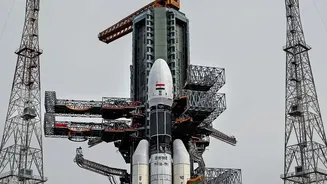
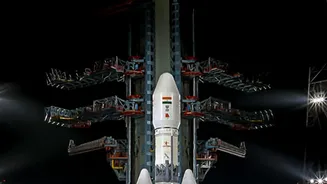
Leading this new race are two standout companies: Skyroot Aerospace and Agnikul Cosmos. Hyderabad-based Skyroot Aerospace made history in July 2026 by successfully launching its Vikram-1 rocket, becoming India's first private company to place payloads into orbit. This achievement, dubbed 'Mission Aagaman,' marked India as the third country, after the US and China, to have a private company with orbital launch capability. Founded by former ISRO scientists, Skyroot first made headlines in November 2022 with the suborbital flight of its Vikram-S rocket. Close on its heels is Chennai-based Agnikul Cosmos. In May 2024, the company successfully launched its Agnibaan SOrTeD (Sub-Orbital Technology Demonstrator), which was notable for being powered by the world's first single-piece 3D-printed semi-cryogenic engine. This innovative manufacturing approach significantly reduces complexity and production time. Agnikul also operates from India's first private launchpad, 'Dhanush', at Sriharikota.
The Ground Control: Government as an Enabler
This private-sector boom would not be possible without a strong push from the government. The creation of the Indian National Space Promotion and Authorisation Centre (IN-SPACe) in 2020 was a game-changer. IN-SPACe acts as a single-window agency to promote, authorise, and supervise the activities of private space companies, often referred to as Non-Governmental Entities (NGEs). It facilitates access to ISRO's extensive infrastructure, testing facilities, and technical expertise, which is crucial for startups to develop and validate their technologies. Furthermore, ISRO's commercial arm, NewSpace India Limited (NSIL), works to transfer mature technologies, like the reliable PSLV rocket, to industry partners. Liberalised foreign direct investment (FDI) policies and venture capital funds are also being established to inject necessary capital into this deep-tech sector.
Beyond the Rocket: Building a Full Ecosystem
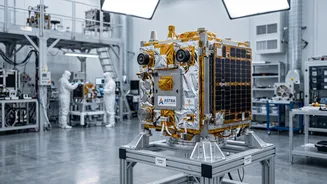
The new space race isn't just about launch vehicles. A whole ecosystem of private firms is emerging to build critical components and provide downstream services. Companies like Pixxel are developing a constellation of hyperspectral imaging satellites to provide high-resolution data for sectors like agriculture and climate monitoring. Pixxel's 'Firefly' constellation, which began launching in 2025, aims to create a health monitor for the planet with unprecedented detail. Meanwhile, Hyderabad-based Dhruva Space is a full-stack company building satellite platforms, solar panels, and deployers for a global client base. Their success is evident in their growing order book and recent funding, including from a sovereign space technology fund. However, challenges remain, including dependency on foreign suppliers for critical components like sensors and chips, and ensuring consistent launch availability.