






The High Cost of a Bad Guess
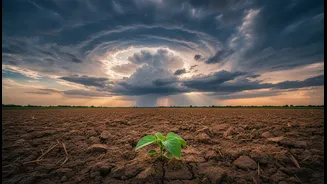
Farming in India has always been a high-stakes gamble with the monsoon. For a majority of the country's farmers, especially those in rainfed areas, a timely downpour can mean prosperity, while a delayed or weak monsoon can lead to devastating losses.
Traditionally, farmers relied on broad, district-level forecasts or indigenous knowledge passed down through generations. However, these methods are struggling to keep pace with increasing climate volatility, which brings more frequent droughts, floods, and unpredictable rainfall patterns. A forecast that is wrong by even a few kilometres or a couple of days can have serious consequences. Sowing seeds too early may see them fail in dry soil, while applying expensive fertilisers or pesticides just before a heavy shower can result in them being washed away, wasting precious capital and harming the environment.
The Power of Pinpoint Precision
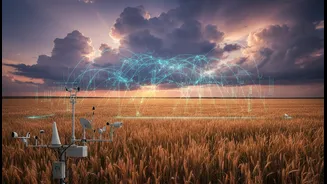
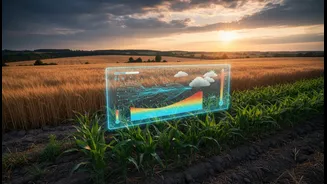
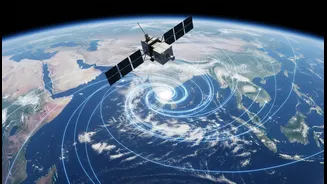
Enter hyperlocal weather forecasting. This isn't your standard regional weather report. Using a combination of satellite imagery, ground-based sensors, and powerful AI algorithms, these modern services can provide predictions for specific areas, sometimes as small as an individual field. Instead of a general alert for an entire district, a farmer can receive a forecast tailored to their specific location, covering temperature, humidity, wind speed, and, most importantly, the probability of rain within the next few hours or days. This level of detail transforms weather from an unpredictable threat into a manageable variable. Government bodies like the India Meteorological Department (IMD) and a growing number of agritech startups are now making these services available through accessible platforms like mobile apps and WhatsApp messages.
Smarter Decisions from Sowing to Harvest
With localised forecasts, farmers can make strategic decisions at every stage of the crop cycle. An accurate prediction of the monsoon's onset helps in choosing the right crop variety and determining the optimal time to sow. Short-range forecasts allow for precise irrigation scheduling, conserving water and energy by avoiding watering before expected rainfall. Planning for the application of fertilisers and pesticides becomes far more efficient. Farmers can choose a clear, calm window to spray, ensuring maximum effectiveness and preventing chemical runoff. This not only saves money on costly inputs but also improves crop health and yield. Finally, knowing a storm is approaching can prompt an early harvest, saving a mature crop from damage and securing the farmer's income.
Beyond Rain: A Complete Advisory System
The benefits of this technology extend beyond just rainfall. Many of these advanced systems integrate weather data with agronomic information to provide holistic advisories. For example, predictions of certain temperature and humidity combinations can warn farmers of a high risk for specific pest or disease outbreaks, allowing them to take preventative measures. These platforms can also provide crucial information on soil moisture levels, helping to refine water management even further. By combining weather predictions with data on crop life cycles, agritech firms can offer a full suite of proactive advice, turning a farmer's smartphone into a powerful decision-making tool. Some states, like Telangana, have already launched initiatives to deliver these detailed advisories directly to farmers' phones.