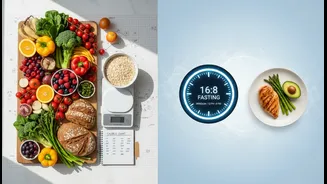









Understanding the Two Approaches
First, let's clarify the terms. Calorie counting, or continuous calorie restriction, is the traditional approach: you have a daily calorie budget and track your food intake to stay within that limit. The focus is on how much you eat. Intermittent fasting
(IF), also known as time-restricted eating, is about when you eat. It involves cycling between periods of eating and fasting. A common method is the 16:8 plan, where you fast for 16 hours and eat all your meals within an 8-hour window. The fundamental goal of both methods is to create a calorie deficit, which is necessary for weight loss.
The Evidence: A Tie for Weight Loss
For years, proponents of each method have claimed superiority. However, a growing body of research, including recent large-scale reviews, suggests that when it comes to shedding kilos, both approaches are similarly effective. Several studies have found that people lose roughly the same amount of weight whether they are restricting calories daily or limiting their eating window. For example, a recent study from the University of Adelaide found that after six months, participants in both an intermittent fasting group and a calorie-restricted group lost an average of about seven kilograms. The key takeaway is that neither method seems to be a magic bullet for weight loss over the other; both work by helping people consume fewer calories overall.
The Psychological Edge of Fasting
While weight loss results may be similar, some research points to a potential psychological advantage for intermittent fasting. The same Adelaide University study noted that participants on the IF plan felt they could lose weight without the constant mental effort of monitoring food and counting calories. This could make IF a more sustainable option for people who struggle with the restrictive feeling of traditional diets or who are prone to 'yo-yo' dieting. The structure of IF simplifies food decisions to timing, which can reduce decision fatigue and the obsessive focus on food that sometimes accompanies calorie counting.
Challenges and Practical Considerations
No diet is without its challenges. Calorie counting can be tedious, time-consuming, and may lead to an unhealthy relationship with food for some. It requires diligently measuring portions and logging every meal, which can be difficult in social settings or when eating out. Intermittent fasting, on the other hand, can be socially isolating if your eating window doesn't align with family meals or social events. Initial side effects like headaches, fatigue, and irritability are also common as your body adjusts. Furthermore, some studies have shown that without attention to food quality, fasters can lose lean muscle mass along with fat.
Beyond the Scale: Other Health Benefits
Weight loss is just one piece of the health puzzle. Both diet styles can lead to improvements in metabolic health markers. However, some research suggests intermittent fasting might have added benefits, such as improving insulin sensitivity, lowering blood pressure, and reducing inflammation. Fasting triggers a metabolic switch where the body starts burning fat for energy and may also activate a cellular cleanup process called autophagy. It is important to note, though, that many studies conclude these metabolic improvements are primarily a result of the weight loss itself, rather than a unique benefit of fasting.
Which Approach Is Right for You?
Ultimately, the research points to a simple truth: the best diet is the one you can stick with long-term. If you prefer structure and don't want to constantly track what you eat, intermittent fasting might be a good fit. It simplifies the rules down to a schedule. If you value flexibility and want the freedom to eat at any time of day, as long as you stay within a goal, then calorie counting might be more suitable. Consider your lifestyle, personality, and social commitments. Do you have a job with irregular hours? Do you enjoy family dinners every night? Answering these questions will guide you to a more sustainable choice than simply following the latest trend.