


Catch the Perseid Meteor Shower's Finale
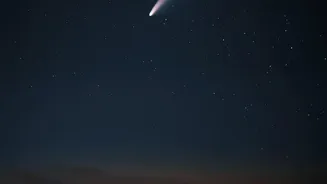
If you missed the peak of the Perseid meteor shower around August 12-13, don't worry. While the main event, which featured up to 100 meteors per hour under ideal moonless conditions, is over, the show isn't entirely finished. The shower remains active
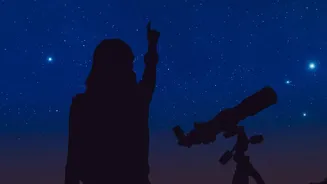
until about August 24. In the week following the peak, you can still catch a few stray “shooting stars” in the late-night and pre-dawn hours. These meteors are leftover debris from the comet Swift-Tuttle, burning up as they enter Earth's atmosphere. For your best chance, find a dark location far from city lights, let your eyes adapt for about 30 minutes, and look towards the northern and northeastern sky. Patience is key, as the rate of meteors will be significantly lower than during the peak.
The Morning Parade of Planets
A special planetary alignment that began earlier in the month continues to grace the pre-dawn sky until around August 18. This “planet parade” offers a chance to see multiple planets spread across the sky at once. Roughly an hour before your local sunrise, look to the east to find several celestial wanderers. Mars, with its distinct reddish glow, will be high in the eastern sky. The giant of our solar system, Jupiter, will appear as a very bright, silvery point of light lower toward the horizon. The ringed planet Saturn will be visible further south. While four planets in this parade have been visible to the naked eye, some, like Mercury, can be tricky to spot in the morning twilight. This pre-dawn display is a beautiful and serene way to start your day.
Saturn Shines Brightly
August is a fantastic month to turn your attention to Saturn. The iconic ringed planet is growing brighter and more prominent in our night sky as it heads towards its opposition in early October. At opposition, Earth passes directly between the sun and a planet, making it appear at its biggest and brightest. Throughout late August, Saturn rises in the east during the evening and remains visible for much of the night, tracking across the southern sky. While its famous rings are only visible through a telescope, the planet itself is a bright, steady, yellowish point of light that is easily distinguishable from the twinkling stars around it. It provides an excellent and reliable target for even the most casual sky-watchers.
Moon Phases and a Close Encounter
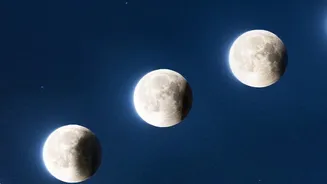
The Moon itself offers some notable moments this month. The First Quarter Moon arrives on August 20, appearing as a perfect half-moon in the evening sky. The following morning, on August 21, early risers can look for a pretty conjunction between the Moon and the planet Mercury just before sunrise. Look toward the eastern horizon between 5:30 and 6:00 AM IST for the best view of the pair sitting close together. The month culminates with a Full Moon on August 28. While this Full Moon will be accompanied by a partial lunar eclipse, the eclipse event will unfortunately not be visible from India. Still, the brightness of the Full Moon will dominate the night sky, making it a poor time for spotting faint stars but a beautiful sight in its own right.
Tips for the Best Viewing Experience
To make the most of these celestial events, a little preparation goes a long way. First, escape light pollution. The bright lights of cities can wash out all but the brightest objects. Head to a rural area, a park, or even a dark corner of your neighbourhood. Second, give your eyes time to adjust. It takes about 20-30 minutes for your eyes to become fully dark-adapted, allowing you to see much fainter objects. Avoid looking at your bright phone screen during this time. Third, check the weather. Clouds are the ultimate obstacle for any stargazer, so look for a clear forecast. Finally, while many of these events are visible with the naked eye, a simple pair of binoculars can dramatically enhance your view, revealing more detail on planets and bringing dimmer star clusters to life.