



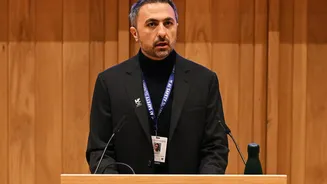


Dario Amodei, CEO of AI firm Anthropic, made a bold prediction: diseases like cancer could be relics of the past within a decade. Is this the optimism of a tech leader, or a real glimpse into a future transformed by artificial intelligence?
The Promise of an 'Age of Miracles'
The claim comes
from a leader at the forefront of AI development. Anthropic, the company behind the AI model Claude, is a major player in the tech industry, and Amodei's statement reflects a growing belief among technologists that AI can fundamentally change the pace of scientific discovery. He argues that AI can compress what might have taken fifty to one hundred years of medical progress into just five or ten. This isn't just a stray comment; Amodei and other AI leaders, like Google DeepMind's Demis Hassabis, envision a future where AI accelerates biological research and drug discovery to an unprecedented degree. The core idea is that AI systems can analyse vast biological datasets far beyond human capacity, identifying patterns and generating hypotheses that could lead to new treatments.
How AI Is Already Fighting Cancer
Beyond future promises, AI is already an active tool in the fight against cancer. In diagnostics, AI algorithms are helping radiologists detect cancers earlier and more accurately from scans like mammograms. Researchers are using AI to analyse complex genetic data from tumours, which helps in personalising treatment plans for individual patients. One of the most significant breakthroughs has been in understanding proteins, the microscopic machines that drive biological processes. AI tools like AlphaFold have predicted the structure of millions of proteins, a task that used to take years of painstaking lab work. Understanding a protein's structure is critical for designing drugs that can target it, especially the malfunctioning proteins that drive cancer growth.
Accelerating the Drug Discovery Pipeline
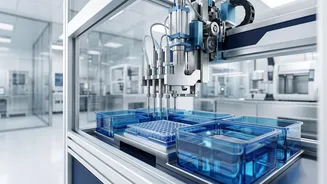
The traditional path to developing a new drug is incredibly long and expensive, often taking over a decade with a low success rate. This is where AI evangelists see the most potential for revolution. AI models can screen billions of potential drug compounds virtually to find promising candidates, a process that used to be a matter of physical trial and error. Companies like Anthropic are already partnering with biotech firms to design new molecules and improve potential drug candidates. In one collaboration, AI helped redesign a part of a therapy's genetic instructions, making it more effective at killing tumour cells in lab tests. By generating better candidates for clinical trials, AI could dramatically reduce the failure rate and cost of drug development.
A Necessary Dose of Reality
For all the optimism, many medical experts and pharmaceutical executives urge caution. They point out that cancer is not one disease, but hundreds of complex and highly variable diseases. A breakthrough against one type may not apply to others. Furthermore, even if AI can identify a promising drug candidate in record time, that molecule must still undergo years of rigorous clinical trials in humans to prove it is both safe and effective. These regulatory and biological realities cannot be compressed by computation alone. Critics also highlight the 'black box' problem, where some AI models arrive at conclusions without developers fully understanding how. Other challenges include ensuring AI models are trained on diverse and unbiased data to avoid worsening health disparities.