




First, What Is El Niño?
Think of the Pacific Ocean as a massive bathtub. Normally, strong winds, called trade winds, push the warm surface water from east to west, towards Asia. This allows colder water to rise up from the depths near South America. El Niño flips this script.
It's a naturally occurring climate phase where these trade winds weaken. As a result, the vast pool of warm water that is normally pushed to the west begins to slosh back towards the central and eastern Pacific. This warming of the ocean surface, sometimes by several degrees, might seem distant, but it's powerful enough to disrupt atmospheric circulation patterns across the entire globe, including the ones that drive India's life-giving monsoon. These events happen every two to seven years and can last for about 9 to 12 months.
The Critical Monsoon Connection
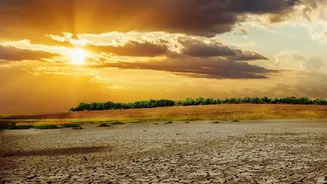
India receives about 70% of its annual rainfall during the southwest monsoon season. The health of the monsoon is directly tied to the rural economy and national food security. The atmospheric changes caused by El Niño have a history of weakening the Indian monsoon. The altered global wind patterns can reduce the flow of moisture towards the subcontinent, leading to delayed onset of rains, long dry spells, and lower overall rainfall. However, the relationship isn't a perfect one-to-one correlation. Not every El Niño year results in a drought. Other factors, like the Indian Ocean Dipole (a similar temperature variation in the Indian Ocean), can sometimes counteract El Niño's drying effect. But the historical data is clear: a strong El Niño significantly increases the probability of a below-normal monsoon, a risk that policymakers and farmers watch with extreme caution. Forecasts for the latter half of 2026 suggest a strengthening El Niño, with the India Meteorological Department (IMD) warning of below-normal rainfall for the rest of the season.
A High-Stakes Gamble for Farmers
For India's agricultural sector, where nearly half the sown area is still rain-fed, a weak monsoon is a direct threat to livelihoods. The Kharif (summer) crops, such as rice, soybeans, pulses, and cotton, are particularly vulnerable. Insufficient or erratic rainfall can delay sowing, stunt plant growth, and ultimately slash yields. Rice, a staple food, is especially sensitive as it requires significant water during its growth phases. A weak monsoon doesn't just mean lower production; it sends ripples through the entire economy. It reduces farmers' incomes, which in turn dampens rural demand for everything from tractors to consumer goods. Furthermore, lower crop output can lead to rising food prices, stoking inflation that affects every household's budget. Livestock is also impacted due to a reduction in the availability of fodder and water.
Urban India Feels the Strain
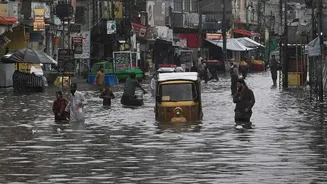
The consequences of a weak, El Niño-influenced monsoon are not confined to rural areas. India's burgeoning cities face a different, yet equally severe, set of challenges. The primary concern is water security. A significant portion of urban water supply depends on reservoirs that are replenished by monsoon rains. Below-normal rainfall means lower reservoir levels, forcing municipal bodies to impose water cuts and rely more heavily on depleting groundwater sources. Beyond water scarcity, El Niño is associated with higher-than-average temperatures and more frequent and intense heatwaves. This not only creates public health risks but also drives up electricity demand for cooling, straining power grids at a time when hydropower generation may also be reduced due to low water levels in dams. Paradoxically, some research suggests that while overall rainfall decreases, the intensity of rain that does fall can increase, leading to short, destructive bursts that cause urban flooding and soil erosion instead of replenishing water tables.