






India’s Next Great Interplanetary Leap
Following the monumental successes of the Chandrayaan moon missions and the Mangalyaan Mars orbiter, ISRO is setting its sights on the second planet from the Sun. The Shukrayaan mission, officially approved by the Union Cabinet in September 2024, represents
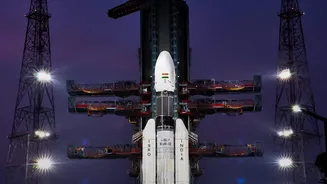
India's next major step in planetary exploration. Scheduled for launch in March 2028 aboard the powerful LVM-3 rocket, the spacecraft will embark on a 112-day journey to reach Venus. This ambitious project places India in an elite club of space agencies that have turned their attention to our enigmatic planetary neighbour, solidifying its reputation as a formidable force in space science.
Why Target the 'Morning Star'?
Venus is a scientific paradox. While it shares a similar size and mass with Earth, it evolved into the solar system's most hostile planet. Its surface is scorched by temperatures hot enough to melt lead, and its atmospheric pressure is over 90 times that of Earth's. Scientists believe Venus may have once been habitable, possibly with liquid water, but suffered a runaway greenhouse effect that transformed it. Understanding why Earth's twin took such a dramatically different path is a key scientific question. The answers could hold vital clues about planetary evolution, climate change models for our own world, and the conditions necessary for life to exist elsewhere in the universe.
Peering Beneath the Sulfuric Clouds
The primary objective of Shukrayaan is to study Venus from orbit, with a special focus on what lies beneath its dense, opaque clouds of sulfuric acid. These clouds have long shrouded the planet in mystery, making its surface and lower atmosphere difficult to observe. The mission is designed to investigate the structure, composition, and dynamics of this thick, toxic atmosphere. By analyzing the gases present, scientists hope to understand the planet's extreme weather systems, its mysterious 'super-rotating' winds, and the processes driving its intense greenhouse effect. The mission will provide a comprehensive global dataset that past missions have been unable to capture.
A Sophisticated Scientific Toolkit
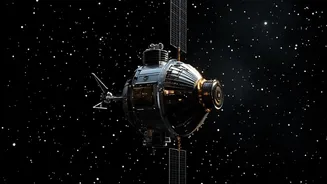
To achieve its goals, the Shukrayaan orbiter will carry a payload of approximately 100 kilograms, comprising around 19 advanced scientific instruments. A key instrument is a high-resolution Synthetic Aperture Radar (SAR), which can pierce through the dense cloud cover to map the Venusian surface with unprecedented detail. This will help identify volcanic hotspots, lava flows, and other geological features. Another groundbreaking instrument will be a ground-penetrating radar, making it the first mission ever to study the planet's sub-surface geology. The mission also features international collaboration, with instruments from Sweden, Russia, and Germany designed to study the atmosphere and its interaction with the solar wind.
A Global Effort for Planetary Science
While Shukrayaan is an Indian-led mission, it is part of a renewed global interest in Venus. NASA and the European Space Agency are also planning missions to the planet around the same time frame, creating a 'Venus renaissance' in planetary science. ISRO's mission includes significant international partnerships, such as the Venusian Neutrals Analyzer (VNA) from Sweden, which will study how solar wind particles interact with the planet's atmosphere. This collaborative approach enhances the mission's scientific output and underscores the global nature of space exploration. By joining forces, international space agencies can paint a more complete picture of Venus than any single mission could achieve alone.