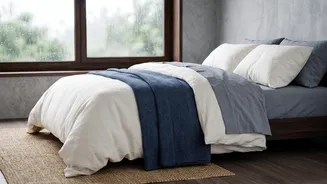







Choose Your Fabrics Wisely
The single most effective change you can make is upgrading your bedding. During humid nights, your body struggles to cool down because sweat can't evaporate into the already saturated air. Synthetic fabrics like polyester or heavy, high-thread-count sheets
trap this moisture and heat, creating a damp, clingy layer against your skin. Instead, opt for natural, breathable materials. Linen is a top performer, as its hollow fibres and loose weave allow for exceptional airflow and it dries quickly, never feeling clammy. Other excellent choices include cotton percale, which has a crisp, airy weave, as well as bamboo and Lyocell, which are known for their moisture-wicking properties and soft feel. The same logic applies to your sleepwear; loose, lightweight cotton or linen pyjamas will serve you far better than synthetics.
Optimise Your Airflow
Even without air conditioning, managing the air in your room can make a world of difference. Stagnant air is humidity's best friend. Creating circulation helps whisk moisture away from your skin, aiding the body’s natural cooling process. If you have a ceiling fan, make sure it’s spinning counter-clockwise to push air downward. For table fans, don't just point them directly at you. Instead, position one fan to pull cool air from an open window (if it's not raining) and another to push hot, stale air out of the room. This cross-ventilation helps replace damp indoor air with fresher, drier air from outside. Even just keeping internal doors open can help moisture disperse throughout the house instead of concentrating in your bedroom.
Actively Dehumidify Your Space
Lowering the actual moisture content in your room is a direct path to comfort. The most effective tool for this is an electric dehumidifier, which pulls water directly from the air. Running one for a couple of hours before you go to bed can bring the room’s humidity down to a much more comfortable level, ideally between 40-50%. If a dehumidifier isn't an option, there are several effective, low-cost alternatives. Placing bowls of natural desiccants like rock salt, baking soda, or charcoal in the corners of the room can help absorb ambient moisture. While they won't work as powerfully as an electric unit, they can make a noticeable difference in smaller, enclosed spaces.
Rethink Your Pre-Sleep Routine
Your habits in the hour or two before bed can either help or hinder your sleep in humid conditions. One of the best strategies is to take a lukewarm shower right before getting into bed. A cold shower can feel refreshing, but it actually causes your body to conserve heat. A lukewarm shower, however, helps kick-start the drop in core body temperature that signals to your brain it's time to sleep. Also, be mindful of what you eat and drink. Heavy, spicy, or fried foods can raise your body temperature as your system works to digest them. High-intensity exercise too close to bedtime can have a similar effect. Instead, opt for a light meal earlier in the evening and allow your body to wind down.
Protect Your Mattress
Your mattress can act like a giant sponge, slowly absorbing moisture from the air and your body, making it feel damp and unhygienic. A breathable, waterproof mattress protector is an essential investment during the monsoon. It creates a barrier against sweat and ambient dampness without trapping heat, so long as you choose a breathable model. It's also a good idea to air out your mattress regularly. On dry, sunny days, strip the bed completely and let it breathe for a few hours. If your mattress feels slightly damp, you can run a fan over its surface to help speed up evaporation before putting fresh, completely dry sheets back on.