







The Misunderstood Nature of Loneliness
We live in an age where loneliness is described as a public health epidemic. The common advice is to 'put yourself out there' and 'make friends.' This places immense pressure on individuals to turn every social opportunity into a quest for a new best
friend. While close friendships are undeniably important for a fulfilling life, an exclusive focus on them misunderstands what it means to feel connected. Loneliness isn't just the absence of a few deep relationships; it's the absence of a broader sense of belonging and community. Research shows that relying only on our closest ties for all our social needs can be draining and, ironically, isolating if those friends are unavailable.
The Surprising Power of 'Weak Ties'
Sociologists have long talked about the 'strength of weak ties.' These are the casual acquaintances in our lives: the barista who knows your coffee order, the neighbour you greet every morning, or fellow members of a book club whose names you might not even know. Studies have found that these low-stakes relationships are crucial for our well-being. A 2014 study highlighted a positive correlation between the number of weak ties and a person's overall happiness. These interactions provide novelty, a sense of being seen and acknowledged, and a feeling of being part of a larger social fabric without the emotional demands that can come with close friendships. They are the gentle threads that stitch us into the world.
Finding Your 'Third Place'
So, where do we find these valuable connections? The answer often lies in what sociologist Ray Oldenburg called 'third places.' If our first place is home and our second is work, the third place is where we go to relax and socialise. These are neutral, accessible spaces like parks, libraries, coffee shops, community centres, or even a local gym. These environments are vital because they allow for 'public relaxation' and facilitate encounters with familiar faces. Engaging in a hobby, volunteering for a cause, or joining a local sports team can provide a sense of purpose and identity outside of home and work. Simply being in the presence of others, even without direct conversation, can create a feeling of 'solitude without loneliness.'
How Casual Contact Rewires Your Brain
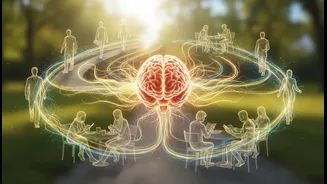
The benefits of these interactions are more than just a feeling; they have a measurable impact. Psychologists have found that even brief, positive interactions with strangers or acquaintances can boost our mood, reduce feelings of anxiety, and increase our sense of belonging. These small moments act as positive distractions, breaking cycles of negative thinking. Neuroimaging scans show that our brains light up differently when we are physically around other people compared to virtual interactions, highlighting the unique power of in-person contact. Each friendly nod, quick chat, or shared smile reinforces our place in a community, contributing significantly to our overall psychological well-being.
Redefining Social Success
The key takeaway is to reframe what 'successful' socialising looks like. Instead of measuring success by the number of close friends acquired, we can see value in building a diverse social portfolio that includes both strong and weak ties. This approach removes the pressure and anxiety that can make socialising feel like a chore. The goal of joining a community choir or a weekend walking group doesn't have to be finding a soulmate; it can simply be to enjoy the activity and the light social contact it brings. Research shows that people who participate in meaningful, challenging activities report being less lonely, even without high levels of social support. Embracing this mindset allows us to reap the anti-loneliness benefits of community activities on their own terms.