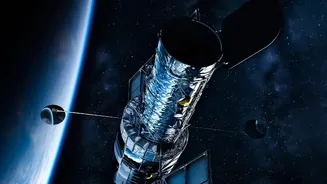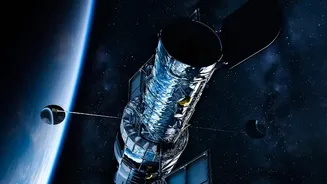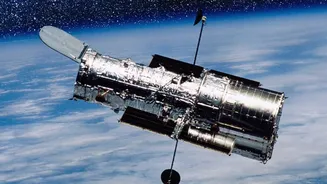






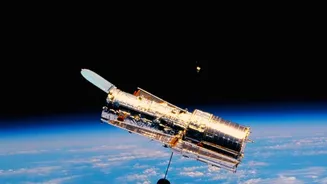
The Hubble Space Telescope, our eye on the universe for over three decades, is in slow-motion trouble. Its orbit is decaying. In a major shift, NASA is now asking the private space industry for ideas to save this legendary observatory.
A Legend in the Stars
For more than 35
years, the Hubble Space Telescope has been one of humanity's greatest scientific instruments. It has brought the cosmos into our homes with breathtaking images, from the 'Pillars of Creation' to distant galaxies. Its observations helped determine the age of the universe, proved the existence of supermassive black holes, and characterized the atmospheres of planets outside our solar system. Launched in 1990, it overcame an early flaw in its main mirror to become a symbol of scientific perseverance and discovery. Its data is used by astronomers globally, making it a true international treasure worth preserving.
A Slow and Silent Fall
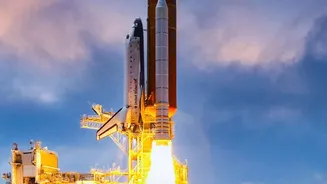
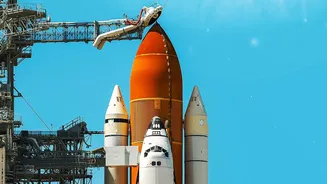
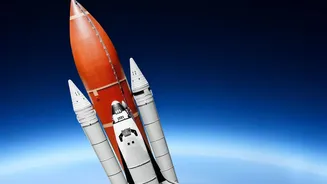
Hubble's problem is simple: gravity. Like all objects in low-Earth orbit, it faces minuscule drag from the Earth's upper atmosphere, which slowly pulls it downward. It currently orbits about 540 km above the Earth, but that altitude is steadily decreasing. Unlike many modern satellites, Hubble has no onboard propulsion system to push itself back up. Without intervention, NASA predicts it will likely re-enter the atmosphere and be destroyed sometime between 2033 and 2034. The last time astronauts boosted its orbit was during a Space Shuttle servicing mission in 2002.
A Call for New Heroes
With the Space Shuttle fleet long retired, NASA no longer has its own vehicle to service the telescope. In a landmark move reflecting the new realities of the space industry, the agency issued a formal 'Request for Information' (RFI) in late October 2026. This is not a contract, but an open invitation for commercial companies to propose how they might save Hubble. The RFI asks for ideas on three possibilities: boosting Hubble to a higher orbit, servicing it with new technology, or planning for its safe and controlled disposal at the end of its life.
Who Could Answer the Call?
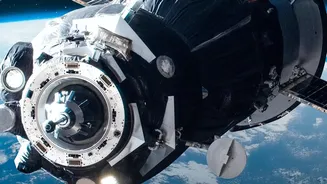
This isn't the first time a private rescue has been considered. In 2022, NASA and SpaceX conducted a joint study to explore the feasibility of using a Dragon spacecraft for a reboost mission, in partnership with the private Polaris Program. While NASA decided not to proceed at that time, the new RFI opens the door to the entire commercial space industry. Companies like SpaceX, which has extensive experience with its Dragon capsule, are seen as likely contenders. The Polaris Program, funded by entrepreneur Jared Isaacman, has also publicly expressed strong interest in leading such a mission. This new call invites innovative solutions from a rapidly growing commercial space sector.
More Than Just a Boost
Any rescue mission is a high_stakes operation. Hubble is a delicate and priceless piece of scientific history. A key challenge is that it was designed to be captured by the Space Shuttle's robotic arm, not to dock with a modern, autonomous spacecraft. Any proposal would need to detail a plan for safely rendezvousing with and capturing the telescope without causing any damage. NASA's RFI specifies that any mission would need to occur by 2032 and that the provider would be responsible for the launch vehicle, spacecraft, and mission operations—including a human crew, if the plan requires one.
A New Model for Space
This initiative represents far more than just maintaining an old satellite. It is a powerful example of the evolving business of space. As government agencies like NASA increasingly focus their resources on ambitious deep_space goals like returning to the Moon and exploring Mars, they are turning to private industry for reliable services in low_Earth orbit. A successful commercial mission to save Hubble would not only extend the life of a beloved observatory but would also serve as a powerful proof_of_concept for the entire in_space servicing market, potentially unlocking new business models for satellite refueling, repairs, and life extension.