

Cosmic Origins: Halley's Comet Dust
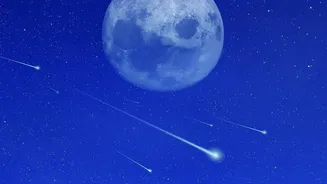
The Orionid meteor shower is an annual event that occurs when Earth passes through the trail of debris left by the famous Halley's Comet. These 'shooting stars' are not stars at all, but tiny fragments of ice and dust, many no larger than a grain of sand,
that were shed by the comet hundreds of years ago. As these particles enter our atmosphere at incredible speeds of around 66 kilometres per second, they burn up, creating brilliant streaks of light across the night sky. It’s a direct link to one of the most well-known comets in history, which itself will not return to our skies until 2061.
Peak Viewing Times for India
Mark your calendars for the night of October 21-22, 2026, which is the peak of the Orionid shower. While the shower is active from early October to early November, your best chance to see the most meteors is during this peak window. The most crucial time for viewing in India will be in the early morning hours, between midnight and dawn. This year, a bright waxing gibbous Moon will be present, which can wash out fainter meteors. The key is to wait until the Moon sets, which will be around 3 a.m. local time, creating a window of darker skies before sunrise.
Where in the Sky to Look
The shower gets its name because its radiant point—the spot from which the meteors appear to originate—is in the constellation of Orion the Hunter. Look for Orion rising in the eastern sky after midnight. However, a common mistake is to stare directly at the radiant. For the best experience, don't. The meteors will appear all across the sky, and those farther from the radiant often have longer, more dramatic trails. Lie back, look up, and take in as much of the sky as possible, rather than focusing on one specific spot.
Finding the Perfect Viewing Spot
The single most important factor for a good viewing experience is getting away from light pollution. City and street lights drastically reduce the number of meteors you will be able to see. For optimal viewing, find a location with a clear, unobstructed view of the sky, far from urban centres. This could be a remote village, a national park, or a hilltop. Places in India known for their dark skies, like Ladakh, Spiti Valley, the Rann of Kutch, or even less-travelled rural areas, are ideal. Even driving 30-40 minutes away from city lights can make a significant difference.
Your Essential Viewing Checklist
You do not need any special equipment like a telescope or binoculars; in fact, they limit your field of view, so it is best to use just your eyes. Comfort is key, as you will be outside for a while. Bring a reclining chair or a thick blanket to lie on. Dress in warm layers, as temperatures can drop significantly in the pre-dawn hours. Pack some snacks and a warm beverage. Most importantly, bring patience. It can take up to 30 minutes for your eyes to fully adjust to the darkness, after which you will see many more stars—and hopefully, meteors.
Tips for a Memorable Night
To preserve your night vision, avoid looking at your phone screen. If you need a light, use a torch with a red filter, as red light is less disruptive to your eyes. Under ideal, dark sky conditions, you might see between 10 and 20 meteors per hour during the peak. However, with the bright Moon this year, it's best to set realistic expectations and simply enjoy the experience. Watching a meteor shower is less about a constant downpour and more about catching moments of sudden, fleeting beauty. So relax, look up, and enjoy the cosmic show.