




The Ultimate Power Problem
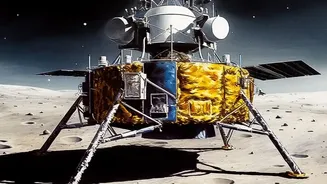
For missions to the Moon and eventually Mars, astronauts will face environments far more hostile than anything encountered in Earth's orbit. Lunar nights, for example, can see temperatures plummet to a staggering minus 200 degrees Celsius. At these temperatures,
the liquid electrolytes inside conventional lithium-ion batteries—the same kind that power your phone and laptop—can freeze solid. This not only stops them from working but can permanently damage the battery's internal structure. On the flip side, lunar daytime temperatures can exceed 100 degrees Celsius, which can also cause standard batteries to fail. This creates a huge problem. Future Artemis astronauts will need reliable power for everything from emergency life support packs to rovers and scientific tools. Relying on current technology would require bulky, heavy, and power-hungry heating and cooling systems just to keep the batteries operational, adding weight and complexity that are launch-killers for deep space missions.
A Solid Solution for Space
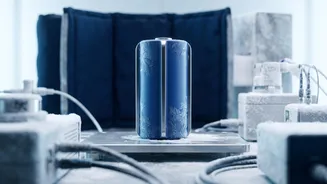
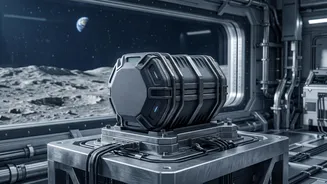
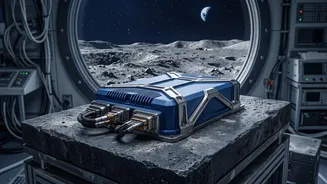
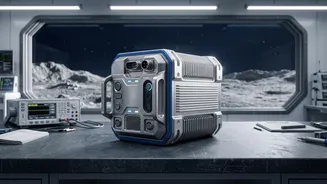
NASA's answer to this extreme challenge is a project called SPEARS, which stands for Solid Power for Extreme Environment Adaptability and Resilience in Space. The key innovation is the move away from liquid electrolytes. Instead, SPEARS batteries use a solid material, such as a specialised ceramic or polymer. This fundamentally changes the battery's resilience. Without a liquid to freeze, boil, or evaporate in a vacuum, the battery becomes inherently safer and more durable. The technology is being developed to survive the brutal cold of deep space. While the batteries do not operate at the lowest possible temperatures, the fact that they survive unscathed means they only need small, lightweight heaters to warm them up to an operational temperature, rather than a heavy system to keep them constantly warm. This could dramatically reduce the overall mass of power systems, a critical factor for any space mission.
More Power, Less Risk
The benefits of solid-state technology go beyond temperature resistance. Conventional lithium-ion batteries carry a risk of 'thermal runaway', a dangerous chain reaction where a damaged cell overheats, potentially leading to fire—a catastrophic event on a spacecraft. Replacing the flammable liquid electrolyte with a solid one makes the battery far more stable and less prone to such failures. This research also aims for huge gains in performance. NASA is targeting solid-state batteries that can offer more than double the energy density of current space-rated batteries. Higher energy density means more power in less mass. This could allow a single battery pack to run longer, or it could allow designers to use smaller, lighter batteries to achieve the same mission goals, freeing up precious space and weight for more scientific instruments or supplies.
Powering the Artemis Generation
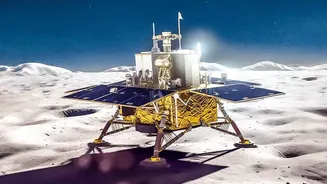
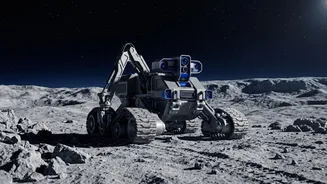
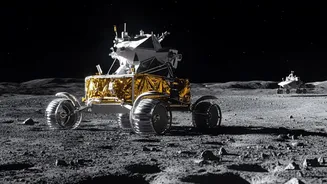
The applications for this new technology are vast and form a cornerstone of NASA's plans for a sustained human presence on the Moon and beyond. For astronauts, it means having a reliable emergency power pack that will work when needed. For exploration, it means powering rovers that can venture into permanently shadowed craters, which may hold water ice but are also among the coldest places in the solar system. It means drills and scientific instruments that can operate for long durations without complex thermal management. This work is part of a broader strategy to build a robust lunar infrastructure, including reliable power grids that can support habitats and resource utilization plants. By developing these core technologies, NASA is laying the groundwork to not just visit the Moon, but to stay there.