




The Junkyard in Orbit
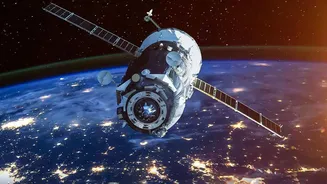
Space may seem vast and empty, but the region just above Earth is becoming dangerously crowded. Decades of satellite launches, rocket stages, and mission-related debris have created a massive field of orbital junk. According to global tracking networks,
there are over 43,000 objects larger than 10 centimetres currently being monitored, but millions of smaller, untrackable fragments are also hurtling through space. Travelling at speeds of up to 28,000 kilometres per hour, even a piece of debris the size of a small pebble can strike with enough force to cripple or destroy a multi-crore satellite. This creates a chain reaction risk known as the Kessler Syndrome, where each collision generates more debris, leading to more collisions. In 2025 alone, the Indian Space Research Organisation (ISRO) had to perform 20 collision avoidance manoeuvres to protect its assets, with nine more conducted so far in 2026, highlighting the escalating nature of this threat.
India’s Vital Eyes in the Sky
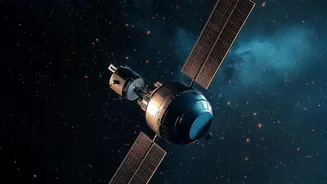
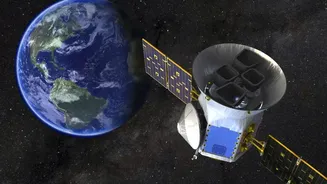
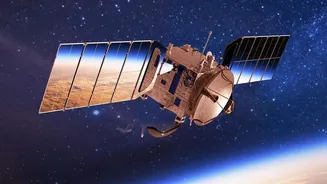
This threat is not abstract; it puts India's most critical infrastructure at risk. The country operates a sophisticated fleet of observation, communication, and navigation satellites. These assets are fundamental to modern life and national security. They provide the data for weather forecasting, disaster management during cyclones and floods, and agricultural planning. They power our GPS systems through the NavIC constellation, enable banking services in remote areas, and form the backbone of military surveillance and communication. Protecting this fleet is paramount. Out of India's 22 active satellites, 20 operate in Low Earth Orbit (LEO), the very region where the space debris crisis is most concentrated. Any loss or damage to these satellites would have immediate and severe consequences on the ground.
An Intelligent Shield: Project NETRA
To counter this orbital menace, ISRO has developed a comprehensive early warning system called Project NETRA (Network for space object TRacking and Analysis). This initiative is designed to give India its own independent capability in Space Situational Awareness (SSA), reducing reliance on data from foreign agencies. At its core, Project NETRA involves a network of radars, telescopes, and data processing centres that can spot, track, and catalogue objects as small as 10 centimetres. A key component is the multi-object tracking radar in Sriharikota, with more powerful radars and telescopes being established across the country, including in Assam and Ladakh, to expand its surveillance capabilities. This network acts as India’s eyes, constantly scanning the heavens for potential threats to its valuable space assets.
How AI and Thrusters Work Together
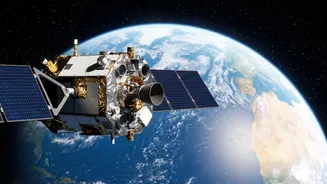
Detecting a potential collision is only half the battle. The real innovation lies in how ISRO now responds. The vast amount of data from Project NETRA is fed into advanced, AI-driven systems. These algorithms can predict the trajectory of thousands of objects and calculate the probability of a collision with an Indian satellite far faster and more accurately than a human team ever could. When the system flags a high-risk conjunction, it can autonomously trigger the satellite's onboard propulsion system. These systems use small engines, or thrusters, to perform a Collision Avoidance Manoeuvre (CAM). By firing a thruster for a short duration, the satellite's orbit can be minutely adjusted—a gentle nudge to move it out of the path of incoming debris. This integration of AI is crucial, as it allows for quicker responses and frees up human operators to focus on the most critical threats.
A Leap in Autonomous Space Safety
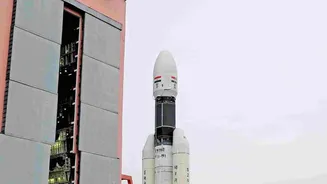
The move towards AI-powered, automated protection represents a major leap forward for India's space program. It is a shift from a reactive to a proactive and predictive safety posture. This capability not only secures India's current fleet but is also essential for future ambitions, including the Gaganyaan human spaceflight mission and the expansion of satellite constellations. Furthermore, it aligns with India's goal of becoming a leader in sustainable space operations, underscored by its 'Debris-Free Space Missions by 2030' initiative. By developing sophisticated autonomous systems, ISRO is not just building a shield for its own assets but also contributing to a more sustainable model for all nations operating in an increasingly congested space environment. This technological self-reliance ensures the long-term security and viability of India’s presence in space.