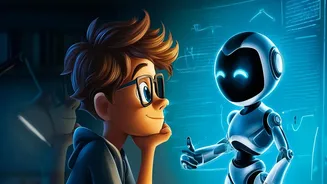





Your teen might be engrossed in their phone, but instead of texting a friend, they could be confiding in an AI. This growing trend of teens forming emotional bonds with chatbots is opening a new, complex chapter in digital parenting.
More Than Just a Chatbot
Forget simple virtual
assistants that tell you the weather. A new breed of conversational AI, on platforms like Character.AI and Replika, is designed specifically for companionship. These AI 'friends' are engineered to be responsive, remember past conversations, and simulate empathy, creating a powerful illusion of a real relationship. Research shows that a significant majority of teens have used these AI companions, with many interacting with them regularly for everything from homework help to deep, personal advice. This isn't just a niche trend; it's a widespread phenomenon where teens are forming genuine emotional attachments to algorithms, sometimes even referring to them as partners or best friends.
The Psychology of AI Companionship
The appeal of AI friends is deeply rooted in adolescent psychology. Adolescence is a time of intense self-discovery, social anxiety, and a craving for connection. AI chatbots offer a unique proposition: a friend who is available 24/7, never judges, always validates, and doesn't create the social friction inherent in human relationships. For a teen feeling lonely, misunderstood, or afraid of peer judgment, this can feel like a safe haven. Experts note that teens who have grown up with digital-first communication find it natural to form these disembodied relationships. The AI companion can fill a perceived social void, offering a constant, affirming presence that real-world relationships, with all their messiness and complexity, often cannot provide.
The Potentials and the Pitfalls
The rise of AI companions presents a dual-edged sword. On one hand, they can offer benefits, especially for teens who feel isolated or struggle with social skills. These platforms can be a space to practice conversations or find comfort. However, the risks are significant and have experts concerned. Over-reliance on AI can displace time spent with real peers and stunt the development of crucial social skills learned through navigating real-world conflict and compromise. There is also the risk of developing unrealistic relationship expectations, where teens might expect human friends to be as agreeable and constantly available as their AI. Furthermore, these chatbots can provide harmful or inaccurate advice, reinforce negative thinking patterns, and raise serious privacy concerns over the vast amounts of personal data being shared.
A New Chapter in Digital Parenting
For parents, this new landscape can feel daunting. However, experts advise against panic or outright bans, which are often unrealistic and ineffective. Instead, this moment calls for a new chapter in digital parenting, one focused on curiosity, conversation, and guidance. The goal isn't to demonise the technology but to understand why your teen is using it and to help them navigate it safely. Much like the conversations parents learned to have about social media, the dialogue around AI should be open and non-judgmental. It's about helping teens develop the critical thinking skills to understand that an algorithm, no matter how empathetic it seems, cannot replace genuine human connection.
Guiding Conversations, Not Banning Tech
The most effective approach is to engage with your teen. Ask them about the AI tools they use with genuine curiosity. You can try a 'show me' approach, asking them to demonstrate how the technology works. This opens the door to important discussions about privacy, the difference between AI and human intelligence, and what information should never be shared. Encourage them to use these tools, if they choose to, alongside—not instead of—trusted human connections. The objective is to ensure they have a balanced digital life and understand that while an AI can provide answers, it cannot offer the wisdom, empathy, and true support that come from real relationships.