







Meet the Indian Ocean Dipole
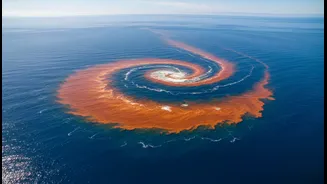
The phenomenon in question is the Indian Ocean Dipole (IOD), an ocean-atmosphere interaction that unfolds across the vast expanse of the tropical Indian Ocean. Think of it as a climatic see-saw. It involves a difference in sea surface temperatures between
the western part of the Indian Ocean (near the Arabian Sea and the African coast) and the eastern part (near Indonesia and Australia). First identified by Indian researchers in 1999, this oscillation has three distinct phases—positive, negative, and neutral—each with profound consequences for India's weather.
The Positive Phase: A Monsoon Booster
During a positive IOD phase, the western Indian Ocean becomes warmer than average, while the eastern part cools down. This temperature difference is crucial. The warmer waters in the Arabian Sea lead to increased evaporation and the formation of moisture-laden clouds. This process strengthens the monsoon winds blowing towards India, often resulting in enhanced rainfall, particularly during the second half of the season. A strong positive IOD can be a saving grace, sometimes counteracting the drought-inducing effects of an El Niño event and delivering much-needed rain. Historical examples from 1997 and 2019 show a strong positive IOD helping to offset El Niño's impact, leading to better-than-expected monsoon performance.
The Negative Phase: A Monsoon Suppressor
Conversely, a negative IOD phase spells trouble. In this scenario, the western Indian Ocean becomes cooler than normal, while the eastern waters near Indonesia warm up. This pattern weakens the monsoon winds and reduces the moisture flowing towards the Indian subcontinent, leading to suppressed rainfall and potential drought-like conditions. A negative IOD can be particularly damaging when it coincides with an El Niño year, as the two phenomena can work together to severely weaken the monsoon, with significant consequences for the country. This phase also tends to increase the formation of cyclones in the Bay of Bengal while suppressing them in the Arabian Sea.
The Dance with El Niño
The IOD does not operate in a vacuum. It interacts with the more famous El Niño-Southern Oscillation (ENSO) in the Pacific Ocean. While the two phenomena can occur independently, they often influence each other. A positive IOD can sometimes mitigate the negative effects of an El Niño on the Indian monsoon, which typically suppresses rain. For instance, even with a strong El Niño, a concurrent strong positive IOD can help normalize rainfall. On the other hand, a negative IOD occurring alongside an El Niño can exacerbate dry conditions, leading to severe droughts. This complex interplay makes forecasting the monsoon a challenging task for meteorologists.
What It Means for India in 2026
Recent reports from mid-2026 indicate that India's monsoon season began with a significant rainfall deficit, partly due to strengthening El Niño conditions in the Pacific. Forecasts suggest a strong El Niño is likely to persist through the season. Meanwhile, the Indian Ocean Dipole has been in a neutral state, but some models suggest a positive IOD could develop later in the winter-spring period. However, forecasts vary, with India's own meteorological department suggesting the IOD may remain neutral. If a positive IOD does develop, it could provide some relief by boosting rainfall in the latter half of the monsoon, potentially offsetting some of the El Niño-induced dryness. This makes the IOD a critical factor to watch for its potential to rescue the faltering 2026 monsoon.