
What Exactly Is a Frisella?
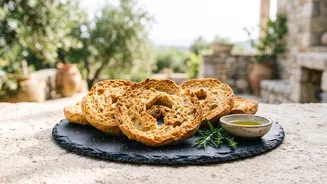
A frisella is a unique type of bread hailing from the sun-drenched southern regions of Italy, particularly Puglia, Campania, and Calabria. Often compared to a bagel or a rusk, it's typically made from durum wheat or barley flour. What truly sets it apart
is the baking process. The dough is first shaped into rings, baked, and then sliced horizontally before being baked a second time at a lower temperature. This double-baking, or 'biscotto' process, removes nearly all moisture, resulting in a rock-hard, incredibly crunchy bread with a very long shelf life. This made it the perfect, durable provision for fishermen and farmers in centuries past.
A Rich History as 'Poor Man's Bread'
Long before it became a trendy appetizer, friselle was known as 'the bread of the Crusaders' and was a staple for sailors and travelers on long journeys. The hole in the middle was practical, allowing the rings to be strung on a rope for easy transport and storage. Its incredible shelf-life made it a reliable food source, a form of sustenance that could be produced in large quantities and stored for months. Historically, two versions existed: a more common one made from barley flour for the working classes, and a more refined version from durum wheat for wealthier families on special occasions.
The Art of Rehydration: 'Sponzare'
The key to enjoying friselle lies in a process called 'sponzare' or 'bagnare', which means to soak or wet. Because they are so hard, friselle are not meant to be eaten dry. The traditional method involves a very quick dip in a bowl of cold water—just a few seconds. In ancient times, fishermen would simply dip them in clean seawater to both soften and season them. The goal is not to make the bread soggy, but to achieve a delightful contrast in texture: a softened, porous top ready to absorb toppings, while the bottom remains firm with a pleasant crunch. Over-soaking is the cardinal sin, as it turns the frisella into a mushy mess.
The Quintessential Topping: A Taste of Summer
Once rehydrated, the frisella becomes a perfect canvas for toppings. The most classic and beloved way to serve it is also the simplest. The rough, porous surface is often rubbed with a clove of fresh garlic, then generously drizzled with high-quality extra virgin olive oil. The crown is a simple topping of fresh, ripe cherry tomatoes, chopped and seasoned with salt and oregano or fresh basil. This combination, known as 'friselle Salentina' in the Salento region, is a pure taste of the Italian summer, where the quality of a few simple ingredients shines through.
Beyond the Basics: Modern and Regional Twists
While the classic tomato topping is hard to beat, the versatility of friselle invites experimentation. In Campania, you might find it served 'caponata' style, with anchovies, tomatoes, and olives. In Calabria, the fiery red onion of Tropea often makes an appearance. Modern variations are endless. Creamy burrata or mozzarella, tuna in oil, capers, anchovies, and grilled vegetables are all popular additions. The sturdy base can handle almost anything you would put on a bruschetta, making it a perfect item for an appetizer spread or a light, satisfying lunch that is both rustic and refreshing.