





The Ghost in the Machine
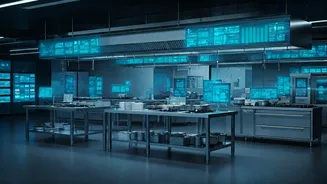
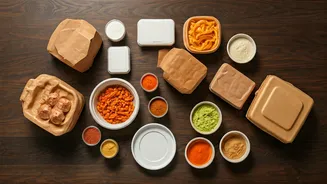
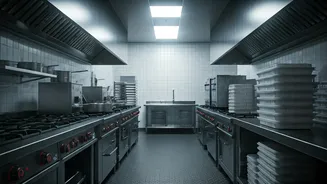
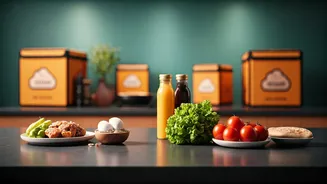
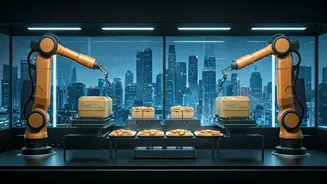
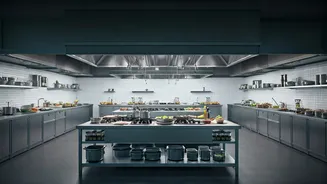
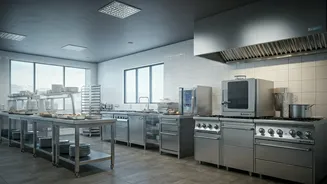
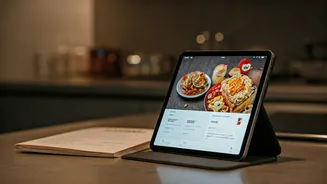
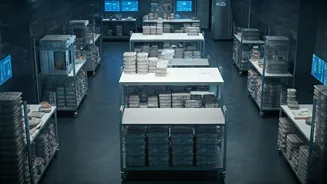
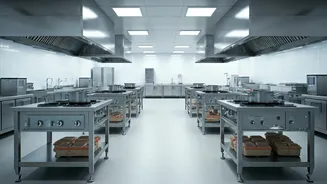
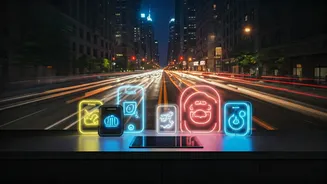
First, let's define the term. A cloud kitchen—also known as a ghost or dark kitchen—is a commercial facility built exclusively for preparing food for delivery. There are no tables, no waiters, and no storefront for customers to walk into. Orders are placed
online via aggregator apps like Zomato and Swiggy or through a brand's own platform, and the food is sent directly to the customer. This model, pioneered and scaled by companies like Rebel Foods with its array of brands like Faasos and Behrouz Biryani, isn't just a restaurant without seats; it's a fundamental rethinking of food service logistics. The Indian cloud kitchen market was valued at approximately USD 1.24 billion in 2025 and is projected to surge to USD 3.69 billion by 2034, growing at a compound annual growth rate (CAGR) of 12.28%. This rapid expansion is fueled by India's rising urbanization, deep internet and smartphone penetration, and a growing consumer appetite for convenience.
The Asset-Light Advantage
The primary threat cloud kitchens pose to legacy chains is economic. Traditional restaurants are burdened by immense capital expenditure: prime real estate, expensive interiors, and large front-of-house staff. A cloud kitchen, by contrast, can operate from a small, low-rent industrial space, slashing setup costs by 40-60% compared to a dine-in establishment. This asset-light model allows for much faster and cheaper expansion. While a legacy chain might spend lakhs to open one new outlet, a cloud kitchen operator can use the same capital to launch multiple delivery-only locations, rapidly capturing new neighborhoods and cities. This financial agility allows them to be more aggressive with pricing and marketing, putting immediate pressure on established players who have higher fixed costs to cover.
Data-Driven and Dangerously Agile
Beyond cost, the biggest competitive advantage for cloud kitchens is their mastery of data and agility. Operating entirely online, they generate a wealth of data on customer preferences, order frequency, and peak demand times. This allows them to engage in data-driven menu engineering, promoting popular dishes and eliminating those that don't sell. Even more powerfully, the multi-brand model allows companies like Rebel Foods and Curefoods to launch, test, and even discontinue entire virtual brands from a single kitchen with minimal risk. If a new pizza concept doesn't take off, they can pivot to a biryani or noodle brand within weeks. For a legacy chain, launching or retiring a brand is a slow, multi-year process involving massive investment and risk. This ability to react to market trends in near real-time is a powerful weapon.
How Legacy Players Can Respond
The outlook for traditional restaurants isn't entirely bleak, but it does demand adaptation. Viewing cloud kitchens as purely a threat is a mistake; they are also an operational model to be adopted. Many established Quick Service Restaurant (QSR) brands are already moving in this direction. Instead of viewing it as an either/or scenario, they are building hybrid models. This involves launching their own delivery-only brands, using cloud kitchens to test new markets before committing to a full-scale restaurant, and streamlining menus for delivery efficiency. Some, like Wendy's in India, have partnered with cloud kitchen experts like Rebel Foods to handle their delivery operations. The future likely lies in a multi-channel approach, where dine-in provides the brand experience and customer connection, while cloud kitchens handle the logistics of scalable, efficient delivery.