


The Unseen Enemy in the Pantry
We often think of mould as the ultimate sign of food spoilage, the final frontier of freshness. But in a humid environment, especially during the Indian monsoon, the battle for freshness is lost long before the first fuzzy spot appears. Humidity acts
as an invisible catalyst, accelerating the decline of your food in ways you can't immediately see. It creates the perfect breeding ground for not just mould, but also bacteria, which can proliferate without any obvious signs. This airborne moisture wages a silent war on the contents of your pantry, affecting everything from taste and texture to nutritional value.
When Crispy Turns to Chewy
The most immediately noticeable victim of humidity is texture. Crispy, crunchy foods are designed to have very low moisture content. Think of papads, wafers, biscuits, and chips. These items are 'hygroscopic', meaning they readily absorb moisture from their surroundings. In a high-humidity kitchen, the air is saturated with water vapour, which these dry goods soak up like a sponge. The result is a disappointing loss of crunch, turning a satisfying snap into a dull, chewy bend. The same process is what causes powders like spices, salt, and flour to form hard lumps, a phenomenon known as caking. This happens as moisture dissolves the surface of the powder particles, which then stick together and solidify when they dry.
The Science of Silent Spoilage
Beyond texture, humidity accelerates two key chemical processes. The first is oxidation. Fats and oils, when exposed to humid air, can go rancid much faster. This is why nuts, seeds, and even cooking oils can develop a stale, unpleasant taste and smell more quickly in damp weather. The second process involves enzymes naturally present in foods like fruits and vegetables. High humidity speeds up these enzymatic reactions, causing produce to ripen, soften, and decay at a much faster rate. Your bananas brown quicker and your leafy greens wilt sooner, not just because of heat, but because the moist air is helping these natural breakdown processes along.
Your Airtight Defence Strategy
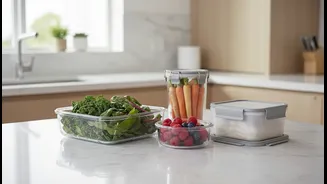
The single most important step you can take is to upgrade your storage. Transfer pantry staples out of their original paper or thin plastic packaging the moment you get them home. Invest in truly airtight containers. Glass jars with rubber-sealed lids are the gold standard because they are non-porous and create a strong barrier against moisture. High-quality, food-grade plastic containers with locking lids are also a great option. Be critical of traditional steel 'dabbas'; unless they have a very tight-fitting modern seal, they may not be enough to block out the pervasive humidity of monsoon season. For extra protection with items like grains, you can even add a food-safe silica gel packet inside the container to absorb any rogue moisture.
Location, Location, Location
Where you store your containers matters almost as much as the containers themselves. The worst spots in the kitchen are near the sink, the stove, or a large window. The area around the sink is naturally damp, while the stove generates steam and heat. Windows can let in sunlight and humidity from outside. The ideal storage location is a cool, dark, and dry cabinet or pantry, preferably elevated off the floor. Moisture can rise from the ground, especially on lower floors, so keeping grains and other dry goods on a shelf is a simple but effective move.
Simple Prep for Longer Shelf Life
A few traditional Indian kitchen practices are scientifically sound ways to combat humidity. Before storing grains like rice and dal for a long period, consider spreading them on a clean cloth and sun-drying them for a few hours; the UV light helps kill any latent insect eggs and the heat drives out moisture. For items like sooji (rava) or besan (gram flour), lightly dry-roasting them in a pan before storing removes excess moisture and extends their shelf life significantly. Finally, always let cooked food cool down to room temperature before sealing it in a container. Packing hot food traps steam, which then condenses into water, creating the perfect moist environment for spoilage.