






Beyond the Gadget Graveyard
Remember the first wave of smart homes? It was a race to accumulate devices. Every surface sprouted a screen, every plug point hosted a new adapter, and coffee tables became a graveyard for remote controls. The flex was quantitative: how many assistants
could you summon? How many apps did you need to control your life? While technologically impressive, it often resulted in a living space that felt more like a cluttered electronics store than a sanctuary. The home was 'smart' in theory, but in practice, it was often complicated, fragmented, and frankly, a bit dumb. The promise of seamless living was lost in a tangle of competing platforms and endless notifications.
The Shift from 'Smart' to 'Intuitive'
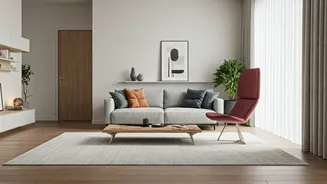
The new frontier of smart living quietly discards this 'more is more' philosophy. Today’s ultimate flex isn't about owning the most gadgets; it’s about having a home with a personalised layout that responds to your life with invisible intelligence. This isn't just about automation (turning lights on at 7 PM). It's about orchestration. It’s a home that knows you work from the study on weekday mornings and need bright, cool light, but prefer the living room with warm, dim lighting and soft jazz on Friday evenings. The technology fades into the background, becoming part of the home’s very architecture and character. The new status symbol is a home that anticipates your needs without you having to ask, creating an experience of effortless comfort.
What Does This 'Flex' Look Like?
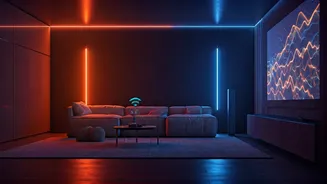
In practice, a personalised layout is a symphony of design and technology. Imagine walking into your home after a long day. The blinds gently lower to a preferred privacy setting, the air conditioning adjusts to your ideal temperature, and a curated playlist begins to play, not from a visible speaker, but from sources integrated into the walls. Your 'work' zone, with its task lighting and activated power outlets, automatically powers down, while your 'relax' zone comes to life. A dinner party setting might trigger a different lighting scheme, a specific music genre, and even adjust ventilation. It's about creating 'scenes' that are not just pre-programmed but are deeply attuned to the rhythms of your family's life. The flex is in the seamlessness, the quiet intelligence that makes your space work for you, not the other way around.
The Philosophy of Invisible Tech
This trend is driven by a design philosophy known as 'ambient computing' or 'calm technology'. The goal is to make technology disappear, weaving it into the fabric of our environment so it can serve us without demanding our constant attention. High-end architects and interior designers are no longer just planning for furniture and fixtures; they're designing digital infrastructure from day one. This involves hiding speakers in walls, integrating smart film on windows that can turn opaque on command, and using sensors to understand movement and occupancy not for surveillance, but for service. The home becomes less a container for technology and more an intelligent organism in its own right. This is a far more complex and subtle achievement than just placing a smart display on a countertop.
Is This Just for the Ultra-Rich?
Currently, a fully integrated, architect-designed responsive home is indeed a luxury. It requires significant investment in both technology and expert design. However, the principles are starting to trickle down. As platforms like Apple HomeKit, Google Home, and Amazon Alexa become more sophisticated, users can create increasingly complex routines that mimic these high-end layouts on a smaller scale. You can create a 'Movie Night' scene that dims the lights, turns on the TV, and adjusts the soundbar with a single voice command. While not as seamless as a professionally integrated system, this DIY approach allows more people to experience the magic of a home that responds to their lifestyle, proving that the desire for intuitive living is a universal one.