






Dal: Our Daily Dose of Goodness
From dal tadka and dal makhani to sambar and varan, lentils are an undeniable cornerstone of the Indian diet. For good reason, too. Dal is a fantastic source of plant-based protein, essential for muscle repair and growth. It's packed with dietary fibre,
which aids digestion and helps maintain stable blood sugar levels. It also provides a wealth of micronutrients like iron, folate, and magnesium. It’s affordable, versatile, and deeply satisfying. In many ways, it’s the perfect foundation for a healthy meal. But there's one crucial nutrient group that dal, and many vegetarian diets, can be low in: Omega-3 fatty acids.
The Flaxseed Factor: An Omega-3 Powerhouse
Enter flaxseeds, or 'alsi' as they are known in Hindi. These tiny, nutty-flavoured seeds are one of nature’s most potent plant sources of Omega-3s. Specifically, they are rich in alpha-linolenic acid (ALA), a type of Omega-3 that our bodies cannot produce on their own. We must get it from our food. ALA is a precursor to other important Omega-3s like EPA and DHA, which are crucial for brain health and are typically found in fatty fish. While the body's conversion of ALA is not perfectly efficient, regularly consuming it is vital for overall health. Beyond Omega-3s, flaxseeds are also loaded with lignans, which have antioxidant properties, and even more soluble and insoluble fibre, making them a true nutritional powerhouse.
Why Your Dal Needs This Upgrade
Marrying dal with flaxseeds is a match made in nutritional heaven. By adding flaxseeds, you are not just adding calories; you are fundamentally enhancing the nutritional profile of your meal. The ALA from flaxseeds helps combat inflammation in the body, which is linked to a host of chronic diseases. Studies suggest that a diet rich in plant-based Omega-3s can support cardiovascular health by helping to manage cholesterol levels and blood pressure. The additional fibre from the seeds works in synergy with the fibre already in the dal, promoting better gut health and increasing satiety, which can help with weight management by keeping you feeling full for longer. It’s a simple way to round out the nutrition of your favourite comfort food.
The Hack: How to Add Flaxseeds Correctly
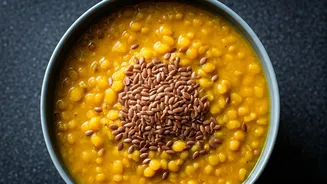
To get the most benefit, you must use ground flaxseeds. Our bodies cannot effectively break down whole flaxseeds to access the nutrients inside. You can buy pre-ground flaxseed meal or simply grind whole seeds yourself in a coffee grinder or mixer. Store the ground meal in an airtight container in the refrigerator to prevent the healthy fats from going rancid. The hack is all in the timing. Do not add the flaxseed powder at the beginning of the cooking process, as prolonged high heat can degrade some of the delicate Omega-3 fats. The best methods are: 1. **Stir It In at the End:** The simplest way. Once your dal is cooked and off the heat, stir in one to two tablespoons of ground flaxseed per serving. It will thicken the dal slightly and blend in seamlessly. 2. **Add to the Tadka (Carefully):** You can add the flaxseed powder to your tadka in the last 15-20 seconds of cooking, just before you pour it over the dal. Sizzle it briefly with the spices, but avoid burning it. 3. **Use as a Garnish:** Simply sprinkle a spoonful of ground flaxseed on top of your bowl of dal before serving, just as you would with fresh coriander.
Getting the Taste and Texture Right
A common concern is whether this will alter the beloved taste of dal. When used correctly, the change is minimal and often pleasant. Ground flaxseed has a mild, nutty flavour that complements the earthiness of most lentils. The key is to start small. Begin with one teaspoon per serving and see how you like it. You can gradually increase to a tablespoon or two as you get accustomed to the taste. In terms of texture, flaxseeds will act as a slight thickening agent, which can be desirable in dals that are a bit too watery. If your dal is already very thick, you might want to adjust the consistency with a little extra water. For most common dals like toor, masoor, or moong, the addition is barely noticeable.