



A New Frontier for Indian Enterprise
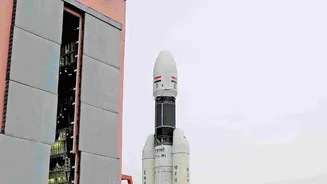
For decades, space exploration in India was the exclusive domain of the Indian Space Research Organisation (ISRO). But the landscape is rapidly changing. Following the global trend of commercializing space and boosted by the success of missions like Chandrayaan-3,
the Indian government has actively opened the sector to private players. The establishment of IN-SPACe (Indian National Space Promotion and Authorization Center) acts as a single-window agency to facilitate and guide private companies, creating a fertile ground for innovation. This policy shift has ignited the ambitions of numerous startups, who are no longer content with just supplying components; they are aiming to lead their own missions, and the Moon is a key destination.
The Pioneers of Private Lunar Exploration
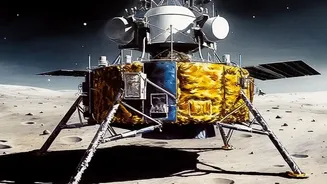
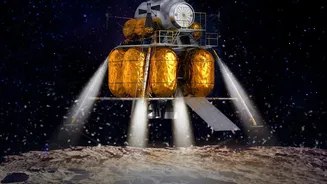
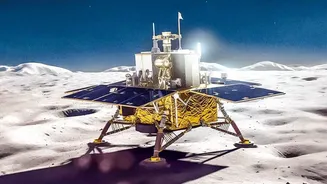
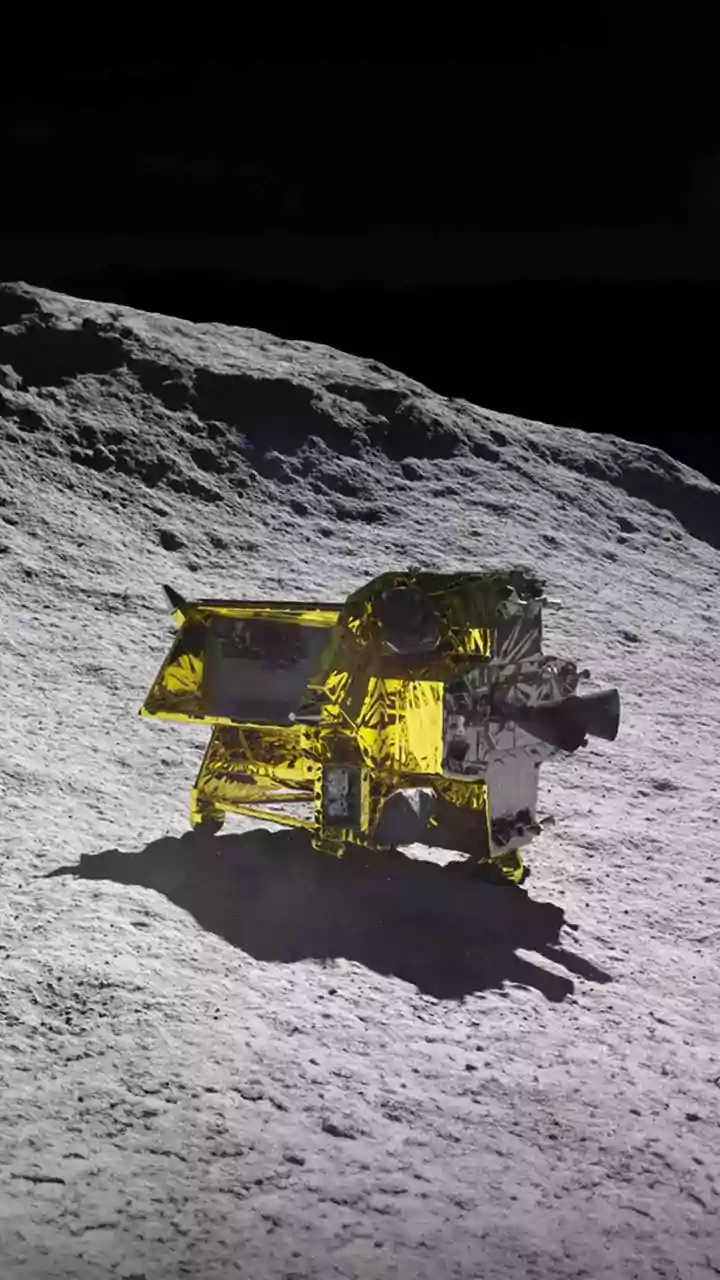
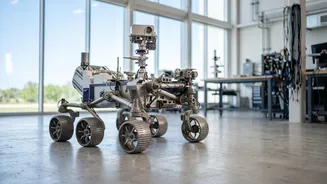
While many startups are focused on satellites and launch vehicles, a few are venturing into the challenging field of surface mobility. The legacy of TeamIndus, India's only entry for the Google Lunar XPRIZE, looms large. Though the competition ended without a winner reaching the Moon, TeamIndus proved that a private Indian entity could design and build a lunar rover, inspiring a new generation. Today, companies like ORBITBeyond are setting up facilities in India to design and manufacture lunar landers and rovers, drawing on talent with experience from ISRO's Chandrayaan missions. Based in Bhubaneswar, the company plans to leverage India's precision engineering and materials ecosystem for its lunar hardware. Another Bengaluru-based startup, Kepler Aerospace, has founders with experience in lunar nano-rover projects, indicating a deep talent pool emerging in the country.
What Exactly Makes a Rover 'Low-Cost'?
India has earned a global reputation for 'frugal engineering' in space, with ISRO's missions costing significantly less than their international counterparts. Private startups are adopting and amplifying this philosophy. The low-cost approach isn't about using cheap parts, but about smart design and efficient processes. These companies often use smaller, lighter rovers with focused capabilities, reducing the overall mass that needs to be launched—a major cost driver. They also leverage shared launch opportunities, piggybacking on larger missions to reduce expenses. Furthermore, by using commercially available off-the-shelf components where possible and focusing on iterative design, startups can avoid the lengthy and expensive development cycles of traditional space agencies. The goal is to build reliable, mission-specific rovers without the multi-billion dollar price tag.
The Business of the Moon
What does a commercial rover actually do? The business models are varied and evolving. One primary market is payload delivery. Scientific institutions, universities, and even other countries can pay an Indian startup to transport their instruments to the lunar surface for experiments. Another significant opportunity lies in data collection and resource prospecting. With the lunar south pole confirmed to hold water ice, companies are planning missions to map these resources. This data is invaluable for future long-term lunar habitation and for agencies like NASA, which runs the Commercial Lunar Payload Services (CLPS) program to buy such services. There are also possibilities in technology demonstration, where a company can prove its systems work on the Moon, and even marketing or 'space burial' services. The aim is to create a steady cadence of missions, turning the Moon into a new economic zone.
India's Role in the Global Lunar Economy
The emergence of Indian startups in the lunar rover space is not happening in a vacuum. It aligns with a global surge in lunar activity, with NASA, China, and private companies from the US and Europe all planning numerous missions. However, India's private sector has a distinct advantage: a proven ecosystem of low-cost, high-reliability engineering, supported by a world-class national space agency. As ISRO plans its own future missions, including a collaborative one with Japan (LUPEX), the private sector is positioned to become a crucial partner, supplying hardware, services, and eventually, entire missions. This public-private synergy could make India a globally competitive destination not just for launching satellites, but for conducting complex operations on the Moon and beyond, heralding a new chapter in the nation's space journey.