

Setting Up Your Countertop Garden
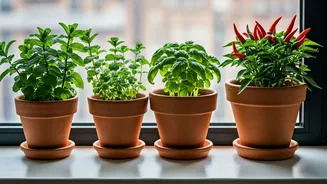
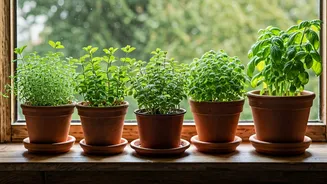
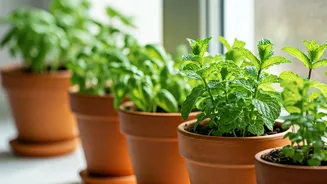
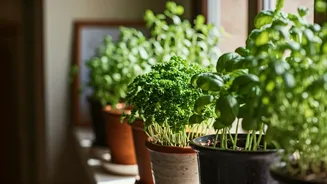
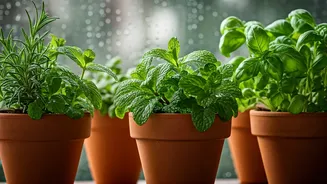
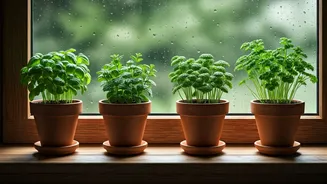
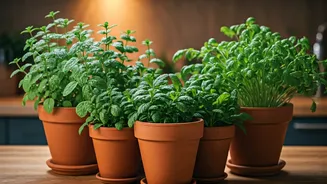
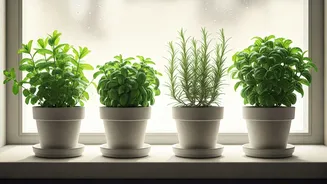
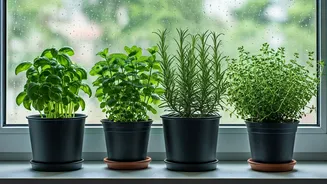
Before you bring home your plants, let’s get the basics right. The success of your kitchen counter garden depends on three things: pots, soil, and location. Choose small to medium-sized terracotta pots, as they are porous and prevent waterlogging, which
can be a major issue during the humid monsoon. Make sure every pot has drainage holes. For soil, use a light, well-draining potting mix. You can find pre-made mixes at any nursery, or create your own by combining garden soil, cocopeat, and compost. This blend holds moisture without becoming soggy, which is crucial for healthy roots. Finally, find a home for your herbs. A kitchen window that receives a few hours of indirect sunlight is perfect. Even during the overcast days of the rainy season, this spot will provide enough light for your herbs to thrive.
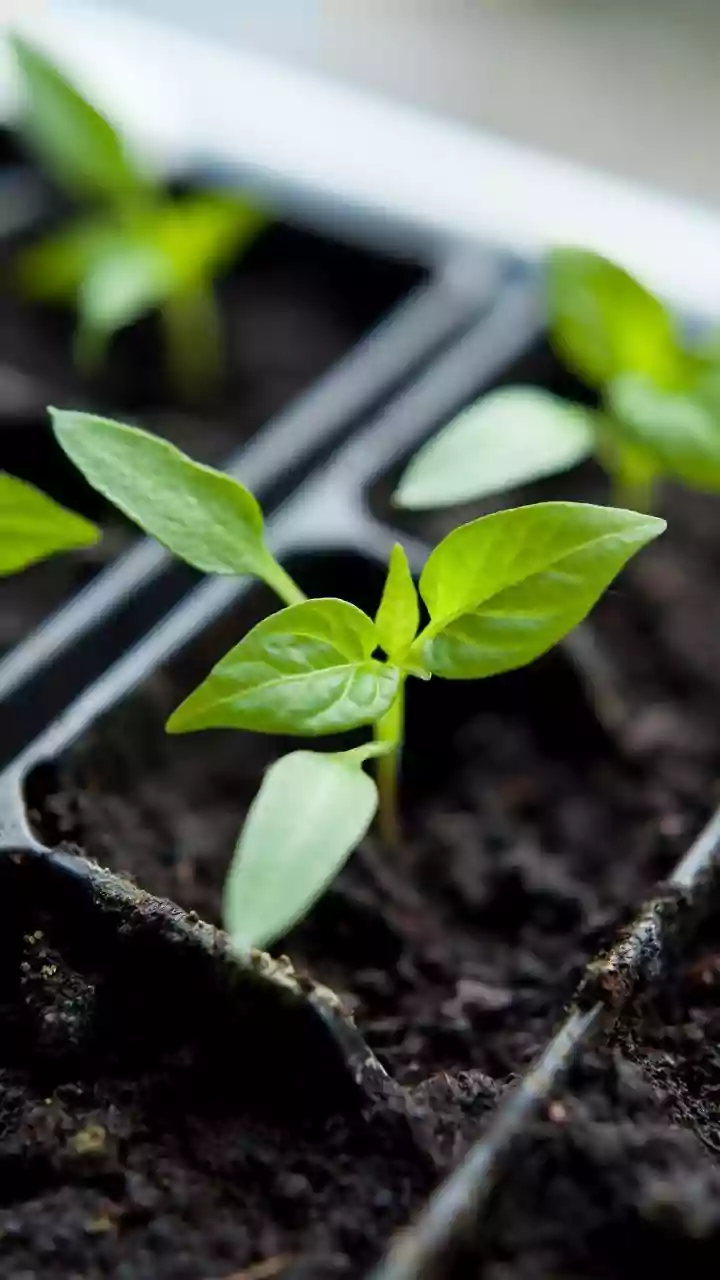
1. Holy Basil (Tulsi)
No Indian home is truly complete without a Tulsi plant, and it happens to be an excellent candidate for your indoor garden. Revered for its medicinal and spiritual properties, Tulsi is also a hardy herb that adapts well to indoor conditions. It thrives in the warmth and humidity of the monsoon. Place your pot in a spot where it can get at least four to six hours of sunlight daily, like a south-facing window. If you’re starting from seeds, sprinkle them on moist soil and press them down gently; they should germinate in one to two weeks. Keep the soil consistently moist but not waterlogged. A key tip to ensure your Tulsi plant becomes bushy is to regularly pinch off the flowering buds (manjaris). This encourages the plant to produce more leaves, giving you a steady supply for your morning tea or for soothing a monsoon-induced cold.
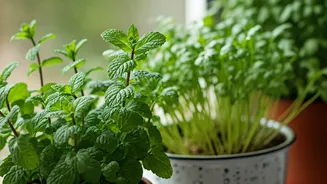
2. Mint (Pudina)
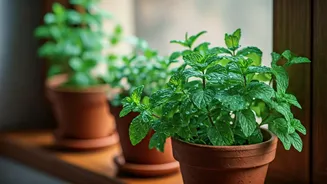
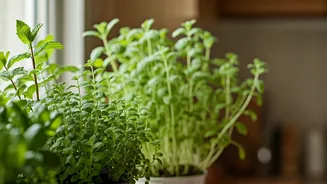
Mint is arguably one of the easiest herbs for a beginner to grow. It is famously resilient and grows so vigorously that it's often recommended to keep it in a pot to prevent it from taking over your garden. This makes it perfect for a contained kitchen-counter setup. Mint loves moisture, making the humid monsoon its ideal growing season. You can easily propagate it from a healthy stem cutting from a bunch you bought at the market. Just place the stem in a glass of water, and within a week or so, you'll see roots begin to form. Once the roots are established, plant it in a wide pot filled with a mix of soil, cocopeat, and compost. Mint is not a sun-loving plant and prefers partial shade, which is abundant during the rainy season. Keep the soil consistently moist, and you’ll have fresh pudina for your chutneys, raitas, and refreshing drinks all season long.
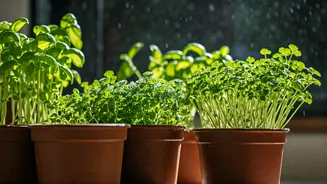
3. Coriander (Dhania)
The satisfaction of garnishing a curry with coriander plucked fresh from your own plant is unmatched. While some find it tricky, the monsoon is actually an ideal time to grow coriander, thanks to the cooler temperatures and ample moisture that prevent the plant from bolting (flowering prematurely). The key is to start with good-quality whole coriander seeds, which you can lightly crush to improve germination. Soaking them overnight before sowing can also speed up the process. Plant the seeds in a pot that is at least six inches deep to accommodate its taproot. Use a well-draining soil mix and water it only when the top inch feels dry. Coriander needs about four to six hours of indirect sunlight, so a bright windowsill is a perfect spot. Harvest the leaves regularly to encourage new growth, ensuring a continuous, flavourful supply for your kitchen.
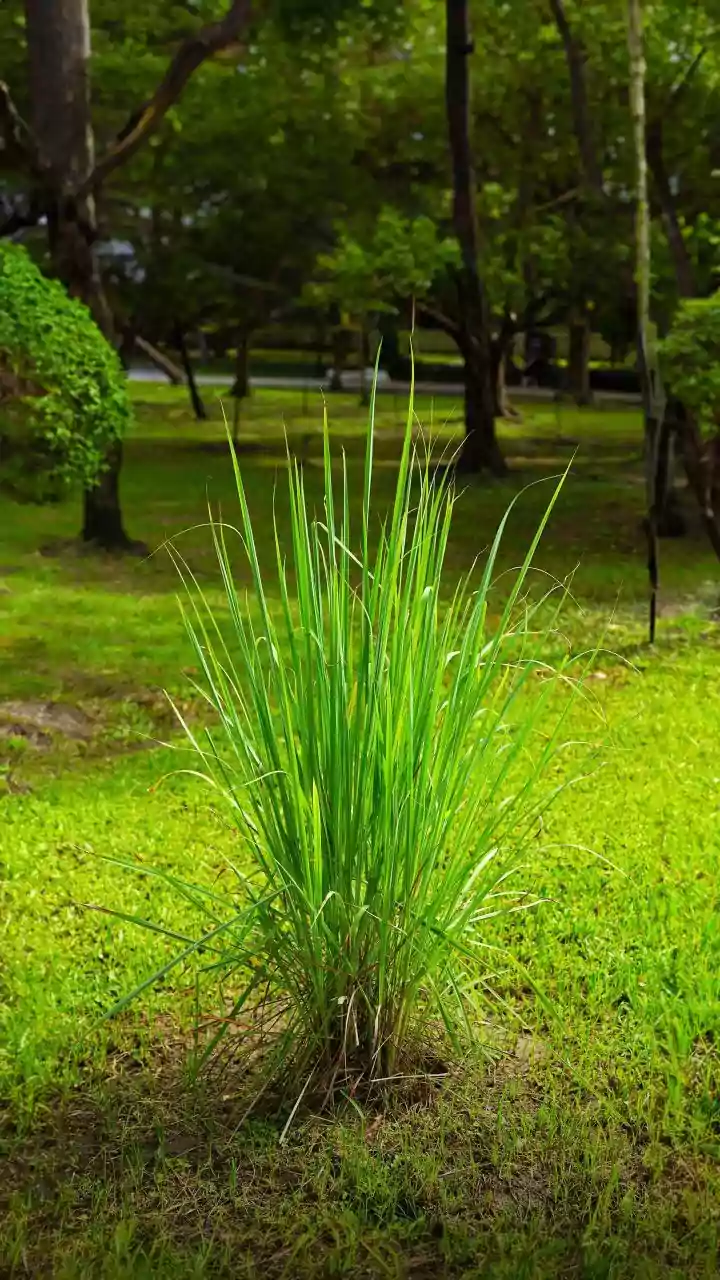
4. Lemongrass
Known for its distinct citrusy aroma and flavour, lemongrass is a staple in many Asian cuisines and makes for a wonderfully fragrant tea. It is a tropical plant native to India, so it naturally thrives in the warm, humid conditions of the monsoon. Growing it on your kitchen counter is surprisingly simple. You can start a new plant from a fresh stalk bought from the grocery store. Just place the stalk's base in a glass of water, and roots will begin to appear in a couple of weeks. Once a good root system develops, you can transplant it into a pot with well-draining soil. Lemongrass needs plenty of water and sun, so pick a sunny spot on your counter and ensure the soil remains moist. Besides its culinary uses, the plant also acts as a natural mosquito repellent, an added bonus during the rainy season.