






The Martian Mobility Problem
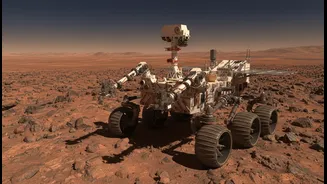
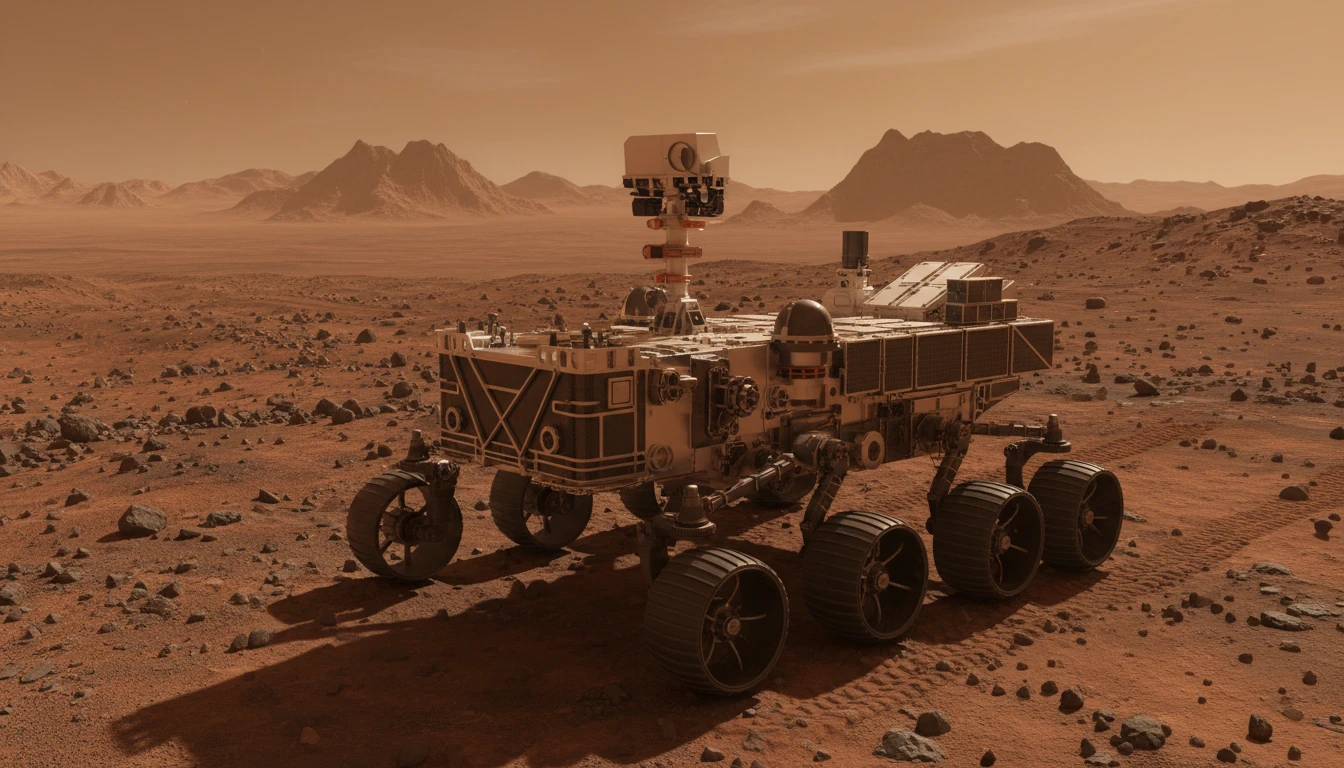
For more than two decades, NASA rovers have been our robotic eyes and feet on Mars. From Sojourner to the long-serving Spirit and Opportunity, and now the active Curiosity and Perseverance rovers, these wheeled laboratories have transformed our understanding
of the planet. Yet, they face fundamental limits. Even the mighty Perseverance travels at a top speed of just over 0.15 kilometres per hour, and its six-wheeled rocker-bogie suspension system, while robust, cannot access steep crater walls, deep canyons, or rugged mountains where some of the most compelling scientific clues may lie hidden. The wear and tear on Curiosity's wheels from sharp rocks highlighted the challenges of long-duration surface missions. To truly unlock Mars's secrets, NASA needs robots that can go farther, faster, and into places previously thought unreachable.
Enter the STRIDE Initiative
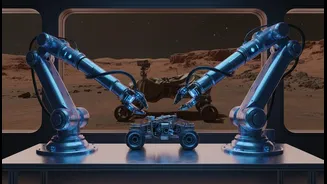
In response to this challenge, NASA has introduced the Science Transport and Robotic Innovation for Deployment and Exploration (STRIDE) initiative. Announced in July 2026, this program represents a strategic shift, leveraging public-private partnerships to accelerate innovation. With a total potential value of around $17 million, NASA has awarded contracts to seven companies to develop and mature next-generation mobility technologies. The goal is to foster a range of concepts—from advanced wheeled rovers to aerial and even multi-robot systems—that could form the backbone of future Martian exploration, including the ambitious goal of returning samples from Mars to Earth. The companies selected are a mix of established aerospace giants and agile newcomers, each bringing a unique perspective to the problem of traversing Mars.
AeroVironment: Masters of the Martian Skies
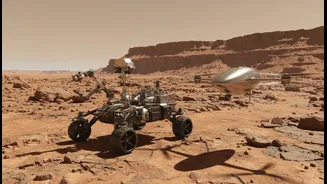
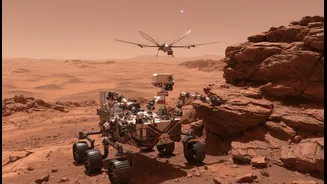
AeroVironment is the company behind the revolutionary Ingenuity Mars Helicopter, which proved that powered, controlled flight is possible in the thin Martian atmosphere. Their involvement in STRIDE strongly suggests a focus on next-generation aerial mobility. Future Mars drones could serve as scouts for rovers, explore otherwise inaccessible areas like cliffsides, or even transport small samples. Building on Ingenuity’s success, AeroVironment is uniquely positioned to develop more advanced, capable, and potentially autonomous flying machines for planetary science.
Astrobotic and Intuitive Machines: Lander Experts Eyeing the Surface
Astrobotic and Intuitive Machines are key players in NASA's Commercial Lunar Payload Services (CLPS) program, building landers to deliver science to the Moon. Their expertise lies in successfully landing on and operating in extraterrestrial environments. Both companies have been developing their own lunar rovers. Their inclusion in STRIDE allows them to apply that experience to the unique challenges of Mars. They could be developing robust rover platforms, advanced landing and deployment systems, or integrated lander-rover mission concepts tailored for the Red Planet.
Venturi Astrolab: Building a Workhorse Rover
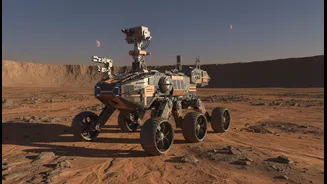
Venturi Astrolab is already developing its Flexible Logistics and Exploration (FLEX) rover, designed to be a versatile transporter for both cargo and astronauts on the Moon and Mars. Their approach is focused on creating a standardized, highly capable mobility platform. Under the STRIDE contract, Astrolab will likely adapt and advance its modular rover design, focusing on the durability, power, and autonomy required to operate for extended periods under harsh Martian conditions and support a new era of complex scientific missions.
Honeybee Robotics: The Veteran Toolmaker
A subsidiary of Blue Origin, Honeybee Robotics has a long and storied history of providing critical systems for NASA missions, including drills, robotic arms, and sample collection tools used on nearly every Mars rover. Their deep experience with the Martian environment at a practical, mechanical level is invaluable. For STRIDE, Honeybee could be developing novel mobility subsystems, such as specialized wheels or legs for extreme terrain, or advanced robotic arms and instruments that are tightly integrated with a new kind of mobile platform.
Ground Control Robotics and MEI Technologies: New Innovators
Ground Control Robotics and MEI Technologies (now part of Aegis Aerospace) represent the fresh thinking that NASA is keen to foster. As newer or more specialized players, they bring agility and potentially disruptive ideas to the table. They might be exploring cutting-edge concepts in autonomous navigation software, cooperative robotics where swarms of small robots work together, or entirely new forms of locomotion inspired by nature. Their work could lead to breakthroughs in how robots perceive and interact with their environment, making exploration safer and more efficient.