


1. Makhan Mishri
No Janmashtami bhog is complete without Makhan Mishri. This simple offering is believed to be Krishna's absolute favourite, earning him the affectionate name 'Makhan Chor' or butter thief. It symbolises the pure, sweet love between a devotee and the divine.
The preparation is incredibly simple and requires no cooking, making it the perfect start to your festive offerings. It represents the essence of devotion in its purest form. To prepare it, take about one cup of fresh, unsalted white butter, preferably homemade by churning cream. Let it soften slightly at room temperature. In a bowl, gently mix the butter with two to three tablespoons of 'mishri' or rock sugar crystals. Avoid overmixing. Just before offering, it is traditional to add a fresh Tulsi (holy basil) leaf on top, as Tulsi is considered very dear to Lord Krishna.
2. Dhaniya Panjiri
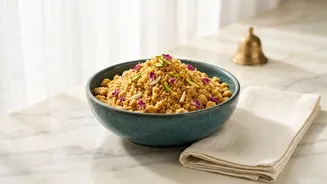
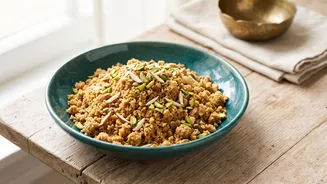
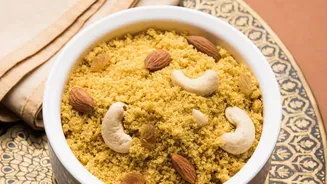
Dhaniya Panjiri is a quintessential prasad prepared especially for Janmashtami, often used to break the fast. Made with coriander seed powder, ghee, sugar, and an assortment of dry fruits, it's a fragrant and nutritious offering. Unlike other flour-based panjiris, this version uses dhaniya, which has a unique, aromatic flavour and is considered sattvic (pure). To make it, heat about half a cup of ghee in a heavy-bottomed pan. Add one cup of coriander powder and roast on a low flame until it turns golden brown and aromatic. To this, add chopped nuts like almonds, cashews, and grated dry coconut. You can also add fox nuts (makhana) and melon seeds for extra texture and nutrition. Roast for another couple of minutes before turning off the heat. Let the mixture cool down completely, then add three-quarters of a cup of powdered sugar and a pinch of cardamom powder. Mix well and your Dhaniya Panjiri is ready.
3. Panchamrit
Panchamrit, which translates to 'five nectars', is a sacred concoction used in Hindu rituals. It is made from five core ingredients: raw cow's milk, curd (yogurt), ghee (clarified butter), honey, and sugar. Each ingredient holds symbolic meaning: milk for purity, curd for prosperity, ghee for strength, honey for sweetness and unity, and sugar for bliss. This no-cook recipe is essential for the puja and is distributed as 'charanamrit' (nectar from the lord's feet) to devotees. To prepare Panchamrit, simply combine one cup of raw milk, half a cup of curd, one tablespoon of ghee, one tablespoon of honey, and two tablespoons of sugar in a clean bowl. Whisk them together until well blended. Many families also add chopped nuts, banana slices, or a few strands of saffron. A Tulsi leaf is always added before offering it to the deity.
4. Gopalkala
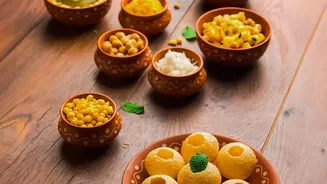
Gopalkala, also known as Dahi Poha, is a savoury and refreshing dish that reflects Krishna's playful childhood. It is said to be a mix that young Krishna would share with his friends, the 'gopalas'. The dish is a simple yet flavourful mix of flattened rice (poha), yogurt, cucumber, and a few spices, making it a light and wholesome bhog. To make it, start by washing half a cup of thick poha and letting it drain. In a mixing bowl, combine the poha with half a cup of yogurt, finely chopped cucumber, and a pinch of salt and sugar. For the tempering, heat a teaspoon of ghee and add cumin seeds, chopped green chilli, and grated ginger. Pour this tempering over the poha mixture. Finally, stir in some grated coconut and pomegranate seeds for a burst of colour and freshness. Mix everything gently and serve.
5. Mewa Laddoo
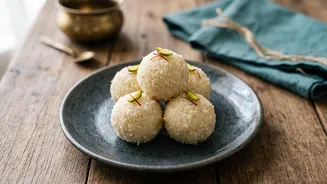
Laddoos are a festive favourite across India, and Mewa Laddoo, made with a rich assortment of dry fruits and nuts, is a perfect energy-boosting offering for Janmashtami. They are simple to make, require minimal cooking, and can be prepared in advance. These laddoos are not just delicious but also packed with nutrients from the nuts and seeds. To make easy Mewa Laddoos, start by lightly roasting a cup of mixed nuts like almonds, cashews, and pistachios in a little ghee. You can also add seeds like melon or poppy seeds. Separately, roast about half a cup of grated dry coconut until fragrant. Let all the roasted ingredients cool down. Transfer them to a grinder and pulse a few times to get a coarse mixture. In a bowl, combine this mixture with half a cup of powdered sugar or jaggery powder and a pinch of cardamom powder. Bind the mixture by adding a few tablespoons of warm ghee. Mix well and shape into small, round laddoos while the mixture is still warm.
6. Makhana Kheer
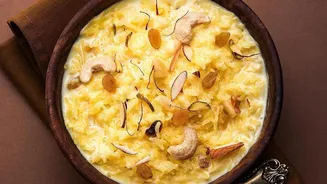
A sweet, creamy kheer is a wonderful addition to any festive thali. Makhana Kheer, made with puffed lotus seeds (fox nuts), is a lighter and healthier alternative to rice-based kheer, making it ideal for those observing a fast. The makhana softens in the milk, creating a rich, pudding-like consistency that is truly divine. To prepare it, lightly roast one cup of makhana in a teaspoon of ghee until they are crisp. Set aside and lightly crush about half of them. In a heavy-bottomed pan, bring one litre of full-cream milk to a boil. Add both the whole and crushed makhana to the boiling milk and simmer on low heat. Stir occasionally to prevent sticking. Continue to cook until the milk thickens and the makhana pieces become tender. This may take about 20-30 minutes. Add sugar to taste, along with a quarter teaspoon of cardamom powder and chopped nuts like almonds and pistachios. Simmer for another five minutes before turning off the heat. This kheer can be served warm or chilled.