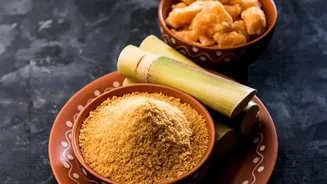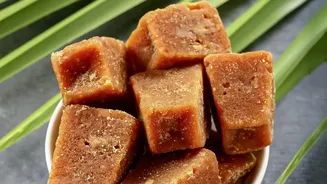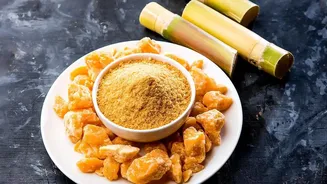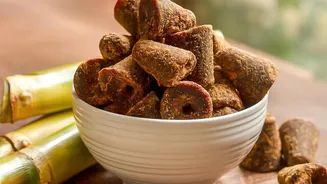


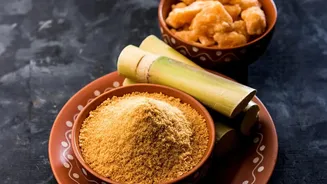
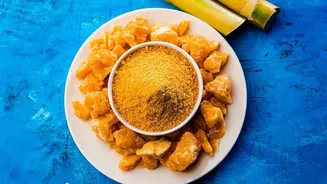

As winter arrives, many Indian kitchens swap white sugar for the comforting, golden glow of jaggery, or 'gur'. Believed to be a healthier, natural alternative, its place in our winter diet is assured. But is it truly superior?
The Golden Staple: What Is Jaggery?
Jaggery is a traditional,
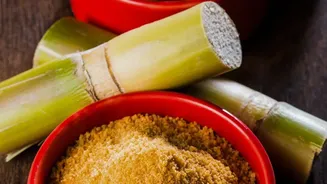
unrefined sweetener made by boiling raw, concentrated sugarcane juice until it solidifies. Unlike its white counterpart, it is not centrifuged, a process that separates molasses from sugar crystals. This minimal processing allows jaggery to retain the molasses, which is responsible for its characteristic brown colour, complex flavour, and its reputation for being nutrient-rich. Available in solid blocks, granular form, or even as a semi-liquid, it is a cornerstone of Indian cuisine, especially in winter sweets and warming drinks.
The White Crystal: Understanding Refined Sugar
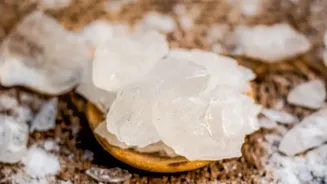
White sugar is the result of an intensive industrial refining process. After sugarcane juice is extracted, it undergoes multiple stages of processing, often involving chemicals like sulphur dioxide, to clarify, filter, and bleach it. The process is designed to remove all 'impurities' — which includes the molasses, minerals, and vitamins naturally present in sugarcane. The end product is almost pure sucrose (around 99.7%), giving it that familiar white, crystalline appearance and a neutral sweet taste without any other flavour notes.
A Clash of Nutrients and Calories
Here's where the debate gets interesting. Gram for gram, jaggery and white sugar have an almost identical calorie count, with both providing around 380-387 calories per 100 grams. The key difference lies in the nutritional fine print. Because jaggery retains molasses, it contains trace amounts of minerals like iron, magnesium, and potassium, which are completely stripped from white sugar. However, the term 'trace' is crucial. To get a significant amount of these minerals, you would need to consume a very large quantity of jaggery — at which point the massive sugar intake would negate any benefits. For example, a typical 10-gram serving provides only a small fraction of your daily iron needs.
The Blood Sugar Surprise
One of the most persistent myths is that jaggery is safer for those managing blood sugar. The evidence suggests the opposite. The Glycemic Index (GI), which measures how quickly a food raises blood glucose, is actually reported to be higher for jaggery (around 84) than for white sugar (around 65). This means jaggery can cause a faster, sharper spike in blood sugar levels. For individuals with diabetes or insulin resistance, this makes jaggery just as problematic as white sugar, and neither should be considered 'safe'.
The Winter Wellness Question
In many Indian households, jaggery is a winter must-have, believed to generate body heat and boost immunity. The warming effect is real, but it's simply a result of the body metabolising a dense source of calories. Its use in traditional remedies for coughs and colds is common, as it can soothe the throat. While it contains some antioxidants and minerals that white sugar lacks, relying on it as a primary source of nutrition or as a health supplement is misguided. The core of winter wellness lies in a balanced diet, not just in the type of sweetener you use.
The Verdict: Moderation Trumps Colour
The deep brown hue of jaggery signifies the presence of molasses, not a decisive health advantage. While it is less processed and contains a few extra minerals, it is calorically identical to white sugar and can raise blood sugar even faster. Jaggery offers a richer, more complex flavour that is wonderful in traditional dishes, but it is not a health food. The choice between jaggery and white sugar is more about taste and culinary tradition than about health. The real path to a healthier diet isn't about swapping one sugar for another, but about reducing the overall intake of all added sweeteners.