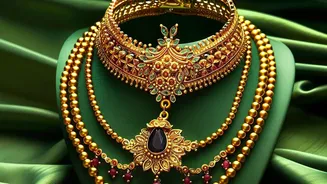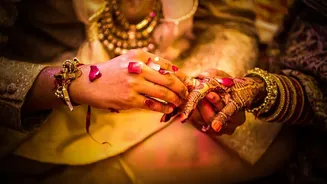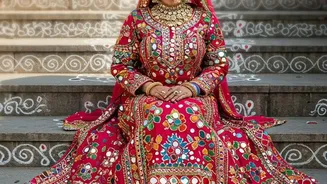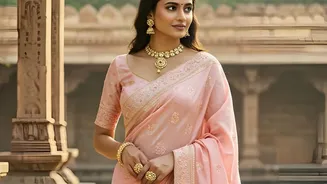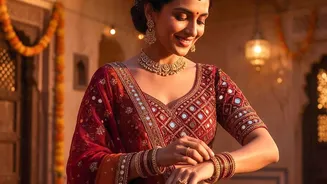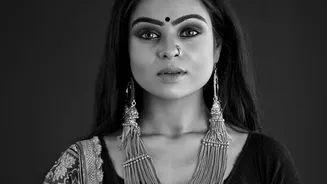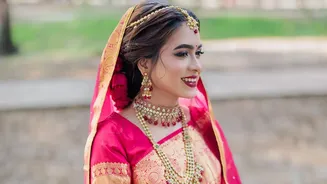


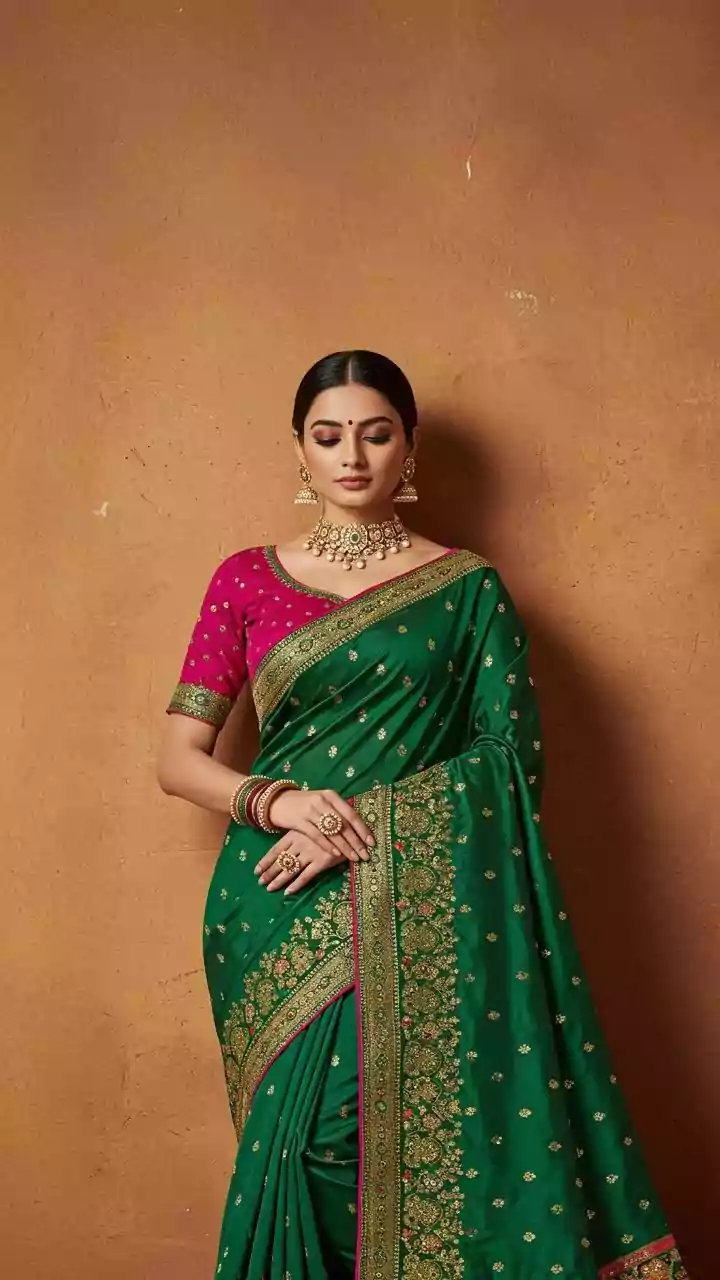

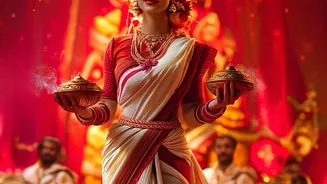
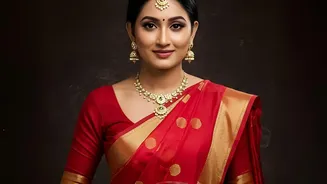
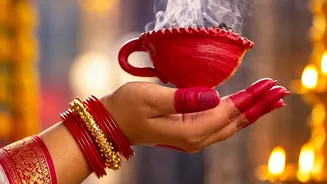
The image of an Indian bride is incomplete without the warm glow of gold jewellery. But beyond its dazzling beauty, why is this precious metal a non-negotiable part of her wedding trousseau? The reasons are woven deep into tradition and family.
More Than Just an Ornament
In Indian
culture, gold is far more than just a beautiful accessory; it's a powerful symbol of prosperity, purity, and good fortune. When a bride is adorned with gold, it represents the blessings of her family for a future filled with happiness and wealth. In Hindu tradition, gold is intrinsically linked to Goddess Lakshmi, the deity of wealth and prosperity. Gifting gold is seen as invoking her divine grace upon the new household, ensuring the couple's life together begins on an auspicious note. This belief is so ingrained that many major life events and festivals, not just weddings, are marked by the purchase or gifting of gold.
A Legacy of Financial Security
Historically and legally, the gold a bride receives is considered 'Stridhan'—her absolute wealth. The term, derived from the Sanskrit words 'Stri' (woman) and 'Dhan' (wealth), refers to the gifts she receives before, during, and after marriage. This tradition was established to provide women with a form of financial security they could control independently. Unlike dowry, which is a demand made by the groom's family and is illegal, Stridhan is a voluntary gift given to the bride for her exclusive use. This asset, often in the form of intricate jewellery sets, is intended to be a safety net she can rely on throughout her life, easily liquidated in times of need.
Connecting Generations Through Heirlooms
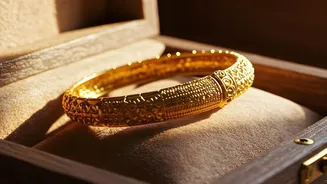
Much of a bride's gold jewellery carries a story that spans generations. It’s common for a mother or grandmother to pass down cherished pieces to the new bride. These heirlooms, whether a layered 'Saath Noli Haar' from Bengal or classic 'Kadagas' from Coorg, are not just valuable ornaments but tangible connections to family history and lineage. Wearing a piece that belonged to an ancestor is a way of carrying forward their blessings and keeping family traditions alive. This practice infuses the wedding with deep sentimental value, linking the bride to the women who came before her. Even new jewellery is often purchased with a timeless quality, intended to become the heirlooms of the future.
The Purity and Symbolism of Gold
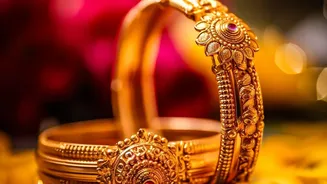
Gold is considered a pure and sacred metal in Indian culture, believed to ward off negative energy. Its incorruptible nature—it doesn’t rust or tarnish—is seen as a metaphor for a strong, enduring marriage. Each piece of jewellery worn by the bride has its own significance. The 'Maang Tikka' on her forehead represents wisdom, the 'Nath' or nose ring honours Goddess Parvati, and the bangles are a sign of marital prosperity. The most sacred piece is the 'Mangalsutra', a gold necklace the groom ties around the bride's neck, symbolising their eternal bond and his vow to protect her. These ornaments collectively create a protective aura and signify her new status as a married woman.
Modern Brides and Timeless Traditions
While the core traditions remain strong, the modern Indian bride is also redefining her relationship with gold. Today's trousseaus often feature a mix of classic, heavy temple jewellery alongside contemporary, minimalist designs. Brides may opt for gold plated pieces or fuse gold with diamonds and other gemstones for a more personalised look. Designers are also offering custom services, allowing couples to engrave their jewellery with initials or significant dates. This evolution shows that while styles may change, the fundamental importance of gold in a wedding trousseau—as a symbol of love, security, and heritage—remains as radiant as ever, seamlessly blending the old with the new.