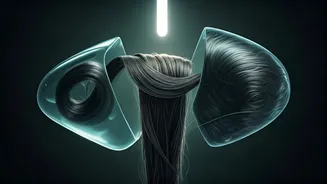









Why Your Hair Is So Vulnerable When Wet
To understand why wet hair care is so important, we need a quick science lesson. Think of each hair strand as being covered by a protective layer of overlapping scales called the cuticle. When your hair is dry, these cuticles lie flat, protecting the inner
core (the cortex). But when you wash your hair, water molecules penetrate the strand, causing it to swell. This process, known as hygral fatigue, lifts the cuticle scales, leaving them open and exposed. In this state, your hair is significantly weaker and more elastic, almost like a stretched-out rubber band. It's far more susceptible to snapping, stretching, and breaking from even minor friction or tension.
The “Now”: Modern Stressors That Raise the Stakes
So, hair has always been weak when wet. What's changed? Our environment and our habits. Urban pollution isn't just bad for our lungs; particulate matter settles on our hair, causing oxidative stress that degrades the hair's protein structure. Many of us in India also deal with hard water, which is high in minerals like calcium and magnesium. These minerals build up on the hair, making it feel rough, look dull, and become even more brittle when wet. Add to this the increased popularity of chemical treatments—colouring, straightening, keratin treatments—and the frequent use of heat styling tools. All these factors create cumulative damage, weakening the hair's baseline strength. When this already-compromised hair gets wet, its vulnerability is magnified exponentially.
Upgrade Your Washing Technique
Great wet hair care begins in the shower. Instead of piling your hair on top of your head and scrubbing vigorously, focus the shampoo on your scalp, where oil and dirt accumulate. Use your fingertips (not your nails) to gently massage the scalp. The lather that rinses down the lengths of your hair is sufficient to clean them without causing unnecessary friction. If you have particularly tangled or dry hair, consider using a pre-shampoo oil or conditioning treatment. This creates a protective barrier that reduces the amount of water the hair shaft absorbs, minimising swelling and cuticle damage.
The Art of Detangling
Never, ever try to rip a brush through sopping wet, unprotected hair. This is the fastest way to cause breakage and split ends. The golden rule is to detangle only when your hair has some 'slip'. After shampooing, apply a generous amount of conditioner, focusing on the mid-lengths and ends. While the conditioner is still in your hair, use your fingers or a wide-tooth comb to gently work through any knots. Start from the ends and slowly work your way up to the roots. This method allows the comb to glide through the hair with minimal resistance, preventing the tearing and snapping that happens when you detangle dry or unprotected wet hair.
Rethink How You Dry Your Hair
The traditional fluffy terrycloth towel is one of the biggest culprits of hair damage. The rough texture creates immense friction against your raised hair cuticles, leading to frizz and breakage. It's time to ditch the vigorous towel rub. Instead, gently squeeze out excess water with your hands. Then, switch to a soft microfiber towel or even a clean, old cotton t-shirt. Instead of rubbing, use a patting or 'plopping' motion to blot the water out. This is far gentler on the hair cuticle and significantly reduces the risk of creating frizz and damage while your hair is in its most fragile state.
Post-Shower Protection Is a Must
Your wet hair care routine doesn't end when the towel comes off. Before you even think about heat styling, apply a protective product. A good leave-in conditioner can help restore moisture and keep the cuticle smooth, while a heat protectant spray is non-negotiable if you plan to use a blow dryer. Even if you're air-drying, a small amount of serum or hair oil applied to the ends can help seal the cuticle as it dries, locking in moisture and protecting it from environmental stressors throughout the day. Think of these products as the final shield for your vulnerable hair.