
Why We Need Infrared Vision
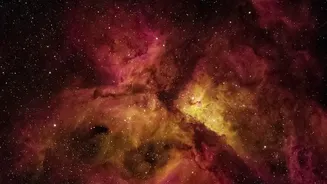
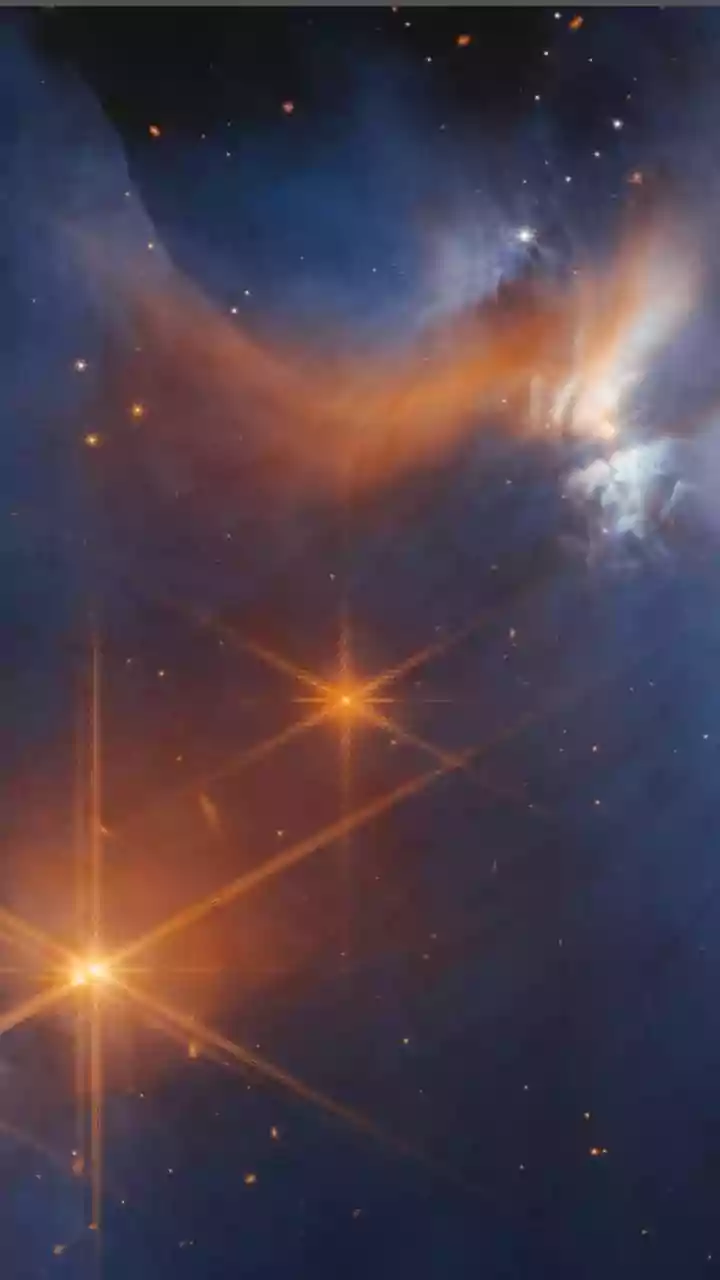
Imagine trying to see a flickering candle through a thick fog. That’s the challenge astronomers face when trying to observe star formation. Stars are born inside vast, dense clouds of cosmic gas and dust that block visible light, the kind our eyes can see.
These stellar nurseries are effectively opaque. However, infrared light, which has a longer wavelength, can penetrate these dusty clouds far more easily. This allows instruments like those on the James Webb Space Telescope (JWST) to peer inside and witness the processes leading to star and planet formation. There's another critical reason for using infrared: the expansion of the universe. As the universe expands, the light traveling from the most distant, and therefore earliest, galaxies gets stretched. Light that started as visible or even ultraviolet is shifted to redder wavelengths, a phenomenon called 'redshift'. For the very first galaxies, this light is stretched all the way into the near- and mid-infrared parts of the spectrum by the time it reaches us. So, to see the cosmic dawn, we must look for this ancient, redshifted infrared glow.
The Technology Behind the Time Machine
The 'eyes' of telescopes like the JWST are its highly advanced instruments, specifically designed to capture this faint infrared light. Key among them are the Near-Infrared Camera (NIRCam) and the Mid-Infrared Instrument (MIRI). These are not ordinary cameras. Their sensors are made from materials like mercury-cadmium-telluride, designed to be exceptionally sensitive to the specific wavelengths of infrared light. NIRCam focuses on the near-infrared range (0.6 to 5 microns), ideal for detecting light from the very first stars and galaxies as they formed. MIRI, on the other hand, observes the mid-infrared range (5 to 28 microns). This is crucial for seeing the glow of slightly warm dust in regions where new stars and planets are taking shape and for detecting cooler objects. To achieve the required sensitivity, these instruments must be kept incredibly cold—MIRI operates at a chilling -266 degrees Celsius—to prevent their own heat from interfering with the faint signals from deep space.
From Faint Glow to Cosmic Map
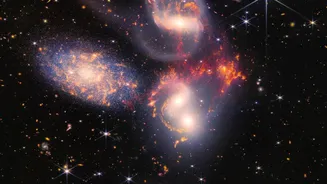
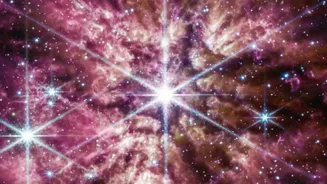
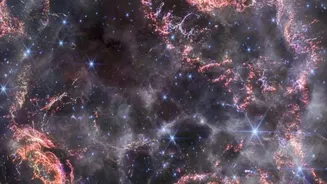
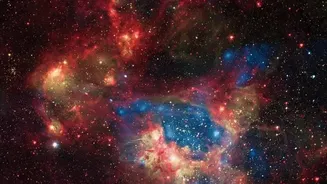
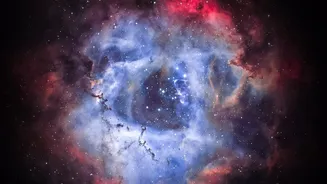
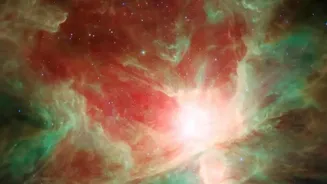
Capturing infrared light is only the first step. The raw data received from the telescope is a collection of energy signatures, not a beautiful photograph. Scientists use a technique called spectroscopy to analyze this light. Spectrographs spread the light out into its constituent wavelengths, much like a prism creates a rainbow. By examining the spectrum, astronomers can identify the chemical composition, temperature, and density of the gas and dust where stars are forming. For instance, the presence of specific elements or the signature of molecular hydrogen jets, which are like signposts for active star formation, can be identified. By combining data from different infrared filters, researchers can then reconstruct a visual image, assigning colors to different wavelengths to create the breathtaking cosmic landscapes we see. These images reveal cavities carved out by stellar winds, glowing ionized hydrogen, and the 'ghostly glow' of newborn stars that were previously completely hidden.
Unveiling the Universe's Hidden Youth
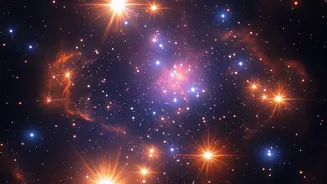
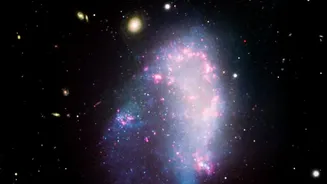
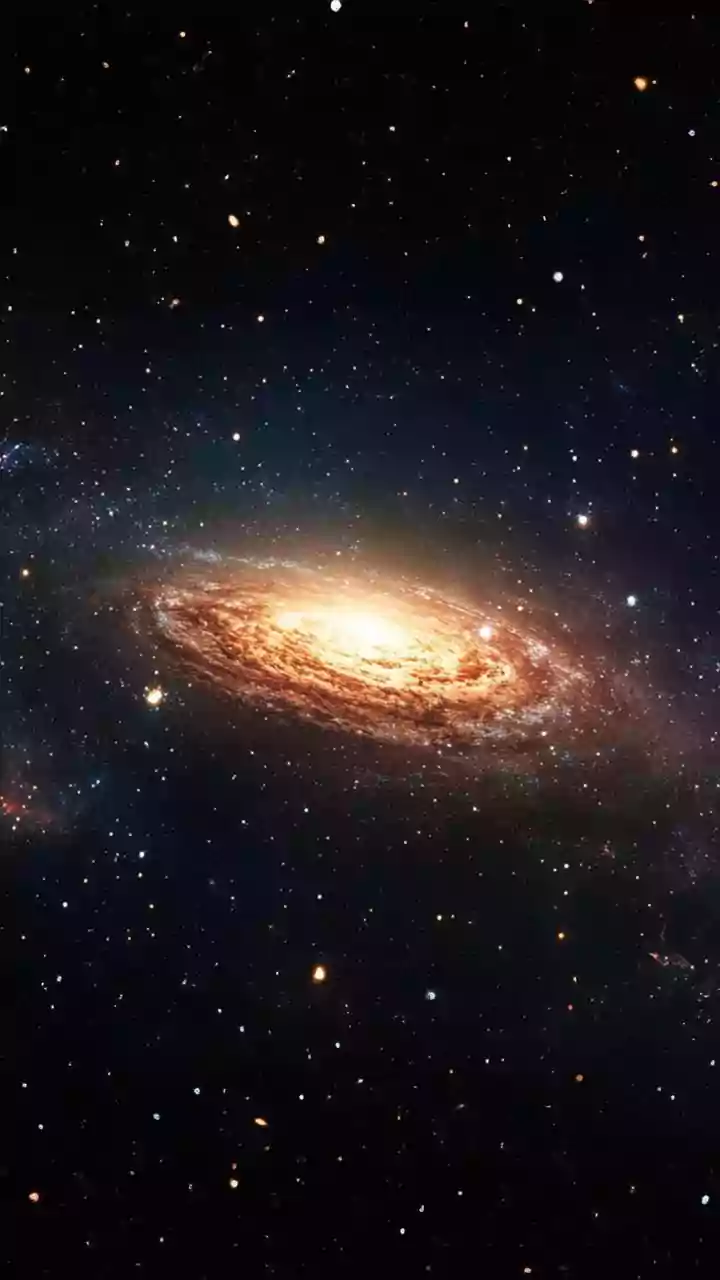
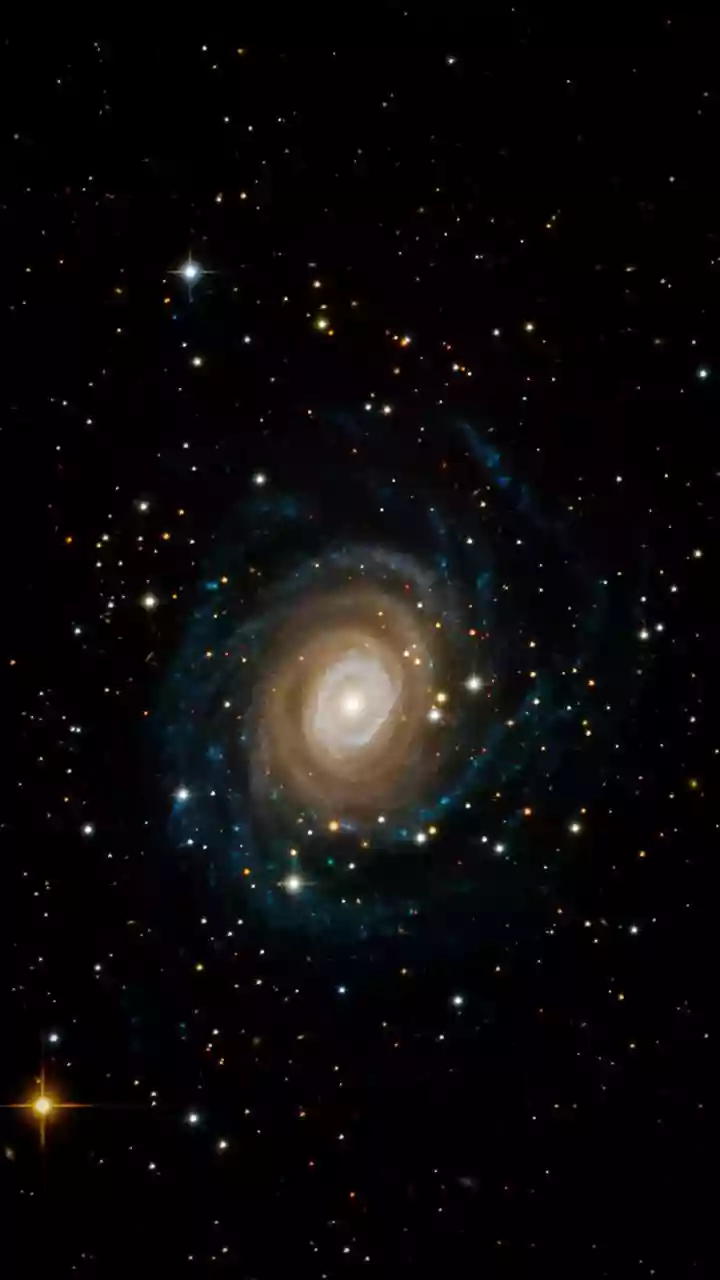
Thanks to this infrared technology, our understanding of the early universe is being rewritten. Astronomers using the JWST have discovered galaxies that are far more massive than theories had predicted for that early epoch. By peering through the dust, they have found surprisingly large populations of faint, low-mass stars that were previously unaccounted for, suggesting early galaxies may have had much more stellar mass than estimated. Recent findings have shown that star formation in the early universe may have happened in rapid, intense bursts rather than gradually. These powerful sensors have detected star clusters in galaxies that existed just 460 million years after the Big Bang, offering the first-ever glimpse of such structures so early in cosmic history. These discoveries challenge our models of cosmic evolution and provide crucial data points that help us understand how we got from a universe of hot gas to the star-filled cosmos we know today.