






The Ancient Secret Revealed: Amla
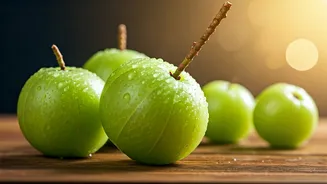
The fruit in question is Amla, also known as the Indian Gooseberry. For centuries, this small, tart, green fruit has been a cornerstone of Ayurvedic medicine, revered for its immense health benefits. While traditionally used for everything from immunity
to digestion, its profound effects on skin health are now gaining significant attention in the modern beauty world. Amla is considered one of the most potent natural sources of Vitamin C on the planet, containing significantly more than an orange. This, combined with a host of other powerful compounds, makes it a true superfruit for your skin.
A Crash Course in Antioxidants
To understand why Amla is so effective, we first need to talk about antioxidants and free radicals. Think of free radicals as unstable, chaotic molecules created by things like UV radiation, pollution, and even stress. They damage healthy skin cells by stealing their electrons, a process called oxidative stress, which leads to premature ageing, fine lines, and dullness. Antioxidants are your skin's heroes. They are generous molecules that donate an electron to neutralize free radicals, stopping the chain of damage before it starts. Amla has one of the highest antioxidant capacities of any fruit, making it exceptionally good at protecting your skin from this daily environmental assault.
Boosting Collagen for Firmer Skin
One of Amla's most celebrated skin benefits is its ability to boost collagen production. Collagen is the protein that acts as the scaffolding for your skin, keeping it firm, plump, and elastic. As we age, our bodies produce less collagen, which is when we start to see sagging and wrinkles. Vitamin C is an essential building block for collagen synthesis; without it, the process slows down dramatically. Since Amla is incredibly rich in a highly stable and absorbable form of Vitamin C, it provides your body with the exact tool it needs to build and maintain healthy collagen levels, promoting a more youthful and resilient complexion from the inside out.
A Brighter, More Even Complexion
If you struggle with dark spots, uneven skin tone, or hyperpigmentation, Amla can be a game-changer. Its high Vitamin C content helps to inhibit the enzyme responsible for producing excess melanin, which is the pigment that causes dark spots. This action helps to naturally lighten and brighten the skin, fading discoloration over time. Furthermore, Amla possesses anti-inflammatory properties that can soothe redness and irritation, making it beneficial for those with sensitive or acne-prone skin. Its antibacterial qualities also help in managing breakouts, contributing to a clearer overall appearance.
How to Incorporate Amla into Your Routine
The beauty of Amla is its versatility. You can reap its benefits both internally and topically. One of the most popular methods is drinking Amla juice, often diluted with water, which helps purify the blood and nourish the skin from within. You can also find Amla powder, which is easy to add to smoothies or yogurt. For a more direct approach, Amla powder can be mixed with ingredients like honey or yogurt to create a brightening face mask. When using it topically for the first time, especially if you have sensitive skin, it’s always wise to do a patch test as it is naturally acidic. Consistency is key; visible improvements in skin tone and texture typically take a few weeks of regular use.