








The Search for a Lost Capital
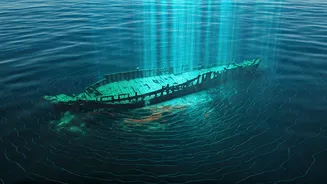
Deep beneath the Bay of Bengal, off the coast of modern-day Poompuhar in Tamil Nadu, a high-tech search is underway for a city lost to time. Poompuhar, also known as Kaveripoompattinam, was the illustrious port capital of the early Chola kings, a hub
of global trade, and a centre of culture immortalised in Sangam literature like 'Silappathikaram' and 'Manimekalai'. Ancient texts describe it as a city of immense wealth, with bustling markets where ships brought goods from as far as Rome and Southeast Asia. Historical accounts suggest that a series of catastrophic events, including tsunamis and gradual sea-level rise, led to the city's submergence centuries ago. Today, a multi-disciplinary project aims to pierce through the ocean's depths and historical mystery to reveal the truth.
Technology Meets Legend
The mission to rediscover Poompuhar is being spearheaded by several premier Indian institutions, including the Tamil Nadu State Department of Archaeology (TNSDA) and the National Institute of Ocean Technology (NIOT), with support from the Department of Science and Technology. Instead of spades and brushes, the primary tools for this excavation are ship-mounted and robotic. Researchers are using advanced marine exploration instruments to survey the seabed. The key technology is multibeam echosounders and side-scan sonar, which send sound waves to the ocean floor. The echoes that bounce back are used to create detailed, three-dimensional maps of the underwater landscape, revealing shapes and structures that could be man-made remnants of the ancient city.
What the Sonar 'Sees'
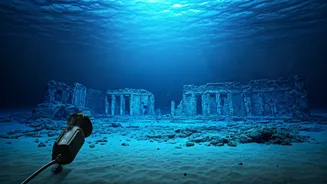
Early phases of the survey have already yielded tantalizing clues. The sonar mapping has identified significant underwater features that do not appear to be natural formations. Initial data, collected from research vessels and remotely operated vehicles (ROVs), has revealed what could be submerged wharves, pier walls, and other structural anomalies hidden beneath the sediment. Some research has suggested the presence of a massive, scientifically designed harbour, dockyards capable of holding numerous ships, and even the potential remains of a lighthouse. While physical verification is the next crucial step, these digital maps provide the first comprehensive look at the potential scale of the submerged site, stretching kilometres off the current coastline.
Rewriting Ancient History?
The project is about more than just finding ruins; it's about reclaiming a vital chapter of Indian maritime history. Confirming the location and layout of Poompuhar would provide concrete evidence for the descriptions found in ancient Tamil literature. Furthermore, some researchers involved in the project have proposed a truly paradigm-shifting theory: that the city could be far older than the 2,500 years commonly believed, with some estimates suggesting it could be over 15,000 years old. If proven through further study and sample dating, this would not only push back the timeline of urban development in South India but could position Poompuhar as one of the oldest port cities in the world. The real treasure, therefore, isn't gold or jewels, but historical knowledge.