







A Sky Full of Satellites
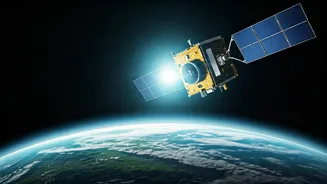
The global space economy is undergoing a massive transformation. What was once the exclusive domain of national agencies is now a bustling commercial frontier. Companies are launching vast constellations of satellites for everything from high-speed internet
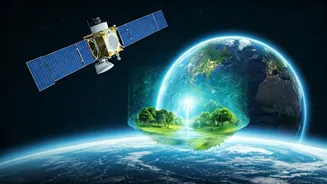
to Earth observation and climate monitoring. India is at the heart of this surge. Bolstered by the government's establishment of IN-SPACe to empower private firms, a vibrant ecosystem of startups has emerged alongside the venerable Indian Space Research Organisation (ISRO). This has dramatically increased the frequency and number of launches, positioning India as a key player in the global space race. But with every successful launch, a hidden challenge grows more urgent.
The Problem of the Orbital Junkyard
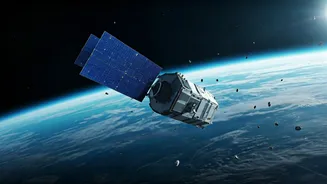
Every satellite eventually becomes obsolete. For decades, we have been filling the pathways around our planet with defunct satellites, spent rocket stages, and fragments from accidental collisions. This is space debris, or ‘space junk’. There are millions of pieces of debris orbiting Earth at incredible speeds—up to 28,000 kilometres per hour. Even a tiny fleck of paint can be catastrophic at that velocity, capable of disabling a functional satellite or even the International Space Station. Scientists warn of the ‘Kessler syndrome’, a theoretical tipping point where the density of debris becomes so high that collisions create a cascading chain reaction, rendering low-Earth orbit unusable for generations. It’s an environmental crisis happening silently, hundreds of kilometres above our heads.
ISRO's Push for Greener Launches
Recognising this challenge, India's space programme is embedding sustainability into its core. ISRO is actively developing ‘green propulsion’ systems. A key project involves creating engines that use liquid oxygen (LOX) and methane as propellants. This combination is not only more efficient but also non-toxic and less polluting compared to the conventional hydrazine-based fuels, which are highly carcinogenic. Furthermore, ISRO is making strides with its Reusable Launch Vehicle (RLV) program. Much like SpaceX's Falcon 9, the goal is to create rockets that can land back on Earth and be used again, drastically cutting down on the cost and waste associated with creating new rocket stages for every single launch. These efforts aim to make the very act of getting to space cleaner and more resource-efficient.
The Startups Tackling Space Debris
India's private sector is not just launching satellites; it's building business models around cleaning up our orbital neighbourhood. Startups are leading the charge in Space Situational Awareness (SSA), which is essentially creating a traffic management system for space. Bengaluru-based Digantara, for instance, is developing the world's first in-orbit commercial space weather and debris-monitoring system. By providing a more accurate map of what’s up there, they help satellite operators avoid collisions. Other companies, like Bellatrix Aerospace, are innovating on the satellite level itself. They are developing eco-friendly electric and water-based propulsion systems for satellites to manoeuvre in orbit, extending their operational life and allowing them to de-orbit safely at the end of their mission instead of becoming junk.
A Circular Economy in Orbit
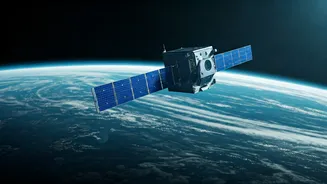
The most ambitious part of this sustainability push is the idea of a circular economy in space. ISRO's SPADEX (Space Docking Experiment) project is a crucial step in this direction. It aims to develop the technology for autonomous docking, which is the foundation for future missions that can service, repair, and refuel satellites directly in orbit. Instead of launching a replacement for a satellite that has simply run out of fuel, a robotic mission could refuel it, extending its life by years. This ‘in-orbit servicing’ model turns satellites from disposable products into long-term, maintainable assets. It represents a fundamental shift from a use-and-discard mentality to a sustainable, circular approach for managing our orbital infrastructure.