




A Major Eclipse… Elsewhere
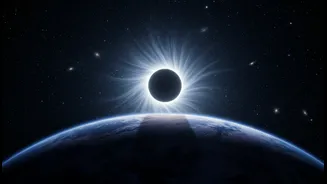
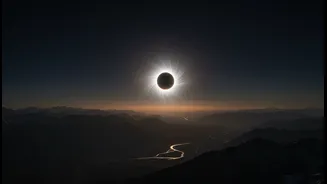
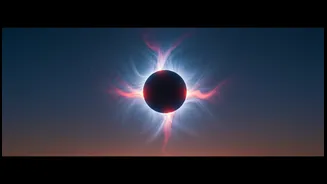
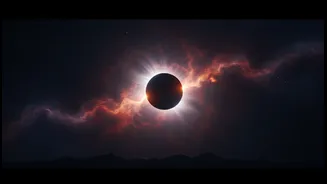
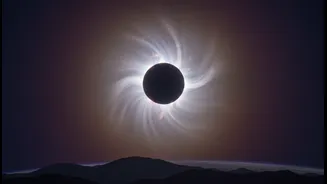
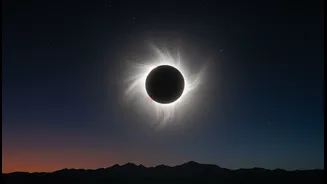
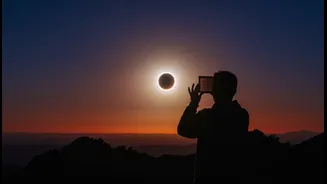
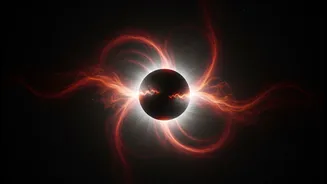
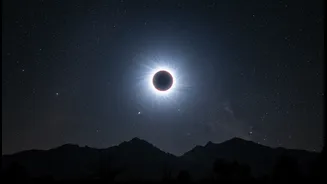
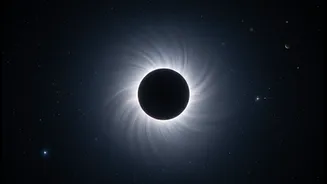
First, let's set the global stage. The August 12, 2026 event is a significant total solar eclipse, meaning the Moon will completely block the Sun, turning day into twilight and revealing the Sun's ethereal corona. This breathtaking spectacle, however,
will only be visible along a narrow path of totality. This path primarily stretches across the Arctic, Greenland, Iceland, and most notably for populated areas, northern Spain. For those in Europe, it will be the first total solar eclipse in over a quarter of a century, making it a massive event for the region. Partial phases of the eclipse will be visible across the rest of Europe, North Africa, and parts of North America.
The View from India: An Unfortunate Miss
Now for the crucial news for Indian observers: the August 12, 2026 total solar eclipse will not be visible from India. The entire event, from its beginning to its end, occurs when it is nighttime across the Indian subcontinent. The peak of the eclipse will happen around 11:16 PM Indian Standard Time (IST). For an eclipse to be seen, the Sun must be above the horizon. Since the Sun will be on the opposite side of the Earth from India's perspective, we will unfortunately miss the celestial show entirely. Consequently, any religious customs or precautions associated with eclipses, like Sutak Kaal, are not applicable in India for this event.
Join the Global Watch Party
Just because the eclipse isn't in our sky doesn't mean we can't participate. For astronomy enthusiasts and the curious alike, the best way to experience the 2026 eclipse will be through the internet. Major space agencies like NASA and the European Space Agency (ESA), along with observatories in Spain and Iceland, will host high-quality live streams. These broadcasts offer a front-row seat to totality, complete with expert commentary explaining the science as it happens. This is a fantastic opportunity to see the eclipse in stunning detail, far better than one might see with the naked eye even if it were partially visible locally.
A Teachable Moment for Students
For students and educators, the eclipse remains a powerful teaching tool. Instead of direct observation, it becomes a lesson in global science and astronomical mechanics. Teachers can use this event to explain why eclipses happen and why their visibility is limited to specific parts of the world. Students can track the path of totality on a world map, watch the live streams, and discuss the differences between partial and total eclipses. It’s also an opportunity to build models like pinhole projectors, which are used for safe solar viewing, or create crafts that demonstrate the alignment of the Sun, Moon, and Earth. This global event can inspire curiosity and connect students in India to a worldwide scientific phenomenon.
Looking Ahead: India's Next Chance
While 2026 is a miss, Indian skywatchers have something to look forward to. The next significant solar eclipse for the region occurs just one year later. On August 2, 2027, a total solar eclipse will travel across North Africa, and its partial phases will be visible from western and northern parts of India. Cities like Mumbai, Bhuj, and Jaisalmer will witness a substantial partial eclipse just before sunset. This gives enthusiasts a concrete date to mark on their calendars and a reason to get their safe solar viewing equipment ready. So, while we may have to watch the 2026 eclipse on a screen, it serves as the perfect dress rehearsal for the celestial event headed our way in 2027.