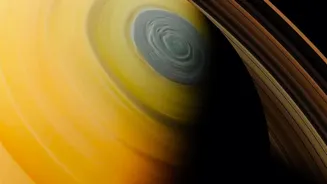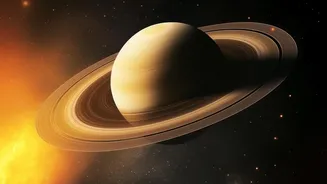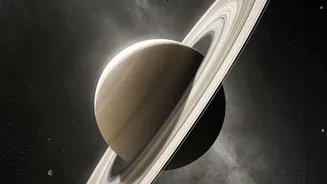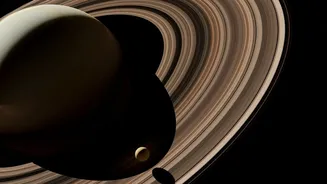





Your Essential Saturn-Spotting Toolkit
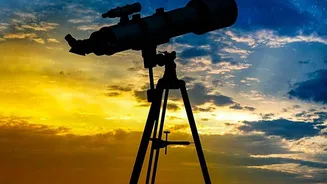
You don't need a powerful telescope to begin your search for Saturn. To the naked eye, it appears as a bright, steady 'star'. The most crucial tool is a reliable sky map. This can be a traditional physical planisphere or a modern smartphone app. A planisphere is a rotating
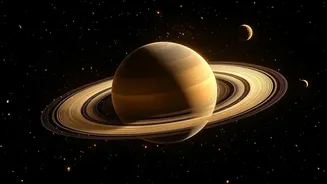
star chart that shows you the visible sky for any date and time. Stargazing apps like SkyView, Star Walk 2, or Stellarium Mobile function as a digital planetarium in your pocket, using your phone's sensors to identify celestial objects in real-time. Many of these apps are available for free on both iOS and Android. For a better view, a good pair of binoculars can help reveal Saturn as a tiny, slightly non-circular disc, differentiating it from pin-point stars.
Prime Time for Viewing in October 2026
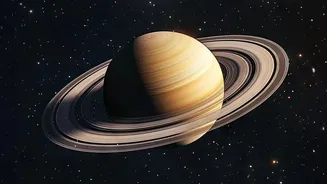
Timing is everything in stargazing. Fortunately, early October 2026 is a fantastic time to look for Saturn. Around October 4th, Saturn reaches 'opposition', which means Earth passes directly between it and the Sun. During this period, the ringed planet is at its closest and brightest for the year, rising around sunset and remaining visible all night long. You'll find it in the constellation Cetus. Don't worry if you miss the exact date of opposition; any clear night in the first couple of weeks of October will offer an excellent view. To find its precise location, your stargazing app will be invaluable. Just set the date and time, and it will show you exactly where to look.
Setting the Scene: Weather and Location
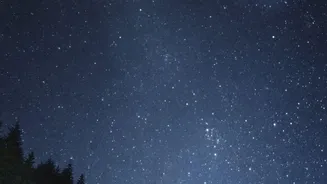
Before you head out, check your local conditions. The first requirement is a clear, cloudless sky. Equally important is finding a location with minimal light pollution. The glow from city and town lights can wash out fainter stars and make spotting planets more difficult. If possible, find a park, a rural area, or any spot away from direct streetlights. Let your eyes adjust to the darkness for about 20-30 minutes; this will significantly improve your ability to see fainter objects in the night sky. Also, consider the Moon. A bright, full moon can make the sky less dark, though Saturn is bright enough that it should still be visible.
How to Distinguish Saturn from a Star
As you scan the sky, you'll see countless points of light. So how do you know which one is Saturn? The key difference is that planets don't twinkle. Stars are so far away that their light comes to us as a single point, which is easily disturbed by Earth's atmosphere, causing the flickering effect we call twinkling. Planets are much closer, so the light they reflect from the Sun arrives as a wider beam, making their glow appear steady and constant. Look for a bright, non-twinkling object with a distinct golden or off-white hue. While other planets like Jupiter and Venus can be brighter, Saturn will be one of the brightest objects in its patch of sky during its opposition period.
Putting It All Together: The Search
On a clear evening, head outside to your chosen dark spot. Open your stargazing app or orient your planisphere. If using a physical chart, hold it up and turn it so the direction you are facing (e.g., 'South') is at the bottom. In early October 2026, Saturn will rise in the east around sunset, travel across the southern sky, and set in the west around sunrise. Use the app to locate the constellation Cetus. Then, scan that area for a bright, steady, golden point of light—that's Saturn. If using binoculars, focus on it. You won't see the rings clearly, but you might notice it's not a perfect point like a star; it will appear as a very small oval or disc.