


The Soul of a Room
Walk into a perfectly styled room. The cushions are chopped, the throw is artfully draped, and a trio of anonymous vases sits on a console table. It’s beautiful, but it can also feel like a showroom—a space designed for an imaginary person. Now, picture
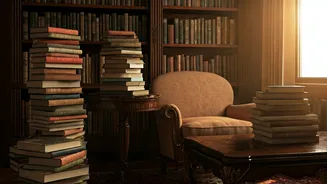
that same room, but with stacks of books on the coffee table, a shelf overflowing with paperbacks, and a few well-loved hardcovers propping up a lamp. Suddenly, the room has a history and a personality. This isn't just decor; it's evidence of a life being lived. Books are one of the most powerful tools for injecting soul into a space because they are inherently personal. They represent time spent, worlds explored, and ideas contemplated.
A Story Beyond the Spine
Unlike a mass-produced decorative object, a book tells a story on multiple levels. There's the story inside its pages, of course, but there’s also the story of how it came to be in your home. Maybe it was a gift from a friend, a treasured university textbook with your notes in the margins, or a dog-eared travel guide from a favourite trip. These objects are imbued with memory and meaning. They are a physical manifestation of your interests, your curiosity, and your journey. While a stylish sculpture can signal good taste, a shelf of books about marine biology, classic sci-fi, and Renaissance art tells a much richer and more authentic story about who you are. They are conversation starters, not just for guests, but for yourself—reminders of what you love and what has shaped you.
How to Style Without Staging
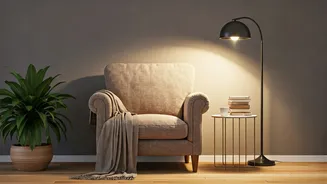
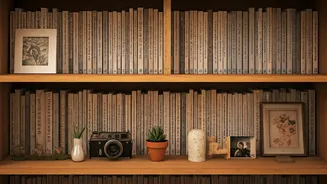
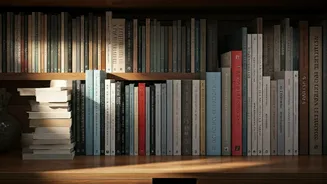
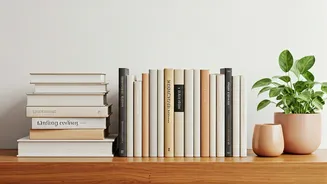
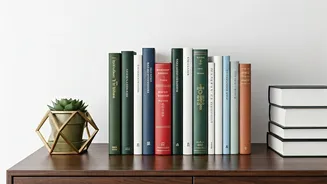
The key to making books work as decor is to resist the urge to make them look too perfect. The goal is authenticity, not a flawlessly colour-coded rainbow shelf (unless that genuinely brings you joy). Start by gathering the books you actually love and read. Let them live where you use them—a stack by your favourite armchair, a pile on your bedside table. When arranging them on shelves, mix it up. Combine vertical rows with horizontal stacks, using the stacked books as pedestals for small plants, photos, or other meaningful trinkets. Allow for a bit of organised chaos. A spine that’s slightly faded or a cover that’s a little worn adds character. The aim is for your shelves to look like they belong to a human, not a stylist who just left.
More Than Just a Library
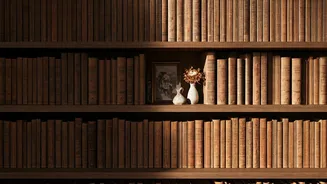
Don’t feel you need to turn your living room into a dusty, floor-to-ceiling library to achieve this effect. Integration is everything. Books provide texture, colour, and intellectual weight, but they shine brightest when balanced with other elements. Place a vibrant vase in front of a row of neutral-spined books. Let a trailing plant cascade over a stack of hardcovers. Intersperse your collection with framed photos, travel souvenirs, and artwork. This approach prevents your space from feeling one-note and instead creates a layered, visually interesting environment. The books become part of a larger personal narrative, grounding the room and giving it a focal point that feels earned, not bought.
The Real Deal vs. The Prop
A recent trend involves buying books by the metre, chosen for the colour of their spines rather than their content, or even using faux book-fronts to fill shelves. This completely misses the point. The 'magic' of books as decor comes from their authenticity. They feel less fake because they *are* less fake. They are objects of purpose that also happen to be beautiful. Using books as mere props is like filling your photo frames with the stock images they came with. It’s an empty gesture that contributes to the very feeling of artificiality you’re trying to escape. A small stack of your own paperbacks will always have more integrity and charm than a wall of pristine, unread hardcovers.