







The Cellular Clock Ticking in Your Muscles
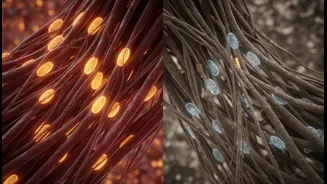
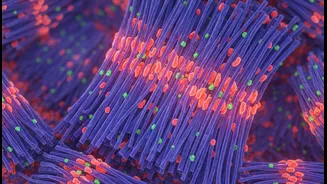
As the years pass, our muscles naturally lose mass and strength in a process known as sarcopenia, which can start as early as our 30s. This isn't just about feeling weaker; it's a reflection of complex changes happening deep within our cells. One of the primary
culprits is a disruption in the balance of protein management. In ageing muscles, the system for building new proteins can become overactive, while the crucial process of clearing out old, damaged proteins slows down. This leads to an accumulation of cellular 'junk,' causing stress and contributing to the gradual loss of function. Scientists have identified a specific gene, called DEAF1, that rises in ageing muscles and drives this harmful imbalance. At the same time, the function of mitochondria—the tiny powerhouses in our cells—declines, further impairing energy production and overall muscle health.
Exercise as a Molecular 'Reset Button'
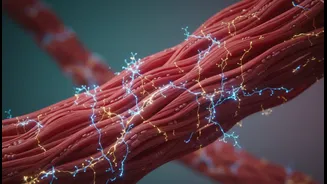
For years, we've known that exercise is a powerful countermeasure to age-related muscle decline, but recent research reveals just how profound its effects are at a molecular level. Physical activity acts like a 'reset button,' helping to restore the natural repair systems that weaken over time. Studies have shown that exercise directly counteracts the negative effects of the DEAF1 gene. It activates protective proteins that lower DEAF1 levels, allowing muscles to once again efficiently clear out damaged components and focus on healthy repair and regeneration. It’s a bit like shifting a factory’s focus from just producing new goods to also maintaining its machinery, ensuring long-term efficiency. In essence, exercise doesn't just slow down the clock; it helps rewind it.
Rejuvenating the Epigenetic Profile
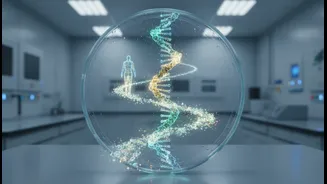
Beyond clearing cellular debris, exercise can also influence our very genetic blueprint for ageing. Our DNA contains epigenetic markers, which are chemical tags that tell our genes when to switch on or off. The pattern of these tags can be used to determine a tissue's 'biological age,' which may be older or younger than our chronological age. Research has revealed that exercise can actively reverse some of these age-related epigenetic changes in muscle. Studies involving both resistance and endurance training have shown measurable reductions in the epigenetic age of muscle tissue. In one remarkable study, just six months of resistance training was enough to substantially reverse the age-related gene expression profile in older adults, making their muscles look much more like those of younger individuals at a transcriptional level. This suggests that our muscles retain an incredible plasticity, capable of adopting a younger molecular pattern in response to physical activity.
The Main Opportunity: Building Cellular Resilience
The main opportunity presented by this growing body of research is a shift in perspective. Instead of viewing muscle ageing as an inevitable decline to be managed, we can see it as a dynamic process that we have significant molecular control over. The goal isn't just to prevent frailty, but to actively build cellular resilience that extends our healthspan—the years we live in good health. By engaging in regular physical activity, we are not just strengthening our limbs; we are orchestrating a complex, rejuvenating symphony inside our cells. We are enhancing mitochondrial function, cleaning up damaged proteins, and promoting a younger epigenetic signature. Both aerobic activities like brisk walking and cycling, and resistance training like lifting weights, are beneficial. A combination of both is likely to provide the greatest benefit, tackling muscle ageing from multiple molecular angles. The opportunity lies in harnessing this knowledge to proactively invest in our long-term muscular and metabolic health, ensuring we stay stronger and more vital for longer.