








The Hidden Challenge in Climate Science
When we discuss climate change, we often focus on the dramatic effects: melting glaciers, rising sea levels, and extreme weather. But behind these headlines lies a fundamental challenge that scientists grapple with daily: data quality. All our understanding
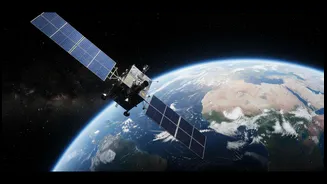
of climate change is built on measurements taken over decades by satellites, weather balloons, and ground stations. But what if those measurements aren't perfectly accurate? What if one satellite's '30 degrees' is slightly different from another's? These tiny discrepancies, when multiplied over years and across the globe, can create uncertainty in our climate models. This is where the concept of calibration becomes critical. Just like you might calibrate a weighing scale to ensure it reads zero before you start, scientists need a way to make sure all their instruments are singing from the same hymn sheet.
What is Data Quality, Really?
Think of it this way: imagine trying to measure your child's growth using a tape measure that stretches slightly over time. For the first few years, the difference might be negligible. But after a decade, you might mistakenly believe they've grown more or less than they actually have. The same principle applies to climate satellites. Instruments in the harsh environment of space can degrade. Their sensors can become less sensitive over their lifespan, leading to 'instrument drift'. This can introduce biases that make it harder to detect the subtle, long-term trends that define climate change. High-quality, well-calibrated data ensures that when we see a trend—like a gradual increase in global temperature—we are confident it's a real change in the Earth's climate, not just a quirk of the instruments measuring it.
Enter NASA's CLARREO Pathfinder
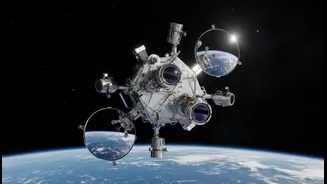
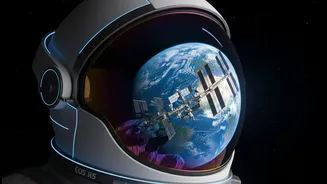
To solve this problem of data consistency, NASA has developed the Climate Absolute Radiance and Refractivity Observatory (CLARREO) Pathfinder mission. Launched and mounted on the International Space Station (ISS), this mission isn't just another satellite taking climate measurements. Its primary job is to be the ultimate reference point—a 'gold standard' in space. The Pathfinder's instrument, a hyperspectral imager, is designed to measure reflected sunlight from Earth with an unprecedented accuracy, five to ten times better than existing sensors. By doing so, it acts as a calibration yardstick for other Earth-observing satellites.
How the Pathfinder Calibrates the Climate
The CLARREO Pathfinder's genius lies in its method. While in orbit on the ISS, it measures the spectrum of sunlight reflecting off the Earth and its atmosphere. But crucially, it also regularly points itself towards a very stable and well-known source: the Sun. By constantly checking its measurements against the known benchmark of the Sun, the Pathfinder can maintain its high accuracy throughout its mission, avoiding the instrument drift that plagues other sensors. Then comes the 'pathfinding' part. As it orbits the Earth, its path will cross with other climate satellites, like CERES and VIIRS. During these crossovers, both Pathfinder and the other satellite measure the same spot on Earth at nearly the same time. By comparing the other satellite's data to its own ultra-accurate measurement, scientists can precisely calibrate the other instrument. It’s like having a master tuning fork in orbit to ensure all the other instruments in the orchestra are playing in key.
Why This Matters for India
The quest for hyper-accurate climate data isn't just an academic exercise; it has profound real-world implications for India. Our nation is particularly vulnerable to the effects of climate change, from the reliability of the monsoon that feeds our agriculture to the threat of rising sea levels along our extensive coastline. Accurate climate models, built on trustworthy data, are essential for predicting these changes and preparing for them. More reliable predictions about cyclone intensity, drought patterns, and heatwave frequency allow for better disaster management, saving lives and protecting infrastructure. By helping to remove uncertainty from climate models, missions like the CLARREO Pathfinder provide policymakers and planners with the solid, dependable information needed to make informed decisions that will safeguard India's future.